

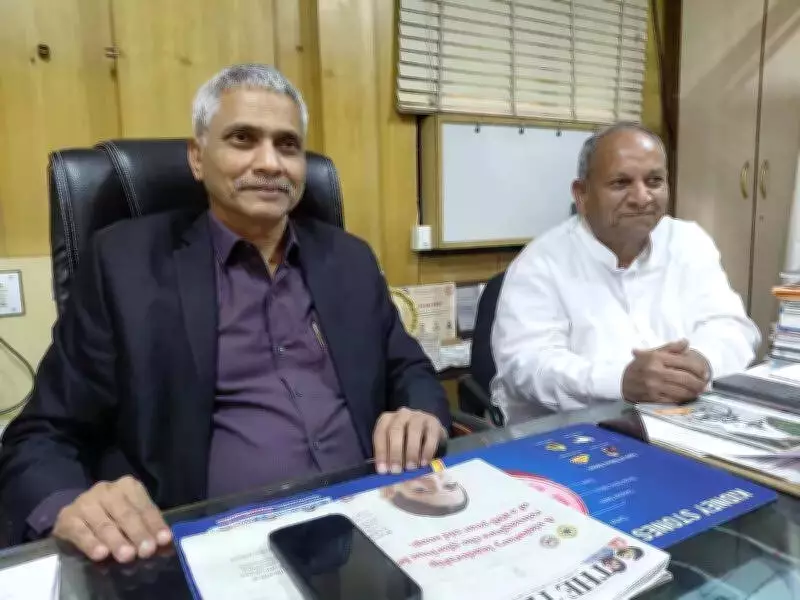
RSS Pracharak's Personal Transplant Journey Ignites National Organ Donation Campaign
In a remarkable story of resilience and advocacy, Gujarat-based RSS pracharak Dileep Deshmukh, aged 65, has transformed his personal medical ordeal into a powerful nationwide movement for organ donation awareness. Having received a successful liver transplant at the age of 60, Deshmukh describes this procedure as granting him a "new life"—a second chance he has dedicated entirely to encouraging others to pledge their organs and save countless lives.
Five-Year Crusade Reaches Millions, Dispels Myths
Over the past half-decade, Deshmukh has addressed and sensitized nearly 1.5 million people across India through an extensive series of lectures, interactive workshops, and community engagements. His relentless campaign has played a pivotal role in shifting public perceptions and dismantling deep-seated myths surrounding organ donation, resulting in a tangible and measurable uplift in collective awareness.
Recently in Nagpur to lead a specialized awareness program for healthcare professionals, Deshmukh emphasized a critical message: the decision to donate organs should be made proactively, when an individual is in good health and mentally prepared. "Organ donation demands the same level of seriousness, consistency, and collective commitment that we demonstrated during historic public health initiatives like the family planning campaigns or the nationwide polio eradication drive," he asserted.

Drawing from Personal Trauma to Drive Change
Leveraging his firsthand experience as a transplant recipient, Deshmukh spoke eloquently about the profound emotional and physical toll of being on an organ waitlist. "The wait for a life-saving organ is an agonizing, uncertain, and utterly exhausting journey. It is a tragedy that anyone should perish simply because a viable organ was buried or cremated instead of being donated," he stated. Beyond his advocacy, Deshmukh also serves as a caretaker at a government school in Kutch, grounding his mission in everyday community service.
He passionately argued that organ donation transcends all artificial boundaries of religion, caste, or ideological divides. "No faith system prohibits the act of saving a human life. Our shared humanity must always rise above individual belief systems," he declared, citing inspiring examples from Hindu, Muslim, and Christian communities where both living and deceased organ donations have successfully preserved lives.
Addressing Nagpur's Critical Donation Shortfall
Deshmukh expressed significant concern over Nagpur's alarmingly low cadaver organ donation rates. He highlighted a stark disparity: "While the city likely has at least 500 patients undergoing dialysis, last year witnessed only about 15 cadaver donations, yielding approximately 30 kidneys. This widening chasm between urgent demand and scarce availability is deeply alarming and requires immediate intervention."
He further underscored the immense economic and emotional burden endured by patients reliant on long-term dialysis, noting that a kidney patient may need to visit hospitals nearly 100 times annually, spending countless hours per session and accumulating lakhs of rupees in medical expenses over time. "People often focus solely on monetary costs, but they frequently overlook the invaluable losses of time, enduring pain, and personal dignity," he remarked.
A Restored Life Advocating for Collective Responsibility
Now leading a fully active and vigorous life post-transplant, Deshmukh shared that he walks over five kilometers daily and frequently undertakes long-distance drives. "A transplant does not signify the end of life; rather, it powerfully restores and rejuvenates it," he affirmed. Framing organ donation as a fundamental collective social responsibility, he issued a compelling call to action, urging citizens, medical professionals, and institutions to unite in collaborative efforts so that no individual ever has to die awaiting the precious gift of life.






