The sharp decline in the number of the Great Indian Bustard (GIB), a Schedule-I protected species and Rajasthan’s state bird, during the recent waterhole census conducted on Vaishakh Purnima has become a matter of concern for environmentalists as well as the Forest Department.
During the latest field count carried out using the waterhole method on the night of Vaishakh Purnima, only 41 GIBs were spotted, compared to 73 recorded last year. The sudden decline has raised concerns over whether the birds are disappearing from their natural habitat or migrating to other areas. Experts believe that the rapidly increasing network of high-tension power lines in GIB habitats, the lack of adequate bird diverters, shrinking grasslands, and threats from stray dogs are making the habitat unsafe for the critically endangered bird.
Notably, the GIB count over the last three years has shown fluctuations: 2024 – 63 GIBs, 2025 – 73 GIBs, 2026 – 41 GIBs. According to Forest Department sources, the wildlife census was conducted on May 1 for 24 continuous hours on Vaishakh Purnima at various waterholes. While the overall wildlife population in the forests appeared stable or increased, the census results showed a worrying decline in GIB sightings.

Desert National Park Census Details
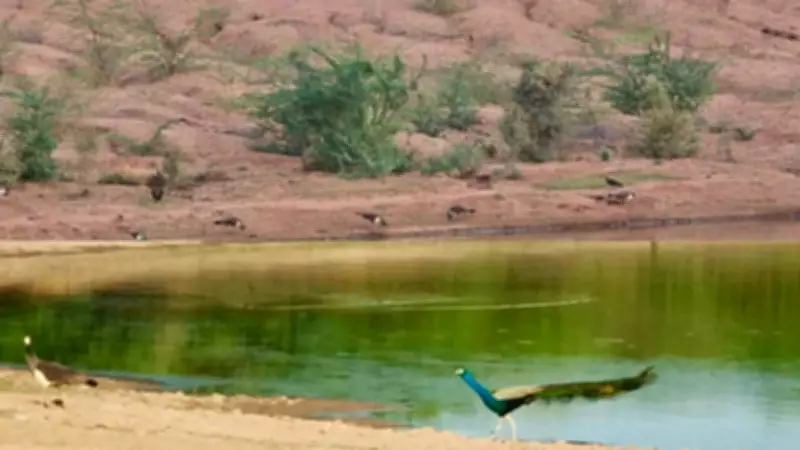
In the Desert National Park (DNP) region, wildlife counting was conducted at 28 water sources, where a total of 2,602 wild animals and birds were recorded. These included: Great Indian Bustard (GIB) – 41, Desert Cat – 84, Desert Fox – 182, Fox – 87, Wild Cat – 13, Chinkara – 1,082, Nilgai – 870, Spiny-tailed lizard (Sanda) – 282, and Peacock – 149. Forest officials said all teams performed efficiently during the counting process and that the numbers of most other wildlife species remained almost similar to last year. However, experts believe the shy nature of the GIB and its shrinking habitat may also be reasons behind the lower sightings.
DFO of Desert National Park, Brijmohan Gupta, said that spotting 41 GIBs itself was a significant achievement and that the data would help in future conservation planning. The Forest Department deployed 52 teams across 52 locations in the DNP region. These teams included members from the Wildlife Institute of India (WII) and personnel from the Eco Task Force. Forest department staff spent long hours in extreme heat, monitoring water sources and counting animals and birds arriving to drink water. More than 156 personnel were deployed across nearly 127 locations in the district. Apart from government staff, experts from the Wildlife Institute of India also participated in the exercise.
During the census, species such as wild boar, nilgai, foxes, desert cats and peacocks were also sighted. Kumar Shubham, DFO of the Jaisalmer DDP division, said overall wildlife numbers remained encouraging compared to last year and that the large number of nilgai and chinkara sightings was a positive sign for the ecosystem. Meanwhile, Devendra Singh, DFO of IGNP, said his team worked intensively at 47 points. The census recorded a healthy rise in the population of jackals and chinkaras. A total of 156 team members were deployed in the region, where 217 jackals, 127 foxes and 827 chinkaras were recorded, taking the total wildlife count in the area to 3,934.
Other Findings
According to the data, the IGNP region reported the presence of 217 jackals. Good numbers of desert foxes, peacocks, vultures and foxes were also recorded during the exercise. Among vultures, Egyptian, White-backed and Red-headed species were prominently sighted. In the DDP forest division of Jaisalmer, counting was conducted at 28 water sources, where 2,602 wild animals were recorded. Among them, 616 nilgai stood out, while species like chinkara, wild cats, desert cats, foxes and peacocks were also spotted in significant numbers.