

In a stark reminder that high-risk pregnancies may not always exhibit warning signs, a routine check-up for a 46-year-old woman who conceived through IVF turned critical when doctors discovered a symptomless pregnancy complication, leading to an emergency C-section at 32 weeks. The case underscores the vital importance of regular monitoring and timely medical intervention.
Routine Visit Reveals Serious Condition
On February 4, the woman visited for a routine evaluation without any complaints of pain, bleeding, or discomfort. However, tests revealed a dangerous combination of conditions, including pre-eclampsia (high blood pressure), intrauterine growth restriction (IUGR), anemia, and abnormal blood flow to the baby (Doppler changes). Additionally, the IVF conception method and a previous cesarean section placed both mother and baby in a high-risk category.
Silent but Critical
Doctors noted that the asymptomatic condition of the fetus was alarming. Dr. Varshali Mali, consultant obstetrician at Surya Mother and Childcare Hospital, explained, "It was a silent but critical case. There were no external warning signs. However, internally, the baby was under severe stress due to compromised blood flow. In such cases, timing of intervention is crucial."

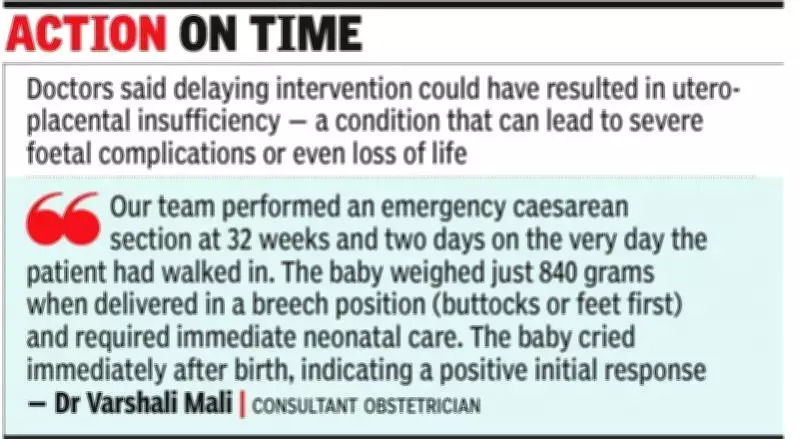
She added, "Our team performed an emergency cesarean section at 32 weeks and two days on the very day the patient walked in. The baby weighed just 840 grams when delivered in a breech position (buttocks or feet first) and required immediate neonatal care. The baby cried immediately after birth, indicating a positive initial response."
Risks of Delayed Intervention
Doctors warned that delaying intervention could have led to uteroplacental insufficiency, a condition that can cause severe fetal complications or even loss of life. Dr. Mohini Thengne, who assisted in the surgery, stated, "Managing such cases requires rapid clinical assessment, seamless coordination between departments, and readiness for immediate surgical intervention. This case underscores the importance of not relying solely on symptoms in high-risk pregnancies."
Successful Outcome
The procedure was performed under spinal anesthesia by a multidisciplinary team led by Dr. Jyotsna Thaval. Both mother and child recovered well after surgery and were discharged in stable condition after three days. This case highlights the critical role of regular check-ups and prompt medical action in managing high-risk pregnancies without obvious symptoms.






