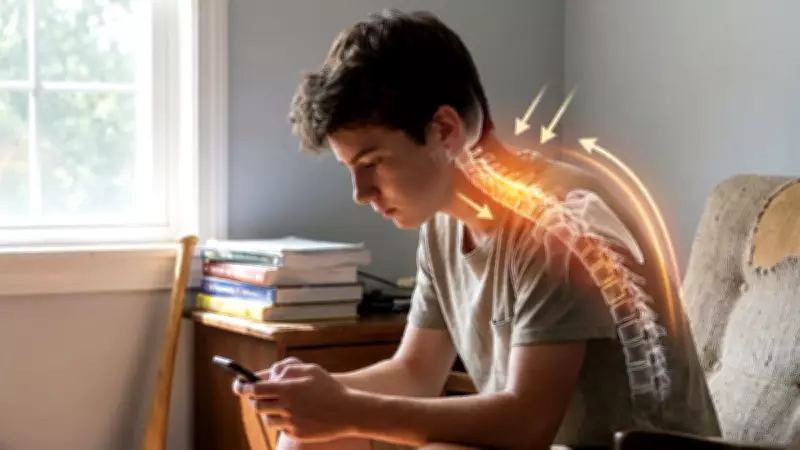
Doctors are raising alarms over a growing health crisis among teenagers: 'text neck,' a condition caused by prolonged screen time that leads to spinal damage and chronic pain. With the average teen spending up to seven hours a day on smartphones, tablets, and laptops, the strain on their developing spines is unprecedented.
What Is Text Neck?
Text neck refers to the repetitive stress injury caused by looking down at handheld devices for extended periods. The human head weighs about 10-12 pounds, but tilting it forward at a 45-degree angle increases the force on the cervical spine to nearly 60 pounds. This added pressure can lead to early wear and tear, disc degeneration, and misalignment.
Alarming Statistics
A recent study found that 67% of teenagers experience neck or back pain related to device use. Emergency room visits for neck pain among adolescents have increased by 30% in the last decade. Specialists note that children as young as 11 are showing signs of spinal deterioration typically seen in middle-aged adults.

Why Teens Are at Higher Risk
Teenagers are particularly vulnerable because their spines are still growing. Poor posture during this critical period can cause permanent changes in spinal curvature. Additionally, teens often ignore early warning signs like stiffness or mild pain, allowing the damage to progress.
Other Health Impacts
Beyond neck pain, text neck can cause headaches, shoulder tension, and even numbness in the arms. It also contributes to poor sleep quality and reduced lung capacity due to slouched posture. Mental health effects include increased stress and decreased focus.
Prevention Tips
- Limit Screen Time: Encourage breaks every 20-30 minutes. Use apps that remind you to look up.
- Proper Posture: Hold devices at eye level. Keep shoulders back and ears aligned over shoulders.
- Strengthen Muscles: Exercises like chin tucks and shoulder blade squeezes help support the spine.
- Ergonomic Setup: Use a stand for tablets and a separate keyboard for laptops to maintain a neutral neck position.
Expert Advice
Dr. Priya Sharma, a pediatric orthopedic surgeon, emphasizes: 'The key is awareness. Teens need to understand that their spine is not invincible. Small changes can prevent lifelong pain.' Schools are also being urged to incorporate posture education into health classes.
When to Seek Help
If a teen experiences persistent neck pain, numbness, or headaches, a medical evaluation is recommended. Physical therapy can often reverse early damage, but advanced cases may require more invasive treatments.
As screen use continues to rise, experts stress that prevention is the best cure. Parents, educators, and teens themselves must take action to protect young spines from the silent epidemic of text neck.