A viral X post by content creator Aakash Gupta sparked debate by claiming that toothpaste needs 30 minutes to work, but most people rinse it off after just two. Dental experts contacted by The Times of India confirm the central message is largely correct, though the extent of benefit may vary with the toothpaste used.
Why Rinsing Immediately Reduces Fluoride's Effect
Fluoride's effectiveness depends on how long it remains in contact with teeth. Dr Ankur Rustagi, a dental surgeon at Medanta, Gurgaon, explains that rinsing with water right after brushing greatly reduces fluoride concentration in the mouth, limiting its ability to support effective remineralisation. He recommends spitting out excess toothpaste and avoiding rinsing right away.
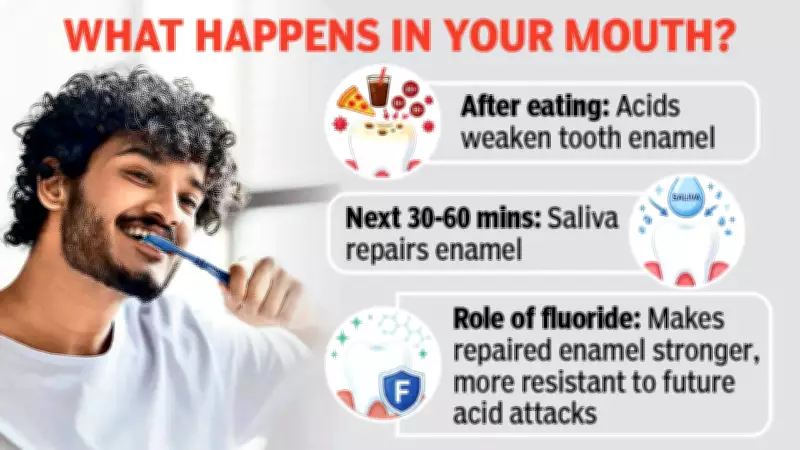
Tooth enamel is constantly exposed to acid attacks from bacteria, sugary foods, and acidic beverages. These acids temporarily draw minerals out of the enamel, weakening its surface. After eating, saliva naturally repairs this damage over the next 30-60 minutes by restoring lost minerals, while fluoride helps make the repaired enamel more resistant to future acid attacks.

The 30-Minute Rule: Not Always Necessary
Dr Vibhuti Jain, senior consultant at PSRI Hospital, Delhi, points out that the 30-minute rule may not be necessary. Even waiting 15-20 minutes before rinsing can help fluoride remain in saliva longer and support enamel repair. Enamel is primarily made of hydroxyapatite, a mineral vulnerable to acid damage. Fluoride helps convert part of it into fluorapatite, a more acid-resistant form that offers greater protection against tooth decay.
Variations by Toothpaste Type
Dr Sageer Aazaz, head of Dentistry at Paras Health, Gurgaon, notes that many people are unaware that toothpaste continues working after brushing ends. Leaving a thin layer of fluoride on the teeth may improve long-term cavity protection. However, experts caution that the advice may not apply equally to every toothpaste. Newer hydroxyapatite-based toothpastes designed for enamel repair and sensitivity control may behave differently from conventional fluoride-based products.
Dr Ashish Kakar, prosthodontist and cosmetic dentist at Apollo Hospital, explains that advanced hydroxyapatite particles can penetrate and block microscopic dentinal tubules more effectively, helping repair enamel and reduce sensitivity. He adds that the idea behind not rinsing immediately is to increase contact time between toothpaste and enamel, but this does not apply equally to all formulations. It depends on the molecular structure and configuration of the ingredients being used. Modern toothpastes are designed for multiple purposes, including whitening, sensitivity reduction, gum protection, and enamel repair, making it important to consider the formulation when evaluating such recommendations.
Practical Takeaway
Despite these nuances, dentists broadly agree that brushing should not necessarily end with an immediate rinse. While not rinsing is not a substitute for proper oral hygiene, delaying that post-brushing rinse may be one of the simplest changes people can make to help fluoride do its job more effectively.