

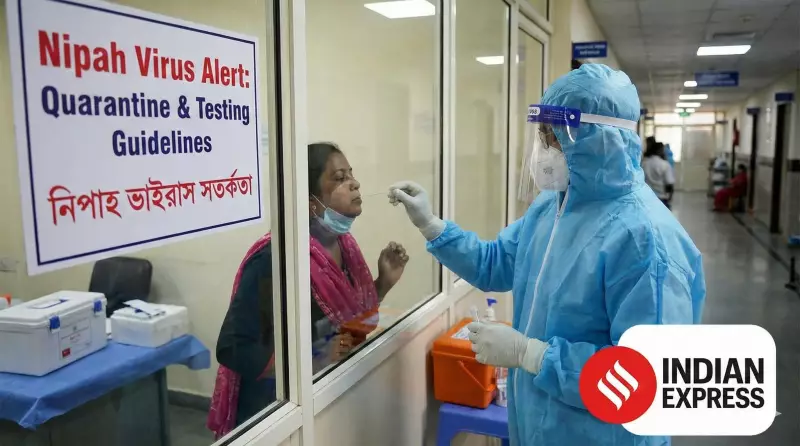
West Bengal Health Department Issues Comprehensive Nipah Virus Guidelines
The West Bengal health and family welfare department has released a detailed set of guidelines to combat the Nipah virus. This action comes days after two nurses tested positive for the virus in the state. A five-member medical team from the state health department prepared this advisory specifically for patients, caregivers, and health workers.
Mandatory 21-Day Quarantine for Close Contacts
According to the newly issued guidelines, anyone who has come into contact with a Nipah patient must undergo a mandatory 21-day home quarantine. This includes individuals exposed to the patient's blood, bodily fluids, saliva, or respiratory droplets from sneezing or coughing.
The state health department categorizes spending time in a confined space with an infected person as a high-risk activity. People under home quarantine will receive health checks twice daily. If any symptoms appear, they must be admitted to a hospital immediately and placed in an isolation ward.

Similarly, contact with a patient's clothing or direct physical contact also triggers a 21-day observation period. Health officials will call these individuals daily to monitor their condition. Any symptom development requires immediate hospitalization.
Precautions for Caregivers and Health Workers
The guidelines emphasize that caregivers of Nipah patients must use adequate protective measures. The state health department directs asymptomatic individuals to take a specific antiviral medication as a precaution.
Since no definitive treatment for Nipah infection exists, the guidelines specify that two alternative antiviral drugs will be used experimentally on symptomatic patients. Health workers who come into contact with patients but remain asymptomatic can continue working with personal protective equipment like masks and PPE kits. They do not need quarantine but must take a special antiviral drug for two weeks as a preventive measure.
RT-PCR Testing Protocols and Patient Management
The state health department mandates immediate RT-PCR testing for suspected Nipah cases. Treatment continues unless the test report returns negative at least twice in a single day.
Critical care specialists and neurologists will be responsible for managing Nipah patients. Patients who test positive will have their samples tested every five days. They can be discharged only if three separate samples—saliva, urine, and blood—test negative twice within a day. Even after discharge, patients will remain under observation for 90 days.
These comprehensive measures aim to contain the virus spread and ensure proper care for all affected individuals. The health department's proactive approach reflects the seriousness of the Nipah threat in West Bengal.

