

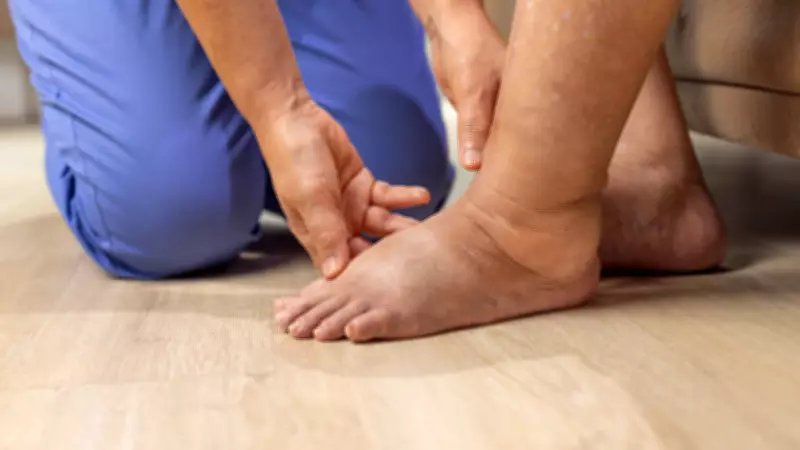
Many people experience a strange sensation after sitting for extended periods—through a long office meeting, a road trip, or binge-watching a series. The feet suddenly feel heavier, shoes seem tighter, and ankles look puffier. Sometimes there is a faint throbbing that disappears after walking for a few minutes. Most ignore it, laughing it off as tired feet, but the body rarely acts without reason.
What Causes Swelling After Sitting?
Swelling in the feet after long hours of sitting is a simple warning about poor circulation and fluid buildup. Medically termed edema, it is often temporary, but repeated episodes can reveal how modern lifestyles affect circulation, veins, muscles, and even heart health.
The Body Was Not Designed for Inactivity
Human circulation depends on movement. Walking, stretching, or flexing calf muscles pushes blood upward from the legs to the heart via the calf muscle pump. When sitting too long with legs hanging down, this pumping system slows dramatically. Dr. Geetesh Govil, Consultant Cardiologist at Manipal Hospital, explains, "Sitting for long hours leads to swelling in the feet and ankles because blood and fluids pool in the lower body. Circulation slows, causing puffiness, tightness, or discomfort." Gravity pulls blood downward; movement sends it back upward. Without movement, fluid collects in tissues around the feet and ankles. A study by the National Institutes of Health (NIH) on prolonged sitting and vascular health confirms that uninterrupted sitting impairs blood flow and affects lower limb vascular function.

Why Some People Swell More
Not everyone experiences swelling equally. Differences arise from circulation, vein health, hydration, age, body weight, and medical conditions. Dr. Govil notes, "Inactivity prevents calf muscles from contracting enough to pump blood back to the heart, causing fluid to gather in feet and ankles—edema." People with weaker vein function swell more easily. Veins have tiny valves that help blood travel upward; these valves weaken with aging, obesity, diabetes, pregnancy, or sedentary lifestyles. Hot weather worsens swelling by widening blood vessels, allowing more fluid leakage. Modern lifestyles normalize uninterrupted sitting—working, eating, shopping, and relaxing while staying still—but the body still expects movement.
Small Signs Often Dismissed
Swelling often starts quietly: sock marks linger on skin, shoes feel snug by evening, or standing up after hours causes temporary stiffness. Dr. Govil lists common symptoms: swollen feet or ankles, tightness in shoes, mild pain or heaviness in legs, and temporary stiffness after standing. The body reacts quickly to movement—even a short walk reduces swelling by improving circulation. However, persistent swelling should not be ignored. Repeated edema may point to deeper issues involving the heart, kidneys, liver, thyroid, or veins. According to the National Heart, Lung, and Blood Institute (NHLBI), chronic or painful swelling requires medical evaluation, especially if accompanied by chest discomfort, shortness of breath, redness, or sudden weight gain.
Beyond the Feet: Broader Health Effects
Swollen feet reflect larger internal changes. Extended sitting slows circulation, increases vein pressure, and reduces blood vessel function. Over time, this can contribute to varicose veins, vascular stiffness, and metabolic problems. Researchers now call prolonged sitting "the new smoking" because it quietly shapes long-term health risks. Another overlooked effect is on lymphatic drainage, which removes excess fluid and waste. The lymphatic system has no pump and depends on body movement; when movement stops, drainage slows. This explains why even healthy young adults may develop temporary swelling during marathon workdays or long-haul travel.

Simple Prevention Methods
The body responds quickly to small changes. Dr. Govil advises, "Preventing swelling requires simple lifestyle changes and regular movement. Get up and walk every 30-60 minutes, especially during work or travel. Stretch legs regularly to improve circulation and reduce fluid buildup. Stay well hydrated to support healthy circulation and prevent fluid retention." Effective habits include rotating ankles while seated, flexing calf muscles every few minutes, avoiding sitting cross-legged for long periods, elevating feet after long workdays, wearing comfortable footwear during travel, and taking short walking breaks. Even standing for two minutes every half hour significantly improves circulation. However, Dr. Govil cautions, "If swelling happens frequently, is painful, or is associated with breathlessness or redness, seek medical evaluation as it may indicate an underlying heart, kidney, or vein-related condition." The body whispers before it screams; swollen feet after sitting too long remind us that humans were built to move more than modern life allows.
Disclaimer
This article is for informational purposes only and should not be considered medical advice. Persistent, painful, or sudden swelling in the feet or ankles should be evaluated by a qualified healthcare professional, especially if accompanied by breathlessness, chest pain, redness, or fever.





