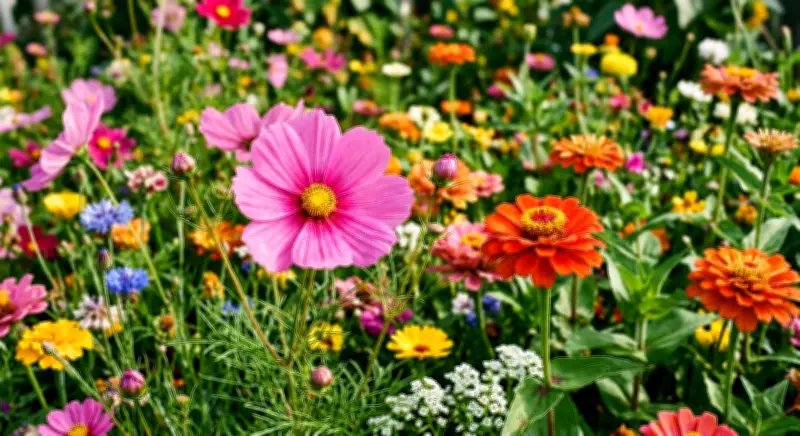
If your garden has been looking a little bare, and you keep telling yourself you will do something about it soon, May is essentially sending you a formal invitation. The soil is warm, the frost risk has passed for most of the US, and annuals sown now can go from seed to full bloom in as little as 8 to 10 weeks. This makes for a truly gorgeous garden by midsummer without spending a fortune at the nursery.
It is also more than just curb appeal. A study from the University of Florida published in the journal Preventive Medicine Reports found that tending plants measurably reduces stress, anxiety, and depression, a truly useful side effect of filling your garden.
If you pick the right flowers, you will also be doing local pollinators a favor. According to research published in Environmental Entomology, annual ornamental flowers can provide meaningful supplemental foraging resources for pollinator communities, so you are filling your garden and helping local bees at the same time.

Seven Fast-Growing Annuals to Sow This May
Cosmos: The Easy Crowd-Pleaser
Cosmos are pretty much foolproof. They germinate in about a week and bloom in 50 to 60 days, one of the quickest payoffs in the annual world. They come in colors ranging from soft blush and white to hot pink and magenta, and bees love them. For taller varieties to anchor a border, try Cosmos bipinnatus 'Purity,' a classic white that can reach five feet in good conditions.
Zinnias: Bright, Cheerful, and Very Forgiving
If you are new to growing from seed, zinnias are your friend. They love full sun and warm, well-drained soil, conditions most of the US has in abundance by May. Expect blooms around 8 to 10 weeks after germination, so plan for August color. The newer bi-colored varieties, such as Queeny Red Line, have a real showstopper quality.
Nasturtiums: The Edible Super-Achiever
Nasturtiums are likely the most useful flower on this list. Fast, easy, forgiving of poor soil, and their flowers and leaves are delicious in a summer salad. They are also used as a companion plant in vegetable gardens, where they can help repel common pests. The vintage variety 'Empress of India' produces stunning crimson-scarlet flowers against deep green foliage, old-fashioned in the best way.
Orlaya: A Florist's Secret
Orlaya, or lace flower (commonly called), is a delicate white umbellifer, an annual that flowers in about 8 to 10 weeks from sowing, and is rather less known than the others, but well worth looking for. It looks expensive, and that is probably why wedding florists use it all the time, but it is really simple to grow. It grows to about two feet tall, so it is great for filling gaps in the front of a border without blocking the view of what is behind it.
Cerinthe: The Icebreaker Vessel
Honeywort, also known as cerinthe, is one of those plants that makes people stop and ask what it is. The arching blue-green stems and deep purple bracts have an almost succulent quality that bees cannot resist. It grows to three feet, tolerates drought once established, and self-seeds prolifically, meaning you plant it once and it pretty much takes care of itself from there. Before planting, soak seeds in water for 12 hours to improve germination.
Ammi majus: Wildflower-Chic and Wispy
Queen Anne's Lace is getting its moment in the cut flower sun, and for good reason. Its soft white domes of tiny flowers look easy and wild in a vase or woven into an existing border. Sow directly into finely raked soil or in small cell trays for more control. It tolerates partial shade, making it a more versatile annual than most on this list.
Cornflowers: The Original Cottage Garden Favourite
Few flowers are as reliably cheerful as a drift of true-blue cornflowers (Centaurea cyanus). They take about two months to flower from sowing, and they love being direct sown; they hate being transplanted. For something a bit different from classic blue, try the 'Black Ball' variety, which has deep velvety purple blooms that look wonderful against silver-green stems. Plant in full sun and somewhat poor soil for best flowering.

Before You Go Digging, One Last Thing
Once in the ground, regular deadheading will keep them flowering well into the fall. But as summer ends, leave a few flowers to seed, and you get free plants next year, and those seedheads become a valuable food source for birds through the colder months. This is a low-effort, high-reward garden habit that pretty much runs itself.