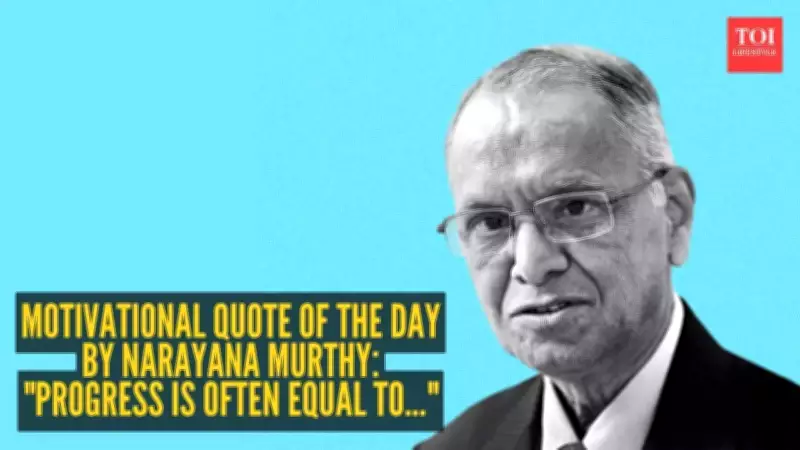
Infosys co-founder Narayana Murthy once said, “Progress is often equal to the difference between mind and mindset.” This statement offers a profound insight into personal and professional development. In a world that glorifies hard work and smart strategies, Murthy emphasizes that true advancement comes not from what you think, but from how you think.
Mind vs. Mindset: Understanding the Difference
To grasp Murthy's message, it is essential to distinguish between the mind and the mindset. The mind represents your intellectual hardware—your IQ, analytical skills, and ability to process information. It is functional but limited to existing knowledge. The mindset, on the other hand, is the operating system that runs in the background. It comprises your beliefs, attitudes, and expectations, shaping how you interpret and respond to events.
Murthy’s core argument is that raw intelligence alone can only take you so far. Breakthroughs occur when you stop pushing your mind to work harder and instead focus on upgrading your mindset. A fixed mindset can hinder progress, while a growth mindset fosters resilience and innovation.

Why Brainpower Is Not Enough
Smart people are abundant, but a brilliant mind trapped in a fear-based, fragile mindset often freezes when faced with risk. Consider two scenarios: a person with high intelligence but a rigid mindset avoids necessary risks due to fear of failure. Conversely, a person with average intelligence but a relentless growth mindset embraces failure as a learning opportunity and continues to advance. Progress is not about having the best tools; it is about having a perspective that embraces uncertainty.
How to Shift Your Mindset
Changing your mindset requires deliberate daily actions. Here are practical steps:
- Audit your personal rules: Identify outdated assumptions about your capabilities. Ask yourself whether a rule is a fact or just a narrative you have accepted.
- Treat failure as data: View mistakes as feedback rather than final judgments. Analyze what went wrong, adjust, and try again.
- Choose your circle wisely: Mindsets are contagious. Surround yourself with people who challenge you to think bigger and avoid those who complain and play defense.
- Embrace discomfort: Step outside your comfort zone. Take on challenges that make you feel like a beginner to keep your mindset adaptable.
The Takeaway
The biggest obstacle between you and your goals is often not a lack of resources or talent, but an internal voice that insists on doing things the old way. Instead of driving your mind into exhaustion, pause, reflect, and change how you approach the game. As Murthy suggests, upgrading your mindset is the key to unlocking real progress.