

Ballari Medical College to Establish Advanced Skills Lab with Rs 41.2 Crore Investment
The government hospital in Ballari, a district previously highlighted for a series of maternal deaths, is set to revolutionize its delivery practices through enhanced obstetric care supported by technological interventions. The Karnataka cabinet recently approved a substantial Rs 41.2 crore project to establish a comprehensive skills lab, simulation center, and innovation incubation facility at the Ballari Medical College and Research Centre (BMCRC).
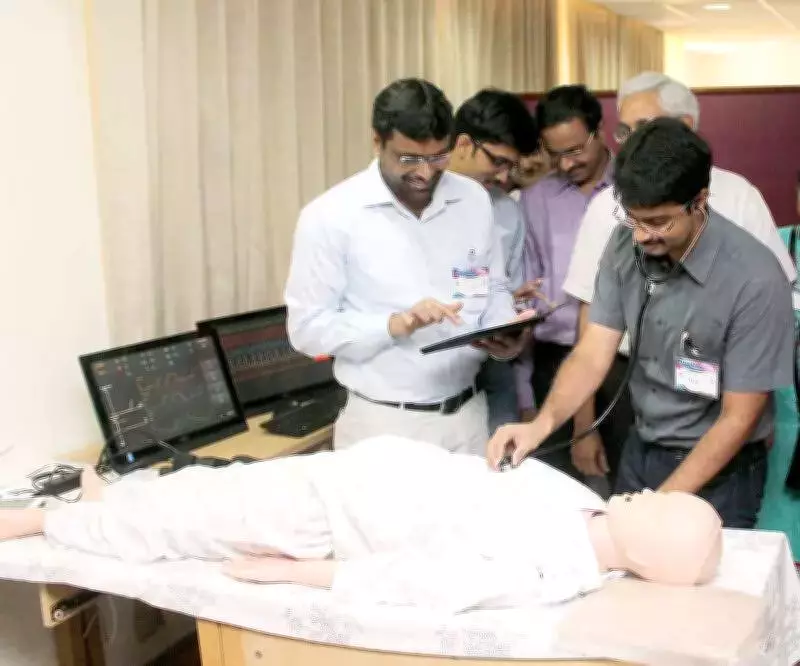
Advanced Training with Mannequins to Improve Clinical Skills
Dr. T Gangadhara Gouda, director of BMCRC, who submitted the proposal to the government, emphasized that the new equipment will enable doctors to train on mannequins before treating actual patients. This approach, standard in many Western countries, aims to strengthen clinical skills by allowing medical professionals to practice procedures such as conducting deliveries, intubating unconscious patients, performing CPR for those in shock, and managing myocardial infarction without risking patient safety.
"Instead of medical professionals attempting procedures directly on patients, they can first practice on mannequins. This is standard practice in many Western countries," Dr. Gouda stated, highlighting the importance of simulation-based training in improving healthcare outcomes.

Focus on Research and Innovation in Medical Technology
Mohammad Mohsin, principal secretary for medical education, revealed that the Ballari facility will place a stronger emphasis on research and innovation. The center will conduct studies on advanced equipment, computer simulations, treatment protocols, and pathological tests. Drawing inspiration from similar labs at Bangalore Medical College (BMC), which have become hubs for medical research producing around 23 research scholars annually with scholarships, the department is exploring clinical trials and innovations in medical equipment.
Potential collaborations with state-run research institutions such as the Indian Institute of Science (IISc), Council of Scientific and Industrial Research (CSIR), and Indian Council of Medical Research (ICMR), as well as private partners, are under consideration to foster a robust ecosystem for medical advancements.
Addressing Regional Healthcare Disparities and Income Inequalities
Dr. Ramesh Babu, Ballari district health officer, noted that the skills center will introduce state-of-the-art medical technology to a region currently lacking such facilities. "These simulations and innovations will not only improve access to better medical technology but also provide much-needed training to professional cohorts in the region — including lab technicians and X-ray technicians," he explained.
The 65-year-old institute has steadily grown in reputation, attracting patients from neighboring districts like Chitradurga and Vijayanagar, as well as from Andhra Pradesh. Dr. Babu also pointed out the stark income inequalities in Ballari and surrounding areas, underscoring that quality public health infrastructure remains a crucial lifeline for the poor in an otherwise fragmented healthcare landscape.
Comprehensive Training for Diverse Medical Professionals
Medical Education Minister Sharanprakash Patil emphasized the broader impact of the initiative, stating, "The lab in Ballari will cater to medical colleges and hospitals around who want to skill paramedical, nursing staffers, doctors, postgraduates, and superspecialists." This comprehensive approach aims to uplift the entire healthcare workforce in the region, ensuring that advanced training and technological benefits reach a wide array of medical personnel.
By integrating simulation-based training with research and innovation, the Ballari Medical College and Research Centre is poised to set a new standard for maternal care and medical education in Karnataka, potentially reducing maternal mortality rates and enhancing overall healthcare delivery in underserved areas.






