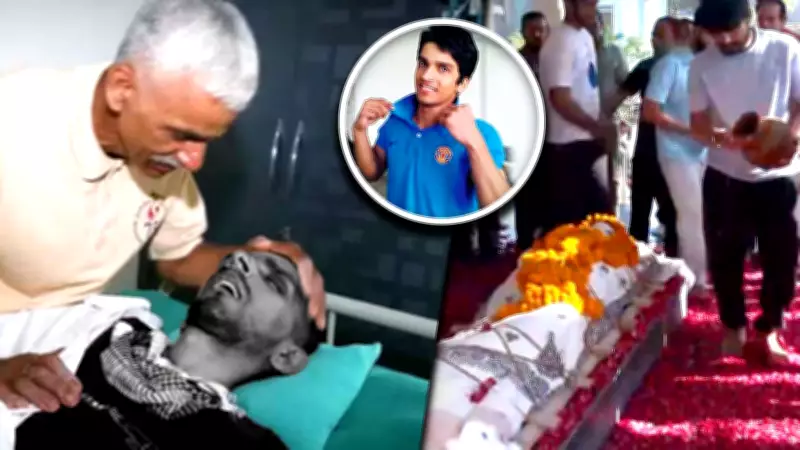
Harish Rana Cremated: India's First Passive Euthanasia Case Concludes
A significant milestone in India's legal and medical history has been reached with the cremation of Harish Rana, who passed away after becoming the nation's first patient to undergo legally sanctioned passive euthanasia. This landmark event concludes a tragic 13-year period during which Rana remained in a persistent vegetative state, unable to recover despite extensive medical care.
Supreme Court's Historic Decision
The Supreme Court of India granted permission for the withdrawal of life-sustaining treatment for Harish Rana, making this the first actual implementation of passive euthanasia following the legal precedent established in the Aruna Shanbaug case. This decision moves the concept from theoretical legal discussion to practical medical reality, setting a crucial example for future cases involving patients with no hope of recovery.
Medical Protocol at AIIMS
The procedure was carefully conducted at the All India Institute of Medical Sciences under strict medical supervision and monitoring protocols. Medical professionals followed established guidelines to ensure the process was carried out with dignity and in accordance with ethical standards, marking a carefully controlled transition from life-sustaining measures to natural death.

Legal Framework and Future Implications
This case highlights the urgent need for a comprehensive legal framework to guide similar decisions in India's complex healthcare environment. As medical technology advances and more patients face prolonged vegetative states, structured guidelines become essential for:
- Protecting patient rights and dignity
- Providing clear protocols for medical professionals
- Establishing ethical standards for end-of-life decisions
- Creating legal safeguards for families and healthcare providers
The successful implementation in Rana's case demonstrates that passive euthanasia can be conducted responsibly within India's medical and legal systems. However, it also underscores the necessity for clearer legislation to address the ethical, medical, and legal complexities that will inevitably arise as similar cases emerge across the country.
A Turning Point in Medical Ethics
Harish Rana's case represents a profound turning point in how India approaches end-of-life care and patient autonomy. The 13-year duration of his coma, followed by the carefully considered decision to withdraw treatment, illustrates the difficult balance between preserving life and recognizing when medical intervention no longer serves the patient's best interests.
This development is expected to influence medical ethics discussions, legal reforms, and healthcare policies nationwide, as India grapples with the complex intersection of technology, medicine, and human dignity in cases of irreversible medical conditions.