The Body's Silent River: Understanding the Lymphatic System
The human body is not merely a circulatory machine powered by the heart. Alongside the cardiovascular network runs a quieter, often overlooked system — the lymphatic system — which performs functions critical to immunity, fluid homeostasis and fat absorption. For UPSC aspirants, this topic bridges General Science, Health Policy and current affairs related to non-communicable diseases and public health infrastructure.
What is the Lymphatic System?
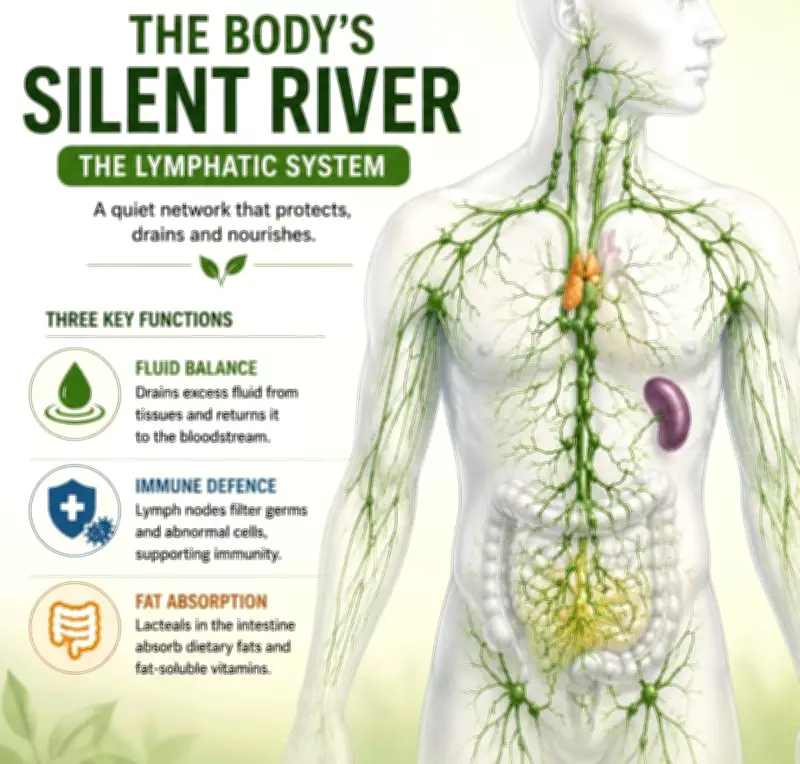
The lymphatic system is a unidirectional network of thin-walled vessels, nodes and organs that collects interstitial fluid (excess fluid between cells), processes it through lymph nodes and returns it to the bloodstream. Unlike blood circulation, which operates in a closed loop driven by cardiac pressure, lymph moves in only one direction — from peripheral tissues back toward the heart — propelled by skeletal muscle contractions, breathing and smooth muscle activity in vessel walls.
The fluid within this system, called lymph, is a colourless liquid rich in lymphocytes — white blood cells central to adaptive immunity.

Three Primary Functions
- Fluid regulation: Collects and redirects excess interstitial fluid, preventing tissue swelling.
- Immune surveillance: Lymph nodes filter pathogens, foreign particles and abnormal cells, triggering immune responses as required.
- Lipid transport: Specialised lymphatic vessels in the small intestine called lacteals absorb dietary fats and fat-soluble vitamins, transporting them via chyle into the bloodstream.
When the System Fails: Lymphoedema
Lymphoedema is a condition characterised by chronic swelling due to impaired lymphatic drainage. It is classified into two categories:
- Primary lymphoedema arises from congenital or genetic anomalies affecting lymphatic vessel development. It may manifest at birth, during puberty or in early adulthood.
- Secondary lymphoedema results from external damage to the lymphatic system. Common causes include surgical removal of lymph nodes during cancer treatment, radiation-induced damage, parasitic infections (notably Wuchereria bancrofti, the causative agent of lymphatic filariasis — a major public health concern in India), and trauma.
Lymphoedema compromises immune function locally, increasing susceptibility to bacterial infections such as cellulitis — a potentially severe skin infection.
Lymphatic Filariasis: A Public Health Priority in India
India bears a significant burden of lymphatic filariasis, commonly known as elephantiasis. The National Vector Borne Disease Control Programme, now integrated under the National Centre for Vector Borne Diseases Control, implements the National Elimination Programme for Lymphatic Filariasis, which uses Mass Drug Administration strategies with DEC and Albendazole. India aims to eliminate lymphatic filariasis as a public health problem — a goal aligned with WHO's Global Programme to Eliminate Lymphatic Filariasis.
Manual Lymphatic Drainage: Science vs Social Media
Manual lymphatic drainage (MLD) refers to a specialised massage technique used to redirect lymph fluid from congested areas in individuals with clinically diagnosed lymphoedema. It is performed by accredited lymphoedema therapists as part of a multimodal treatment approach that includes compression therapy, therapeutic exercise and structured skincare.
However, current evidence does not support MLD as a standalone treatment with significant or sustained outcomes for lymphoedema. Claims circulating on social media platforms suggesting that MLD improves skin texture, enhances facial contours or delivers aesthetic benefits lack robust scientific backing. Any observed effects are likely transient and cosmetically superficial.
Key Takeaway for Policy and Health Literacy
Distinguishing evidence-based medical interventions from wellness trends propagated through social media is increasingly relevant to public health communication — a theme that intersects with India's Digital Health Mission and media literacy efforts.

SEO Keywords
Lymphatic system UPSC, lymphoedema India, lymphatic filariasis elimination India, manual lymphatic drainage, lymphocytes immunity UPSC, NCVBDC, NHM vector-borne diseases, public health UPSC GS2, lymph nodes function, general science UPSC prelims