

Maharashtra Government Admits Regulatory Gap Over Illegal Pathology Labs
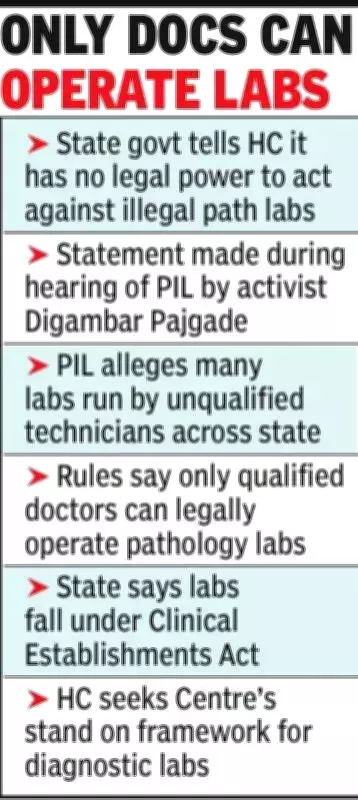
In a significant development, the Maharashtra government has acknowledged a critical regulatory gap affecting pathology labs across the state. During a hearing at the Nagpur bench of the Bombay High Court on Thursday, state authorities revealed they do not possess the legal authority to take action against illegal diagnostic centers operating within Maharashtra.
Public Interest Litigation Highlights Public Health Threat
The statement emerged during proceedings of a criminal public interest litigation filed by social activist Digambar Pajgade. Pajgade, appearing in person, argued that numerous pathology labs are being operated by unqualified technicians, creating a substantial threat to public health. He emphasized that current regulations permit only qualified medical professionals—specifically MBBS doctors with specializations in pathology, microbiology, or biochemistry—to legally run pathology labs.
Pajgade alleged that thousands of labs throughout Maharashtra are instead managed by technicians holding only technical qualifications, such as a diploma in medical laboratory technology (DMLT) or certificate in medical laboratory technology (CMLT). This practice, he contended, compromises diagnostic accuracy and patient safety.

State Government's Legal Position
In response, the state government submitted an affidavit through Dr. Suvarna Kharat, joint secretary of the medical education and drugs department. The affidavit clarified that regulating pathology labs does not fall under the department's jurisdiction. It explained that while hospitals in Maharashtra are regulated under the Bombay Nursing Homes Registration Act, pathology labs and other medical facilities are governed by the Clinical Establishments (Registration and Regulation) Act, 2010—a central government legislation.
Since the regulation of diagnostic labs is covered by this central law, the state government suggested it lacks direct authority to enforce actions against such establishments. This admission underscores a significant gap in state-level oversight for medical diagnostics.
Court Proceedings and Future Directions
The case was heard by a division bench comprising Justices Anil Kilor and Raj Wakode. Acknowledging the seriousness of the issue, the bench postponed the hearing to March 10 to allow for further clarification. The court requested deputy solicitor general Kartik Shukul, representing the central government, to explain the Centre's position and detail the regulatory framework applicable to pathology labs.
NS Rao represented the state government during the hearing. The bench's directive aims to resolve the jurisdictional confusion and establish clear regulatory responsibilities to address the public health concerns raised by Pajgade.
Implications for Public Health and Regulation
This case highlights a pressing need for regulatory clarity in Maharashtra's healthcare sector. The operation of pathology labs by unqualified personnel poses risks of misdiagnosis and improper treatment, potentially endangering countless patients. The state's admission of limited authority points to systemic issues in medical regulation that require urgent attention from both state and central authorities.
As the hearing continues, stakeholders await further insights into how the central government plans to enforce the Clinical Establishments Act and whether amendments or collaborative measures will be proposed to strengthen oversight of diagnostic centers in Maharashtra.






