

PGI Chandigarh's Ambitious Vision 2047: Underground Tunnel and Free Metro to Unify Campuses
In a groundbreaking move to transform healthcare delivery, the Postgraduate Institute of Medical Education and Research (PGI) in Chandigarh has unveiled a comprehensive strategic plan as part of its long-term "Vision 2047". The initiative aims to seamlessly integrate the institute's main campus with the upcoming 50-acre satellite centre at Sarangpur through a dedicated underground tunnel and an internal free metro service, creating a unified "One Campus" model.
Strategic Integration Through High-Tech Infrastructure
The proposed high-tech underground link, currently undergoing feasibility assessment, is designed to function as both a clinical and logistical corridor. Officials emphasize that the goal is to ensure the Sarangpur expansion operates as an organic extension of the main institute, rather than a separate referral unit. This integration is critical to addressing the severe congestion at the existing campus, which is functioning far beyond its designed capacity.
PGI director Prof Vivek Lal highlighted the benefits, stating, "Once approved, it will reduce traffic and rush. We are committed to taking this proposal forward to the ministry to ensure a smoother experience for patients and visitors alike." The project is set to be presented soon before the Union Ministry of Health and Family Welfare for approval.

Addressing Critical Congestion and Capacity Issues
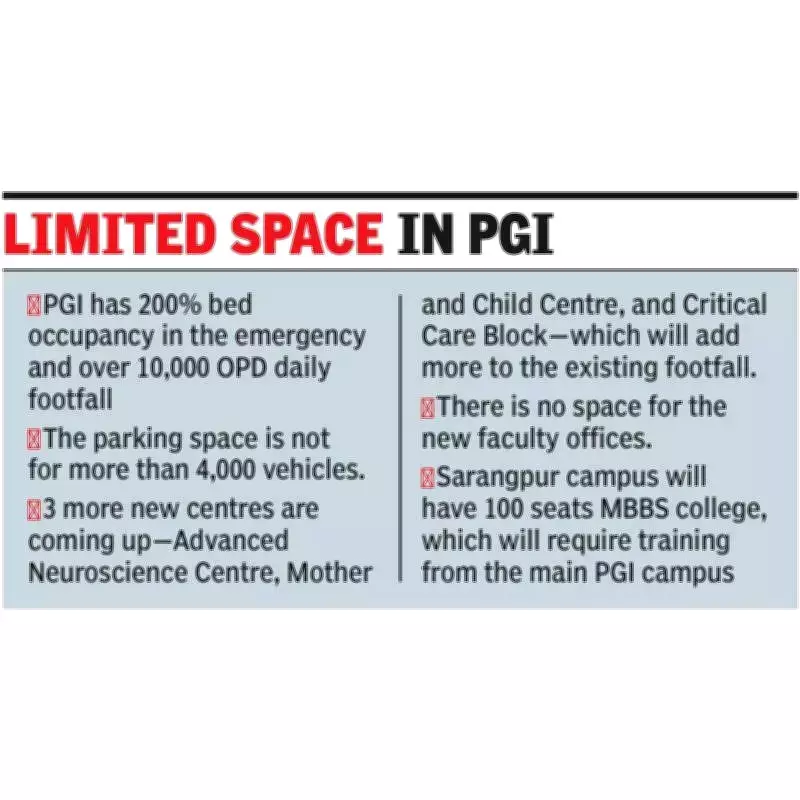
The push for expansion stems from urgent needs to decongest the main campus. Current statistics reveal alarming pressures:
- 200% bed occupancy in the emergency department.
- Over 10,000 daily footfall in outpatient departments (OPDs).
- Parking space limited to 4,000 vehicles, insufficient for current demand.
- No available space for new faculty offices.
The UT administration allocated land in Sarangpur on the condition that primary outpatient services be shifted there, helping to alleviate traffic jams and parking shortages at the main site. By relocating screening OPDs to Sarangpur, PGI expects to filter patient inflow at the periphery, allowing the main campus to focus on high-end tertiary care.
Inspired by AIIMS Delhi and Enhanced Emergency Response
The proposal draws inspiration from AIIMS, New Delhi, where a 614-metre tunnel has demonstrated significant logistical advantages. PGI officials note that their proposed link would not only save time but serve as a lifeline for emergencies. By bypassing the congested Madhya Marg, ambulances could transfer unstable patients between the two campuses within minutes, compared to the current 30 to 45 minutes during peak hours.
An official explained, "We plan to start free metro services for patients and other logistic services." This internal metro is envisioned to facilitate smooth movement for all stakeholders, including faculty and resident doctors who need to transition between surgical duties and teaching assignments without traffic delays.
Streamlining Medical Logistics and Future Expansions
The underground tunnel is expected to streamline the movement of medical resources significantly. Dedicated internal corridors could incorporate pneumatic tube systems for the rapid transfer of samples, biopsies, and critical drugs between the two centres, ensuring they remain unaffected by external conditions.
Looking ahead, PGI's expansion includes several new centres that will further increase footfall:
- Advanced Neuroscience Centre
- Mother and Child Centre
- Critical Care Block
Additionally, the Sarangpur campus will feature a 100-seat MBBS college, which will require training and support from the main PGI campus, underscoring the need for efficient connectivity. This holistic approach under Vision 2047 aims to future-proof PGI's infrastructure, enhancing its role as a premier healthcare institution in India while improving patient care and operational efficiency.






