

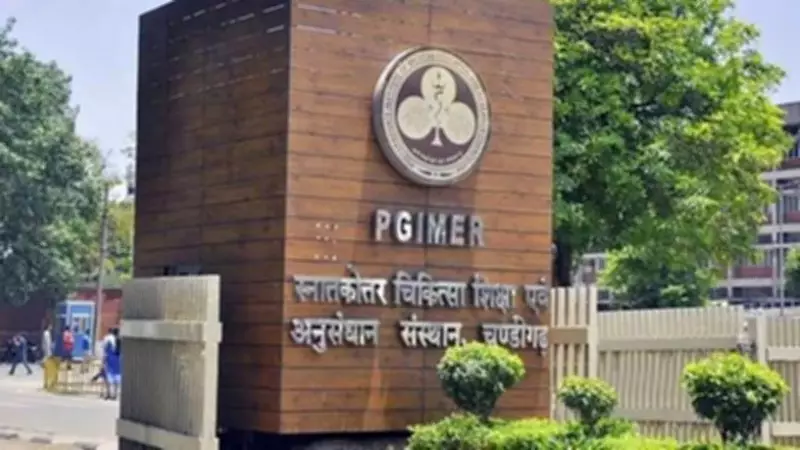
PGIMER Chandigarh Secures Record Budget Allocation of Rs 2,559.65 Crore in Union Budget 2026-27
The Post Graduate Institute of Medical Education and Research (PGIMER) in Chandigarh has been granted its highest-ever budgetary allocation of Rs 2,559.65 crore in the Union Budget for the fiscal year 2026-27. This represents a significant increase of Rs 141.79 crore, or approximately 4.4%, over the revised estimates of the previous financial year, which stood at Rs 2,400 crore.
Historical Budget Trends and Current Allocation Breakdown
This allocation marks a continued upward trend in funding for the premier medical institute. In the 2025-26 fiscal year, PGIMER received Rs 2,417.86 crore, followed by Rs 2,400 crore in 2024-25, and Rs 2,225 crore in 2023-24. The latest budget of Rs 2,559.65 crore is specifically designed to cover essential expenses related to patient care, staff salaries, and infrastructure development.
The budget breakdown includes:

- Rs 390 crore allocated for the creation of capital assets, such as new buildings, advanced medical equipment, and machinery.
- Rs 1,450 crore provided under grant-in-aid for salaries to support the institute's workforce.
- Rs 550 crore earmarked under grant-in-aid (general) to meet ongoing operational expenses.
- Rs 10 crore allocated under the Special Assistance Programme (SAP) head for targeted initiatives.
According to PGIMER officials, this initial allocation may be supplemented with additional funds through supplementary grants later in the year, depending on expenditure patterns and emerging institutional requirements.
Strategic Roadmap and Infrastructure Expansion Plans
PGI Director Prof Vivek Lal has outlined a comprehensive and focused roadmap for 2026, aimed at strengthening healthcare delivery, enhancing medical education, and expanding outreach programs. The increased budget allocation is expected to accelerate several key projects, including:
- A state-of-the-art Advanced Neurosciences Block, which is awaiting CT and MRI equipment, with operations slated to commence in April this year. Initial services will focus on outpatient departments (OPD), followed by emergency services.
- A comprehensive Maternal and Child Care Centre to improve specialized care for women and children.
- A dedicated Critical Care Block (CCB) with 150 beds, part of the Ayushman Bharat Health Infrastructure Mission, to enhance emergency and life-saving services. Construction has already begun after all necessary clearances were obtained.
Additionally, PGIMER plans to establish an MBBS undergraduate medical college to nurture future medical leaders. To bolster trauma response capabilities, two modern trauma centres are proposed at Sarangpur. Satellite centres at Una and Ferozepur will also be developed to decentralize tertiary care, improve regional access, and reduce the patient burden at the main Chandigarh campus.
Digital Transformation and Patient-Centric Upgrades
With daily outpatient departments (OPDs) witnessing over 10,000 patients, including a high number of referrals from Punjab, PGIMER is prioritizing digital upgrades to streamline services. The institute is replacing its Hospital Information System (HIS) 1.0 with an advanced HIS 2.0, aimed at transforming patient care and reducing waiting times.
The upgraded software project will introduce several new features gradually, such as:
- Online appointment systems for greater convenience.
- A mobile application for accessing a wide range of hospital services.
- QR code systems for registration, allowing patients to scan codes instead of standing in long queues.
According to Pankaj Rai, Deputy Director of Administration, a pilot project for these digital initiatives has already commenced in Sangrur, with full implementation at PGIMER expected within a couple of months. These enhancements promise to simplify processes like registration, bill payments, test report tracking, and appointment scheduling, ultimately improving the overall patient experience.

The record budget allocation underscores the government's commitment to advancing healthcare infrastructure and medical education in Chandigarh, positioning PGIMER as a leader in innovative and accessible healthcare solutions.





