

Ahmedabad Research Uncovers Genetic Factors in Male Infertility
A recent study conducted in Ahmedabad has made a significant discovery about male infertility in India. Researchers found that genetic reasons play a crucial role alongside lifestyle factors. This finding challenges common assumptions and opens new doors for diagnosis and treatment.
New Detection Method Improves Diagnosis
Conventional methods for identifying infertility causes typically detect only about four to five percent of cases. The new approach developed by researchers improves detection by an additional six to eight percent. This advancement offers fresh hope to couples who are planning to have children.
The study employed cutting-edge sequencing technology called single-molecule molecular inversion probes. This method can detect mutations in specific genes that are vital for sperm production, size, and movement. Key genes identified include PMFBP1, DNAH1, and AR.

Cystic Fibrosis Connection Revealed
Researchers made an important connection between cystic fibrosis and male infertility. While cystic fibrosis typically affects children with lung and pancreatic problems, the study found a different manifestation in some adults.
In certain cases, individuals carry one gene copy with a mildly disruptive mutation. These people do not develop the usual lung or pancreatic dysfunction. Instead, they experience blocked tubes in their testes. They produce sperm normally, but the passage through which sperm travels becomes obstructed, leading to infertility.
Comprehensive Study Details
The research titled 'Genetic diversity of infertile males in India' was published in the Journal of Assisted Reproduction and Genetics by Springer Nature. The team included Dr Harsh Sheth, Dr Pritti Priya, Dr Jayesh Sheth, Professor Joris Veltman, and other experts.
Dr Harsh Sheth, the lead author and head of the advanced genomic technologies division at the FRIGE Institute of Human Genetics in Ahmedabad, explained the study's origins. He noted that infertility in general, and male infertility specifically, has been increasing in India over recent decades. Patients often begin fertility treatments with more questions than answers.
The study enrolled 247 men with known infertility issues, primarily those with severe sperm abnormalities. Researchers examined their genetic makeup to understand underlying causes and common issues.
Along with conventional methods like karyotyping and azoospermia factor testing, the team used indigenously designed sequencing technology. This patent-protected approach targets specific gene regions responsible for sperm production and quality.
While earlier tests could detect only a handful of causes, the new sequencing technology allowed researchers to examine DNA at a single-letter level. This detailed analysis revealed many more responsible factors than previously possible.
Significance of the Research
This represents the largest study on male infertility from India and the second largest globally. A unique aspect involved comparing the DNA of infertile men with that of their parents. This comparison helped identify genetic causes that are present in the individual but not inherited from either parent.
Practical Benefits for Couples
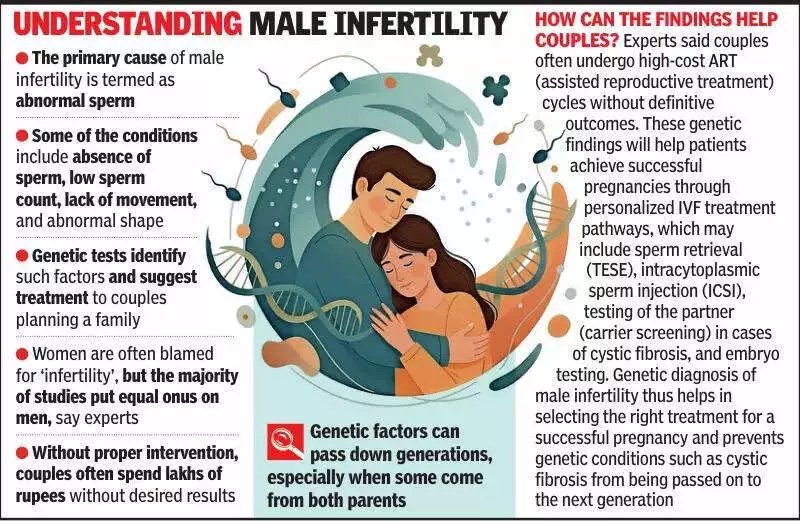
Experts emphasize that couples often undergo high-cost assisted reproductive treatment cycles without definitive outcomes. These genetic findings will help patients achieve successful pregnancies through personalized IVF treatment pathways.
Treatment options may include:
- Sperm retrieval procedures
- Intracytoplasmic sperm injection
- Partner testing for cystic fibrosis carrier screening
- Embryo testing
Genetic diagnosis of male infertility helps in selecting the right treatment option for successful pregnancy. It also prevents genetic conditions like cystic fibrosis from being passed to the next generation.
Understanding Male Infertility
The primary cause of male infertility involves abnormal sperm. Specific conditions include:
- Complete absence of sperm
- Low sperm count
- Poor sperm movement
- Abnormal sperm shape
Genetic tests can now identify these factors more accurately and suggest appropriate treatments for family planning.

Experts note that women are often unfairly blamed for infertility issues. The majority of studies indicate that men share equal responsibility. Without proper intervention, couples frequently spend substantial amounts of money without achieving desired results.
Genetic factors can be passed down through generations, especially when some mutations come from both parents. This makes accurate diagnosis and treatment planning even more critical for future family health.
The Ahmedabad study represents a major step forward in understanding and addressing male infertility in India. By combining advanced genetic analysis with practical treatment applications, researchers are providing new hope for couples struggling with fertility challenges.





