

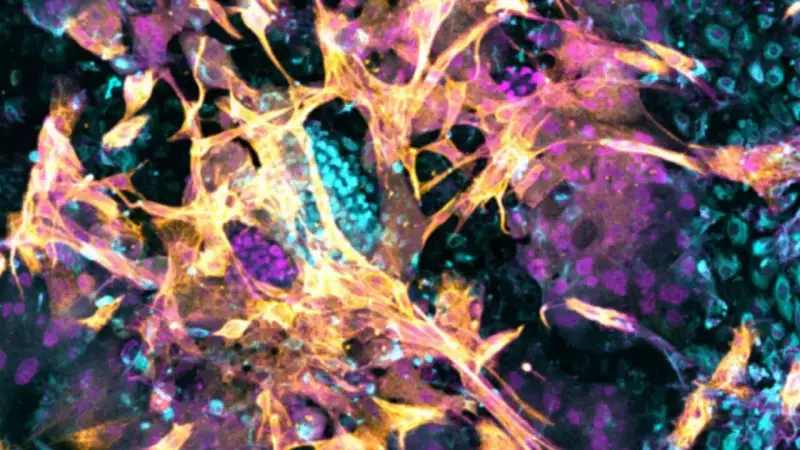
For decades, the earliest and most critical stage of human pregnancy has remained shrouded in mystery. Implantation, the process where a microscopic embryo attaches itself to the wall of the womb, has been nearly impossible to observe directly. This biological black box is a primary reason for many unexplained early pregnancy failures. Now, a groundbreaking study has finally shed light on this hidden process.
A Lab-Made Womb: Replicating the Uterine Environment
Researchers from Babraham University have achieved a significant scientific milestone by creating a functional, artificial model of the human uterine lining, known as the endometrium. To build this model, scientists first collected healthy uterine tissue samples from women. From these samples, they isolated two crucial cell types: stromal cells, which form the supportive structure, and epithelial cells, which create the surface where embryos attach.
The stromal cells were embedded into a biodegradable hydrogel to mimic their natural, soft environment. Epithelial cells were then grown on top of this layer, successfully recreating the architecture of the womb's inner lining in a laboratory bioreactor.

Embryos Thrive and "Talk" in the Artificial Lining
In a series of landmark experiments, the team introduced very early-stage human embryos—donated from IVF procedures—to their artificial womb lining. Remarkably, the embryos implanted successfully. Following implantation, they began secreting human chorionic gonadotropin (hCG) and other pregnancy-specific factors, confirming that the model could support key early developmental events.
This system allows scientists to monitor embryo development for up to 14 days post-fertilization, which is the legal limit for such research in many parts of the world. During this period, embryos start the vital process of differentiating into specialized cells, including those that will form the placenta.
One of the most profound insights from the study was observing the essential "chemical chatter" between the embryo and the lining. The research team could track the signals that facilitate attachment and guide tissue development. Crucially, when they blocked specific chemical signals, the development of placental tissue was disrupted, highlighting the precision required for a successful pregnancy.
Transforming Understanding and Treatment of Infertility
This innovation is set to revolutionize reproductive medicine. Implantation failure is a major cause of infertility and early pregnancy loss, but its root causes have been poorly understood due to the inaccessibility of the womb. This artificial model provides a powerful ethical tool to study these failures directly and test potential interventions.
Related research, including studies in China, is already exploring medications that could improve implantation success rates for patients suffering from Repeated Implantation Failure (RIF). The Babraham University model offers a perfect platform to validate and refine such treatments, moving from guesswork to targeted therapy.
By bringing the hidden first days of human life into clear view, this artificial womb lining marks a new era. It promises not only to unravel the fundamental biology of our beginnings but also to deliver hope and solutions to millions struggling to start a family.






