

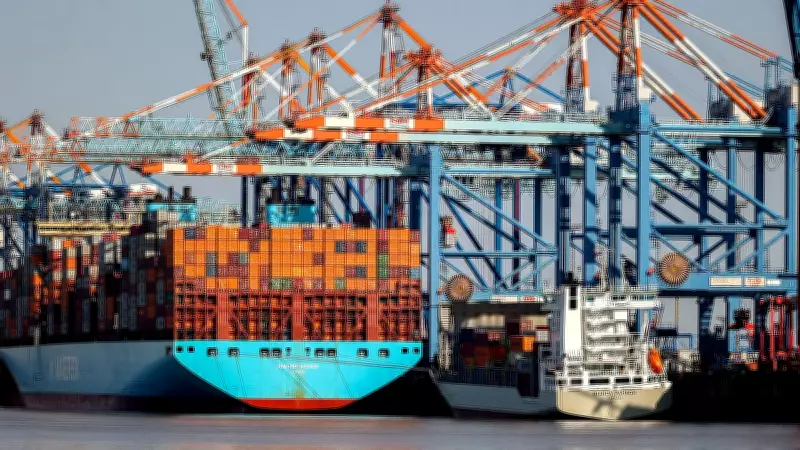
Maersk Suspends Critical Shipping Routes Amid Escalating Middle East Tensions
In a significant development impacting global maritime trade, Danish shipping conglomerate A.P. Moller-Maersk has announced an immediate pause on all vessel transits through the strategically vital Suez Canal and the adjacent Bab el-Mandeb Strait. This decisive action is a direct response to what the company describes as an escalating conflict situation in the region, posing heightened risks to maritime security and crew safety.
Escalation Prompts Full Suspension After Initial Rerouting
This complete suspension marks a sharp escalation from Maersk's position just days prior. On Friday, February 28th, 2026, the company had indicated it would only temporarily reroute a select number of its sailings away from the Suez Canal, opting for the much longer journey around the southern tip of Africa via the Cape of Good Hope. The latest decision to halt all traffic through these chokepoints underscores a rapidly deteriorating security assessment.
The Suez Canal, connecting the Mediterranean Sea to the Red Sea, and the Bab el-Mandeb Strait, a narrow passage between the Horn of Africa and the Arabian Peninsula, are among the world's most crucial maritime arteries. They facilitate a substantial portion of global container traffic and oil shipments between Asia and Europe.

Implications for Global Supply Chains and Trade
The operational pause is expected to have immediate and far-reaching consequences:
- Extended Transit Times: Ships forced to divert via the Cape of Good Hope face voyages that are thousands of nautical miles longer, adding significant delays—often 10 to 14 days or more—to delivery schedules.
- Increased Shipping Costs: The longer routes consume substantially more fuel and require additional crew resources, inevitably leading to higher freight rates and operational expenses.
- Supply Chain Disruptions: Industries reliant on just-in-time inventory, including automotive, retail, and manufacturing, may face shortages and logistical bottlenecks.
- Regional Economic Impact: Egypt, which derives crucial revenue from Suez Canal transit fees, could experience a notable financial setback.
Maersk's decision reflects a broader trend of caution among major shipping lines navigating the Red Sea and Gulf of Aden regions, which have seen increased volatility. The company has stated it is continuously monitoring the situation and will resume normal transit operations only when it deems the security environment to be sufficiently stable and safe for its vessels and personnel.
This development places renewed focus on the geopolitical tensions in the Middle East and their capacity to disrupt critical global infrastructure, reminding markets and governments of the fragility of interconnected trade routes in times of conflict.






