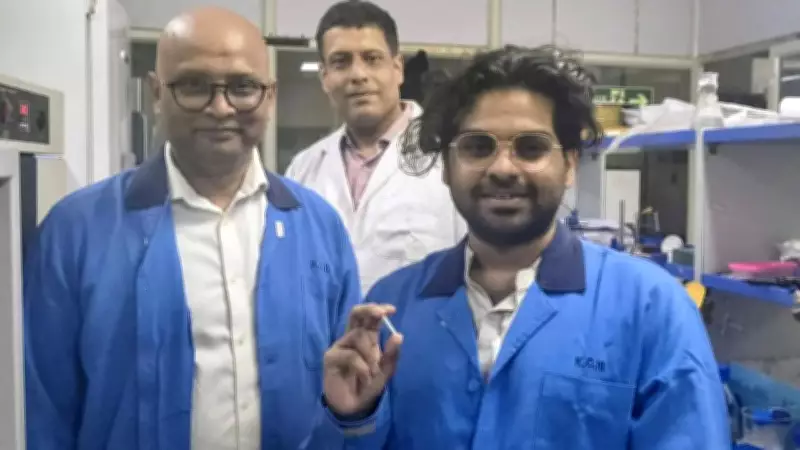
Bengaluru's Dissolving 'Asthana Stent' Moves Closer to Hospital Implementation
A groundbreaking medical device developed in a Bengaluru laboratory is advancing toward clinical application, promising to reduce the need for repeat procedures following major abdominal surgeries. This innovation, known as the "Asthana Stent," represents a collaborative effort between liver transplant surgeon Dr. Sonal Asthana from Aster CMI Hospital and a research team led by Professor Kaushik Chatterjee at the Indian Institute of Science (IISc). The project involves expertise from IISc's Departments of Materials Engineering and Bioengineering.
From Lab Prototype to Licensed Product
The technology has recently been licensed to Advanced Medtech Solutions Private Limited under an Indian Patent, marking a significant transition from a laboratory prototype to a potential operating room product. This step forward could soon bring tangible benefits to patients undergoing complex surgical interventions.
Addressing a Critical Surgical Challenge
The inspiration for this device stemmed from a persistent issue observed after liver transplant procedures. Surgeons must connect bile ducts, which are delicate structures that can subsequently develop leaks or narrowings. These complications affect between 11% and 40% of patients and frequently necessitate additional surgical interventions to correct.

Traditional solutions have relied on plastic stents to maintain duct patency during healing. However, these conventional approaches come with significant drawbacks. Some stents protrude externally from the body, requiring meticulous management and care. Others remain internal but must be extracted later through separate procedures, introducing additional costs, risks, and patient discomfort.
Innovative Biodegradable Design
The Asthana Stent introduces a novel approach by utilizing polydioxanone (PDS), a biodegradable polymer already employed in dissolvable surgical sutures. Once implanted within the body, this stent maintains the bile duct's openness for approximately six weeks. Subsequently, it gradually degrades and is absorbed by the body, eliminating any requirement for removal procedures.
Transforming this concept into a functional device required sophisticated engineering contributions from Thaseeb Rehman of the Materials Engineering Department and Saswat Choudhury of the Bioengineering Department at IISc. The team engineered the tube to remain patent under pressure and resist migration through innovative design features including surface ridges and velcro-like hooks. A flexible mid-section accommodates placement even when duct openings are misaligned, while tiny radiopaque markers enable physicians to monitor the stent's position using standard X-ray imaging.
Rigorous Testing and Performance Validation
Comprehensive testing demonstrated that the stent can withstand pressures exceeding 16 Newtons, significantly above the typical pressures experienced by bile ducts. The device maintained its structural integrity over six weeks in both laboratory conditions and human bile, covering the critical postoperative healing period when complications are most likely to occur.
Regulatory Pathway and Future Prospects
With the technology now licensed, attention shifts to manufacturing processes and regulatory approvals. The company will navigate the regulatory framework established by the Central Drugs Standard Control Organisation (CDSCO) to secure necessary clearances. The project has additionally received support from the Indian Council of Medical Research (ICMR), underscoring its potential significance for healthcare.
Upon receiving regulatory approval, the stent will be deployed during initial surgical procedures and will be available in multiple sizes to accommodate different anatomical requirements. For patients, the advantages are substantial: potentially reducing surgical interventions from two procedures to one, while simultaneously decreasing the likelihood of complications during recovery at home.
This development exemplifies how interdisciplinary collaboration between clinical medicine and engineering research can yield practical solutions to longstanding medical challenges, potentially improving outcomes for patients undergoing complex abdominal surgeries.