Navi Mumbai Doctor Performs Life-Saving Heart Procedure with Improvised Dialysis Catheter
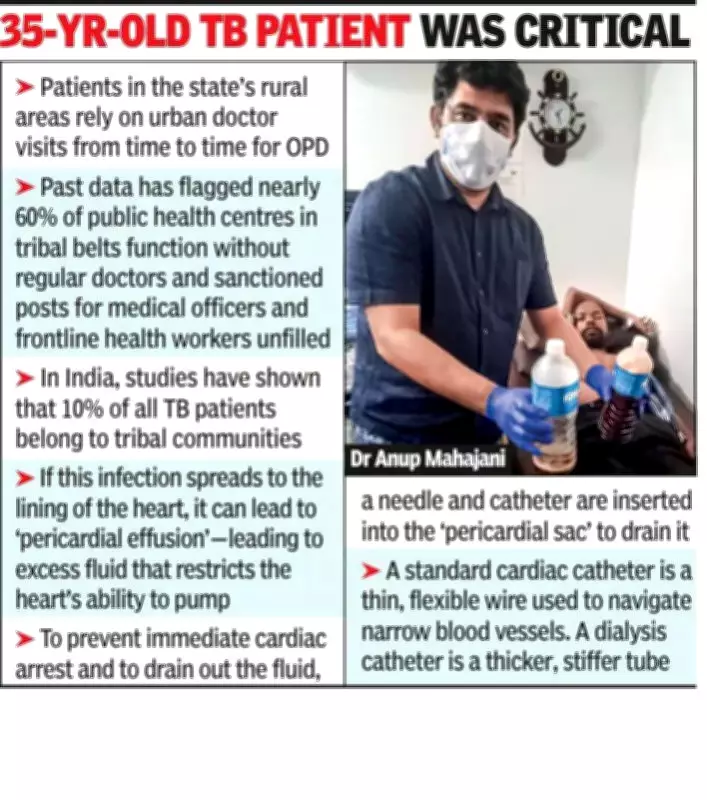
In a remarkable display of medical ingenuity, a doctor from Navi Mumbai saved a man's life using a kidney dialysis catheter when specialized cardiac equipment was unavailable within a 70-kilometer radius. The emergency unfolded at a rural nursing home in Roha, where Dr. Anup Mahajani, attached to Medicover Hospital in Navi Mumbai, was conducting his Sunday OPD.
Critical Patient Arrives with No Time to Spare
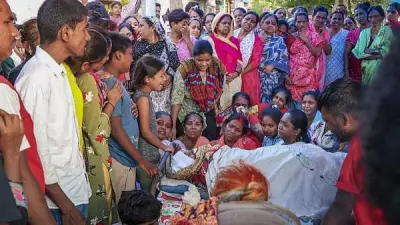
The patient, 35-year-old Manohar Pawar from the tribal community of Nandgaon, arrived critically ill after traveling 25 kilometers with his family. "I was about to leave when a group arrived with a man lying in the back of a van," Dr. Mahajani recalled. A 2D echo immediately revealed cardiac tamponade—a dangerous condition where fluid accumulates in the pericardial sac, putting deadly pressure on the heart.
The family was informed that the standard procedure required travel to a facility with a cardiac catheterization lab, but they insisted on immediate treatment. "They had no funds for further travel and realized time was running out," explained Dr. Mahajani. Manohar's wife, Vinita, highlighted the healthcare access challenges in their community: "Residents in our hamlet usually have no choice but to travel long distances to J J Hospital or MGM in Kamothe for advanced care."

Improvisation Becomes the Only Option
The standard treatment for cardiac tamponade is pericardiocentesis, which involves inserting a needle and guidewire into the pericardium to drain fluid. However, the specialized cardiac kit required for this procedure was completely unavailable at local pharmacies. "We called around, but no one had the cardiac kit," said Dr. Mahajani. "It clicked that a dialysis catheter functions similarly. The pharmacist had one in stock by luck, so we decided to move forward."
This decision carried significant risk. A cardiac catheter is typically thin and flexible, while a dialysis catheter is thicker and stiffer. Furthermore, Dr. Mahajani lacked access to fluoroscopy—the continuous X-ray imaging that guides such procedures in well-equipped facilities.
"Blind" Procedure in a Sonography Room
Working in a sonography room with adapted infection control measures, Dr. Mahajani performed the procedure "blind", relying solely on a 2D echo in one hand to guide the needle with the other. "Once the needle was inside, I had to confirm placement via echo while simultaneously operating," he described. As the fluid began to drain, the pressure on Manohar's heart eased dramatically.
The patient's blood pressure stabilized at 100/70 mm Hg, his breathing improved, and he regained consciousness. Approximately 1.5 liters of fluid was drained initially to avoid further risk, after which Manohar was transferred to JJ Hospital to complete the drainage. "He is getting better," his family confirmed.
Medical Community Recognizes Extraordinary Effort
Dr. Ajay Mahajan, head of the cardiac department at KEM Hospital, commented on the procedure's difficulty in resource-scarce settings. "It is a very easy procedure, but can be a challenge in resource-scarce setups. Anything can go wrong when it comes to the heart if using a dialysis catheter. The doctor had no choice but to save a life."
This incident underscores the critical healthcare access gaps in rural India and the extraordinary measures medical professionals must sometimes take to save lives when standard equipment is unavailable. The successful outcome demonstrates both medical expertise and creative problem-solving under extreme pressure.