

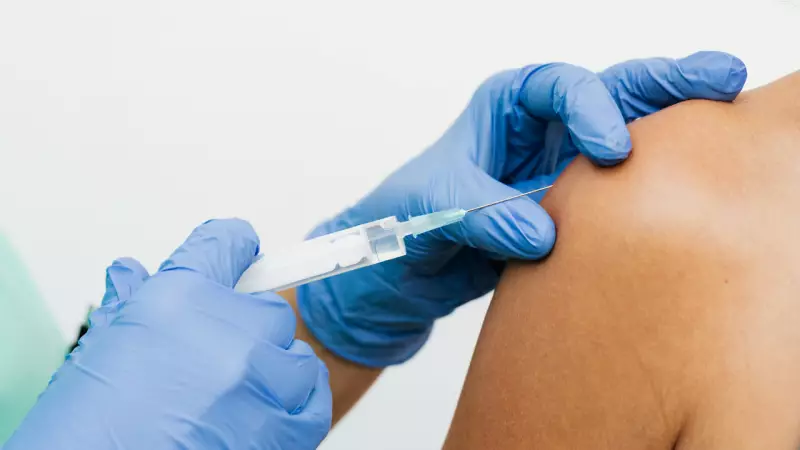
In a significant breakthrough for global health security, an experimental vaccine designed to combat the deadly Nipah virus has successfully cleared its first major hurdle in human testing. The pioneering clinical trial has demonstrated that the vaccine is well-tolerated and capable of provoking a protective immune response in healthy adults. This development, published in the prestigious medical journal The Lancet, offers a glimmer of hope for regions like India, which face recurrent and fatal outbreaks of the virus.
A Closer Look at the Groundbreaking Trial
The research centered on a vaccine candidate named HeV-sG-V. Originally developed to protect against the Hendra virus—a pathogen related to Nipah—it was found to be effective against Nipah as well. The science hinges on a surface protein called the G glycoprotein, which is shared by both viruses, allowing the vaccine to target them. The study was a Phase 1, randomized, placebo-controlled trial conducted at a single site in the United States, involving 192 healthy volunteers aged between 18 and 49 years.
Participants were divided into groups receiving either one or two doses of the vaccine at different concentrations or a placebo. The primary goals were straightforward but critical: to assess the vaccine's safety and its ability to kickstart the human immune system. The findings on both fronts have provided a strong foundation for future research.

Safety First: Excellent Tolerability Profile
The Phase 1 results brought reassuring news on safety, which is the foremost concern in early-stage trials. The vaccine exhibited a good tolerability profile across all dose levels and regimens. The most commonly reported side effect was mild to moderate pain at the injection site, which resolved on its own without intervention. Crucially, no severe adverse effects, hospitalizations, or deaths were linked to the vaccine among the trial participants. Scientists concluded that the risk profile is acceptable for all tested doses, a trend consistent with other new vaccines in early development.
Immune Response: Two Doses Show Superior Effect
The second key finding related to immunogenicity—the vaccine's ability to trigger a defensive immune response. The outcome was positive but nuanced. While a single dose led to detectable antibodies against the Nipah virus within about a month, it was insufficient for a robust, protective reaction. However, a two-dose regimen proved significantly more effective.
The strongest immune response was observed in participants who received two 100-microgram injections, spaced 28 days apart. Notably, levels of neutralizing antibodies—the kind that can directly disable the virus—rose substantially within a week after the second dose and remained detectable for some time. This suggests the vaccine could potentially be used both for preventive vaccination of high-risk groups and during outbreak responses, though real-world efficacy is yet to be proven.
Why This Trial is a Global Milestone
For experts in India and worldwide, this trial represents a major leap forward. Nipah virus outbreaks, with their high mortality rate and respiratory transmission, pose a severe threat in South and Southeast Asia. An editorial in The Lancet accompanying the study hailed it as a milestone in Nipah vaccine development. Until now, all candidate vaccines had stalled at the animal testing stage, despite showing promise in models like hamsters and non-human primates. This is the first completed human trial to confirm both safety and immunogenicity for a Nipah-targeting vaccine.
The research was funded by the Coalition for Epidemic Preparedness Innovations (CEPI), which lists Nipah as a priority pathogen. For communities, particularly in Kerala and other parts of India that face outbreaks on an alarming cycle, the progress of a viable vaccine into human clinical trials is a positive step forward, offering both scientific and psychological reassurance.

The Road Ahead: Caution Amidst Optimism
Despite the promising data, experts urge caution. This vaccine is not yet ready for widespread use. Phase 1 trials are small and cannot determine a vaccine's actual effectiveness in preventing disease, hospitalization, or death. The path forward requires larger Phase 2 and Phase 3 trials to confirm safety in broader, more diverse populations and to establish the level of protection it offers in real-world scenarios.
There is currently no approved vaccine or specific treatment for Nipah virus infection anywhere in the world. Therefore, while this first-in-human trial confirms that the immune system reacts appropriately to the candidate without major safety red flags, it will take several more years of rigorous testing to determine if this hopeful beginning translates into a practical tool for countries on the frontlines of Nipah outbreaks.





