

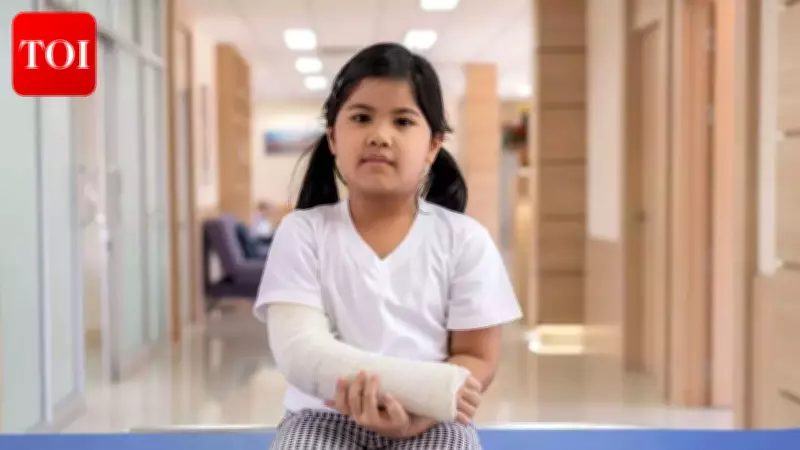
Mozambique Girl's Life Transformed by Rare Surgery in India
An 11-year-old girl from Mozambique, Ancha, embarked on a journey to India with her father, who was seeking treatment for cancer. Little did they know that this trip would lead to a life-changing medical breakthrough for Ancha herself. Born with left birth brachial plexus palsy, a condition that severely limited movement in her left arm since birth, she had adapted to a childhood of challenges, writing with difficulty and avoiding playground games, never experiencing the freedom of using her left hand fully.
A Childhood Adjusted Around One Arm
Ancha's condition involved co-contraction, where her shoulder and arm muscles worked against each other, preventing her from bending her elbow or raising her arm. Over the years, this led to permanent shortening of some shoulder muscles, though good physiotherapy preserved her joint structures. Her family had long accepted this as untreatable, focusing instead on daily life adjustments.
The Surgical Innovation That Changed Everything
During her father's consultations at Amrita Hospital in Faridabad, a casual question about Ancha's arm sparked hope. Dr. Anil Murarka and Dr. Mohit Sharma, plastic and reconstructive surgeons, evaluated her case and saw an opportunity for innovation. Instead of conventional methods like Botulinum toxin injections or invasive nerve transfers, they opted for a highly specialized hyper-selective neurectomy (HSN) combined with a modified tendon release and transfer.

This rare procedure, typically not performed on children her age, involved meticulously identifying and cutting specific terminal muscular branches under an operating microscope during a five-hour surgery. Dr. Devajyoti Guin, Senior Consultant and Lead of Brachial Plexus Surgery at the hospital, explained, "Restoring balance between opposing muscle groups was key. We tailored HSN, usually used for spasticity, to address her co-contraction, achieving dramatic results in days."
The First Movement and Rapid Recovery
Post-surgery, Ancha hesitated when asked to bend her elbow, but slowly, her left hand moved upward toward her face—a moment her father described as unforgettable. "We travelled because of my illness, but the biggest healing happened to my daughter. For the first time in 11 years, she lifted her hand herself," he said emotionally. Within just nine days, she was raising her arm above her head and using it for daily activities, marking a swift and remarkable recovery.
Addressing Late Childhood Brachial Plexus Palsy
Cases like Ancha's, presenting in late childhood with reduced brain adaptability, are particularly challenging. They require thorough clinical evaluation, precise diagnosis, and specialized management. The success at Amrita Hospital highlights the importance of a problem-solving approach using advanced surgical techniques to restore functionality and improve quality of life.
This story underscores how medical innovation and a patient-centric focus can turn unexpected opportunities into transformative healing, offering hope to families facing similar rare conditions worldwide.






