Kolkata Witnesses Sharp 20% Increase in Male Infertility Cases Over Past Decade
In a significant health trend, fertility experts in Kolkata have confirmed a nearly 20% rise in male infertility over the last ten years, challenging the common perception that infertility primarily affects women. This finding aligns with data from the Sample Registration System Statistical Report (SRSSR) of 2023, highlighting a growing concern in the region.
Men Now Constitute 35-40% of Infertility Cases in Kolkata
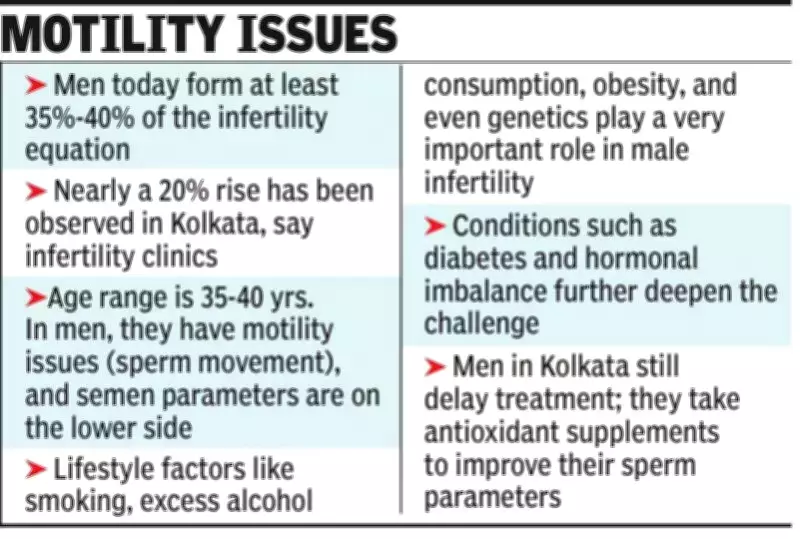
According to recent studies conducted by IVF centers in Kolkata, men today form at least 35% to 40% of the infertility equation. This shift underscores a critical change in reproductive health dynamics, as societal norms often place the burden of childlessness on women.
Bengal's total fertility rate (TFR) has plummeted to 1.3, down from 1.7 in 2013, marking an 18% decline and falling far below the replacement level of 2.1, as reported by the SRSSR. This decline in fertility rates is compounded by the rising incidence of male infertility, which experts attribute to multiple factors.

National Trends Show Alarming Drop in Sperm Quality
Recent national studies reveal that only about a quarter of Indian men meet normal semen parameters. Sperm count has drastically decreased from 60 million per milliliter three decades ago to just 20 million today. The age group most affected by these issues is 35 to 40 years, with many men experiencing motility problems—where sperm movement is impaired—and overall lower semen parameters.
Fertility experts note that sexual disinterest often leads to delays in seeking professional help. More couples are now approaching clinics after over five years of marital life, with absent or nearly non-existent sexual activity, only to express a desire for children later.
Rise in Sexual Dysfunction and Related Infertility Issues
The study indicates a notable increase in sexual dysfunction-led infertility problems, such as erectile dysfunction and premature ejaculation. Sexual dysfunction affects at least 15% to 20% of men, with conditions like azoospermia—a complete absence of sperm—also being observed more frequently.
Dr. Dibyendu Banerjee, a gynaecologist at Charnock Hospital, agrees that male infertility is on the rise globally. "The primary reasons are stress, unhealthy diet, smoking, hypertension, diabetes, and hypothyroid conditions in men. Today, men are behind 30% to 40% of all infertility cases, yet women are still often held responsible if a couple cannot conceive," he explained. Dr. Banerjee advises men to undergo sperm count checks if conception does not occur within a year of trying.
IVF and Advanced Treatments Becoming Common Solutions
Since medications often cannot cure infertility, in vitro fertilization (IVF) has become the most frequently opted-for solution, according to Bani Kumar Mitra, founder and chief consultant at Abha Surgy Centre, an assisted reproduction facility. More intensive methods, such as intracytoplasmic sperm injections, are now being utilized, especially for individuals with sperm counts below 10 million or those not meeting desired levels.
Rohit Gutgutia, medical director of Nova IVF Fertility in Kolkata, reports that clinics are finding men represent 35% to 40% of all infertility cases. "Nearly a 20% increase in male-factor infertility is observed among those aged 35 to 40 years. The most common conditions involve poor sperm motility, abnormal sperm shape, and low sperm count," he stated.
Lifestyle Factors Play a Major Role in Male Infertility
While genetics can influence infertility in men, lifestyle choices are significant contributors. Factors such as smoking, alcohol consumption, obesity, stress, and poor sleep patterns adversely affect male reproductive health. Conditions like diabetes and hormonal imbalances further exacerbate these challenges.
Dr. Gutgutia added, "Many men delay seeking medical help, initially opting for antioxidants and supplements. When these fail, they return to us, but by then, the woman's age may have increased, reducing the success rate of treatments." This delay underscores the need for early intervention and awareness.

The rising trend of male infertility in Kolkata calls for increased public health initiatives and lifestyle modifications to address this growing issue effectively.