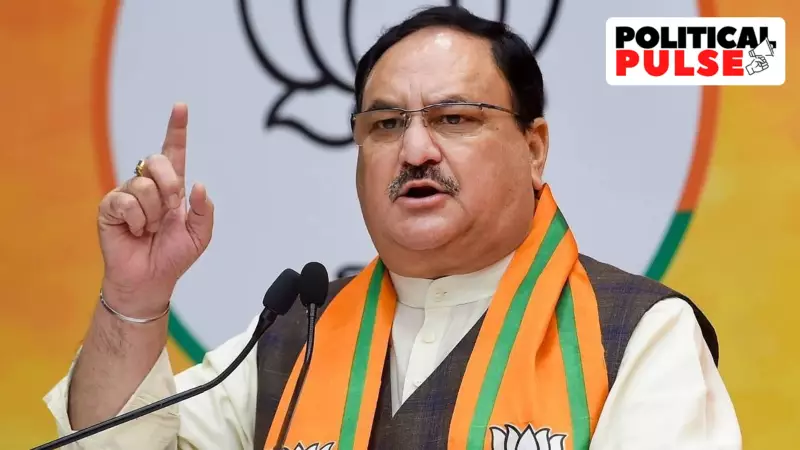
Union Health Minister Jagat Prakash Nadda delivered a strong message to medical graduates, emphasizing the significant public investment in their education and their consequent responsibility towards society. Speaking at the 21st convocation of King George's Medical University (KGMU) in Lucknow on Saturday, Nadda stated that while education is a right, medical education is a privilege funded heavily by the state.
A Privilege, Not a Birthright
Nadda explicitly distinguished medical education from other forms of schooling. He asserted that while school and college education can be considered a birthright, the same does not apply to medical studies. The government spends between Rs 30 to 35 lakh on each medical seat every year, a substantial investment that comes from public funds. He reminded the graduating doctors that they owe a debt to society for this opportunity and must bear the responsibility that comes with it.
"Institutions are here, facilities are here, and infrastructure is also here. Make use of them," Nadda advised the students. His comments came alongside the announcement that the state cabinet had recently sanctioned an additional 1000 seats in medical colleges, further expanding access.

No More Excuses: Infrastructure Boom Under Modi Govt
Addressing a common grievance among students who seek education abroad, the Health Minister declared that complaints about a lack of facilities in India are no longer valid. He presented data showcasing a dramatic transformation in the country's medical education landscape over the past 11 years.
Nadda highlighted that the number of All India Institute of Medical Sciences (AIIMS) has increased from just 1 to 23 under the leadership of Prime Minister Narendra Modi. Furthermore, he provided key statistics on the sector's growth:
- Medical colleges have risen from 387 to 819.
- Undergraduate (MBBS) seats have jumped from 51,000 to over 1,10,000.
- Postgraduate medical seats have grown from 31,000 to 80,000.
- An additional 7,500 postgraduate seats will be added in the current academic year.
"Therefore, our students can no longer complain about a lack of facilities and infrastructure," Nadda stated, adding that while aspirants are free to go abroad, the justification of poor domestic infrastructure no longer holds.
KGMU Honours Excellence, Pathak Emphasizes Service
Uttar Pradesh Deputy Chief Minister and Medical Education Minister Brijesh Pathak, who also attended the ceremony, emphasized the humanitarian aspect of the medical profession. He described doctors as torchbearers of humanity and service, not just medical professionals. He praised KGMU as a symbol of excellence that has produced skilled doctors serving the entire nation.
Pathak noted that KGMU is ranked among the top medical institutions in India, with several faculty members recognized as leading global scientists. During the convocation, 81 students and one faculty member were honoured for outstanding achievements in academics, research, and clinical services across various disciplines including MBBS, BDS, MD/MS, and Nursing. Gold medals and merit certificates were awarded to the achievers.
The event underscored the government's dual focus: massively scaling up hard infrastructure like colleges and seats, while simultaneously instilling a strong sense of ethical duty and service in the next generation of healthcare providers. The message was clear—the state has invested heavily, and now it expects a return in the form of committed service to the Indian public.