

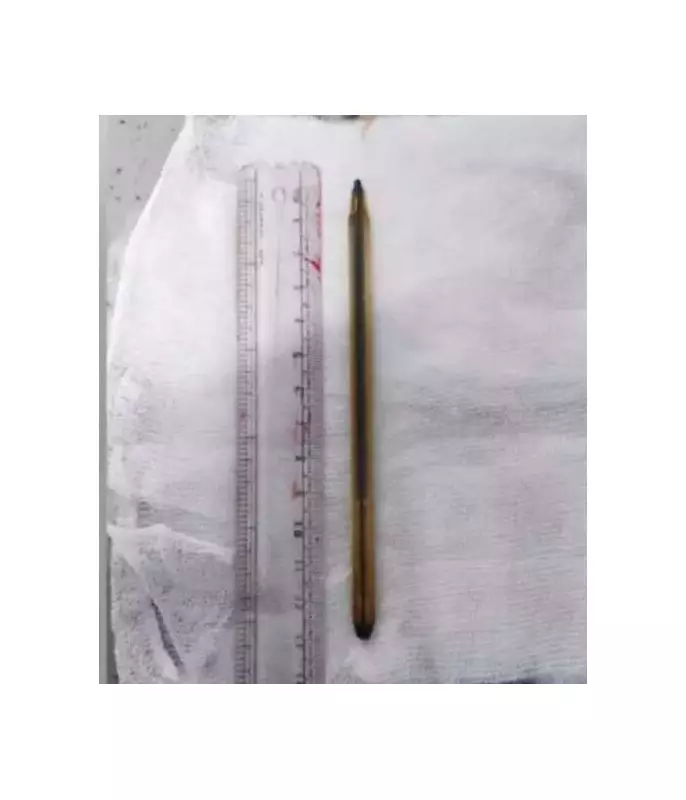
In a startling medical case from Andhra Pradesh, a teenage boy lived with a pen inside his abdomen for close to three years after swallowing it on a childhood dare. The object was finally extracted by specialists at the Government General Hospital (GGH) in Guntur, highlighting the severe risks of such stunts.
The Fateful Bet and Years of Silence
The incident traces back to three years ago when Ravi Murali Krishna was a student in class 9. What started as a casual wager of 50 rupees between friends took a dangerous turn. Acting on a dare, Krishna swallowed a pen. His friend reportedly promised to retrieve it, a promise that was, of course, impossible to keep.
Initially, Krishna did not suffer any major symptoms, which allowed the foreign object to go undetected. As minor discomfort began to surface over time, the boy, fearing reprimand, endured the pain in silence and never disclosed the incident to his parents.

Medical Crisis and Discovery
The situation reached a critical point on December 17. Krishna began experiencing unbearable abdominal pain, forcing his family to seek medical help. They first visited a private hospital, where doctors referred them to the gastroenterology department of the Guntur Government General Hospital (GGH).
Krishna was admitted to GGH on December 27. After a thorough examination, doctors located the pen, which was lodged in his large intestine. The medical team then performed a retrograde endoscopy with overtube procedure to safely remove the object without invasive surgery.
A Rare Case and a Vital Warning
Following the successful procedure, Krishna, now an intermediate student, finally revealed the full story to the doctors. Authorities at GGH stated that such prolonged cases of foreign body ingestion are rare. They used this opportunity to emphasize the critical importance of timely medical evaluation if a foreign object is swallowed.
The hospital also issued a strong caution to parents, advising them to monitor their children's activities closely and educate them against engaging in risky behaviour or dares that could compromise their health. This case serves as a stark reminder that what may seem like a harmless bet can lead to serious, long-term health complications.






