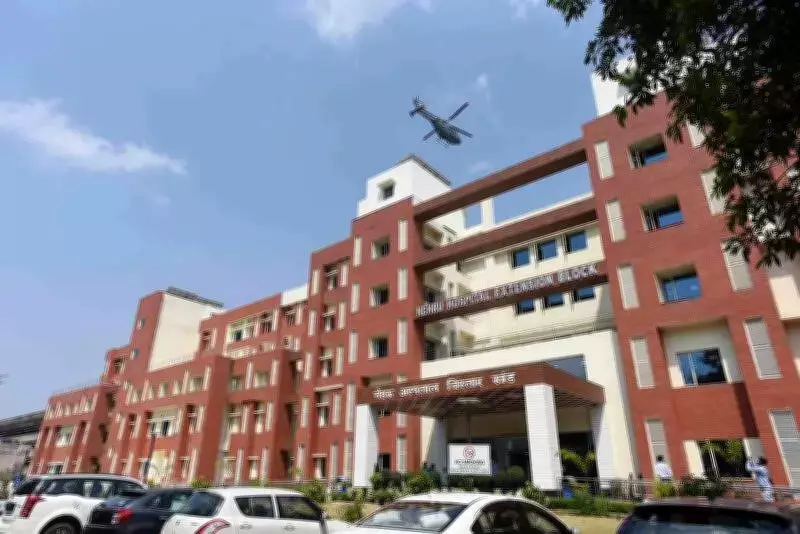
PGI Chandigarh's Bariatric Surgery Program Sees Resurgence with Three Key Procedures in 2025
In a significant development for metabolic healthcare in North India, the Department of General Surgery at the Postgraduate Institute of Medical Education and Research (PGI) in Chandigarh has witnessed a notable revival of its bariatric surgery program. After recording zero surgical cases throughout the entire year of 2024, the department successfully performed three high-impact Laparoscopic Sleeve Gastrectomy procedures during 2025, marking a substantial comeback for surgical weight loss interventions at the premier medical institution.
Surgical Revival Amid Global Medical Crossroads
This surgical resurgence arrives at a critical juncture in global medical discourse. As PGI scales its bariatric program, the international medical community is engaged in vigorous debate about whether traditional surgical approaches might eventually be overshadowed by pharmaceutical alternatives. Specifically, the rapid emergence and adoption of GLP-1 receptor agonist therapies—including medications like semaglutide and tirzepatide—has prompted serious discussion about the future role of bariatric surgery in comprehensive weight management strategies.
Under the leadership of Dr. L. Kaman, Head of the Department of General Surgery, PGI is strategically positioning bariatric surgery not merely as a weight loss tool but as what Dr. Kaman describes as a "metabolic rescue" intervention. This reframing emphasizes the procedure's capacity to address underlying metabolic disorders beyond simple weight reduction.

Patient Success Stories Highlight Program Impact
The program's renewed momentum is further strengthened by its exceptional affordability, offering these potentially life-altering procedures at approximately one-fourth the cost typically charged by private hospitals. This accessibility has translated into remarkable patient outcomes across diverse cases:
- A bride-to-be and former kickboxer achieved a dramatic transformation, shedding nearly 80 kilograms within just six months following her surgery. This weight loss enabled her to transition from a debilitating physical state back to athletic training and competition.
- A patient suffering from life-threatening obstructive sleep apnea (OSA) alongside gallstones underwent a single operative session that successfully addressed both conditions simultaneously, providing immediate respiratory relief and eliminating the need for multiple procedures.
- A 38-year-old man who had lost basic mobility due to excessive weight experienced a 40-kilogram reduction in just four months post-surgery, allowing him to return to an active lifestyle with his children and regain independence.
The GLP-1 Challenge: Surgery Versus Pharmaceutical Alternatives
The increase in PGI's surgical volume—from zero to three procedures—represents a meaningful milestone for 2025, yet this achievement unfolds against the substantial shadow cast by GLP-1 receptor agonists. Many bariatric surgeons express concern that surgical interventions might "lose their shine" as patients increasingly consider weekly injection therapies as alternatives to invasive procedures.
While GLP-1 medications offer a non-invasive approach to weight management, experts at PGI and other institutions are issuing important cautions. Unlike the definitive metabolic reset achieved through sleeve gastrectomy—which fundamentally alters gastrointestinal anatomy and hormone signaling—GLP-1 therapy typically requires lifelong medication adherence and presents specific risks:

- Clinical data indicates these pharmaceutical agents can potentially cause dangerously low blood sugar levels, particularly in certain patient profiles with specific metabolic characteristics.
- Drug-induced weight loss frequently reaches plateaus or reverses completely if medication regimens are discontinued, whereas surgical interventions generally produce more sustained metabolic changes.
Future Trajectory Remains Uncertain
As PGI advances its bariatric program, fundamental questions persist regarding its long-term direction. Will surgical interventions continue their upward trajectory as metabolic rescue procedures, or will the convenience of pharmaceutical "miracle jabs" transform these three surgical success stories into historical footnotes? The department's experience in 2025 provides both encouraging evidence of surgical efficacy and a case study in navigating evolving medical landscapes where multiple therapeutic approaches now compete for clinical relevance.
The renewed activity at PGI's bariatric surgery program demonstrates that surgical interventions retain significant value in specific clinical contexts, particularly for patients requiring comprehensive metabolic correction rather than单纯的 weight reduction. However, the program's future will likely depend on continued adaptation to pharmaceutical advancements while maintaining focus on patient-specific treatment planning that considers both surgical and non-surgical options.