

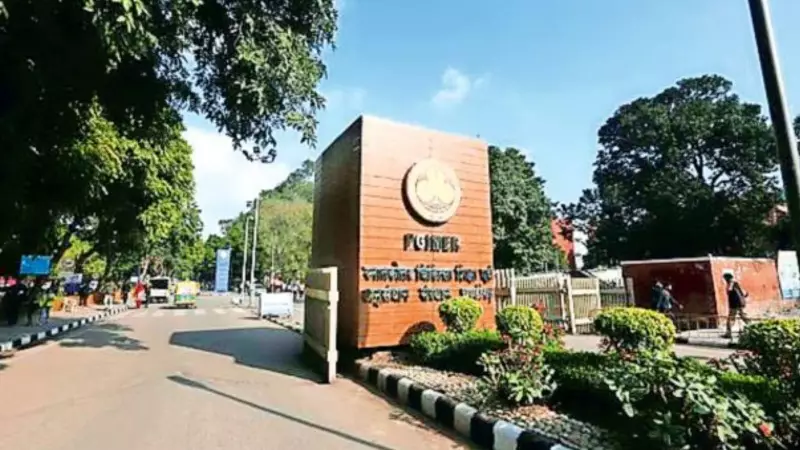
Contractual employees at the prestigious Postgraduate Institute of Medical Education and Research (PGIMER) in Chandigarh launched a hunger strike on Tuesday, escalating their protest over the non-payment of long-overdue wages amounting to a staggering Rs 55 crore. The workers are also demanding improved service benefits, even as the institute administration asserted that all hospital services continued to run smoothly.
Protest Over Unpaid Salaries and Broken Promises
The hunger strike, which commenced at 6 am, was observed by a section of the nearly 4,000 contract workers employed at the institute. According to the workers' Joint Action Committee (JAC), participants included sanitary attendants, sanitation supervisors, hospital attendants, bearers, and cooks from both morning and evening shifts. The JAC emphasized that the protest was conducted in a peaceful and democratic manner.
JAC chairman Ashwani Kumar Munjal stated that the drastic step was taken out of compulsion. He alleged that basic pay and dearness allowance dues have been pending since January 13, 2024. Munjal further claimed that arrears for sanitation supervisors, sewer workers, and staff posted at the Nehru Hospital Extension and the Sangrur satellite centre are also pending clearance.

The protestors expressed anger over an alleged unfulfilled written assurance given by the PGIMER administration on August 12. Their list of demands extends beyond the payment of pending wages. They are seeking maternity leave and medical benefits for women contract staff, payment of bonus, reinstatement of four security guards removed in November 2024, and parity in facilities with regular employees of the institute.
Institute's Response and Contingency Measures
In an official statement, PGIMER administration downplayed the impact of the strike on hospital operations. The institute claimed it successfully maintained full operational capacity due to a robust contingency plan. “Due to a robust contingency plan deployed by the administration, patient care across all departments remained entirely unaffected,” the statement read.
The institute provided data to substantiate its claim, noting that services including OPD, indoor wards, operation theatres, emergency, trauma, and diagnostics functioned normally. On the day of the strike, 8,770 patients were seen in the OPD, and 166 were treated in the Emergency and Trauma department. Furthermore, around 100 new patients were admitted, and 137 surgeries were performed. PGIMER stated that the majority of outsourced workers continued to perform their duties.
Impending Escalation if Demands Unmet
The Joint Action Committee has issued a stern warning, indicating that the protest will intensify if their grievances are not addressed promptly. The committee has given the administration a window of two to three days to reach a resolution.
Should their demands remain unmet, the JAC plans to chalk out further action, which includes organizing another one-day collective hunger strike in the first week of January. This looming threat of continued agitation casts a shadow over the new year, putting pressure on the institute's administration to find a swift solution to the financial and service-related issues raised by its crucial contract workforce.






