

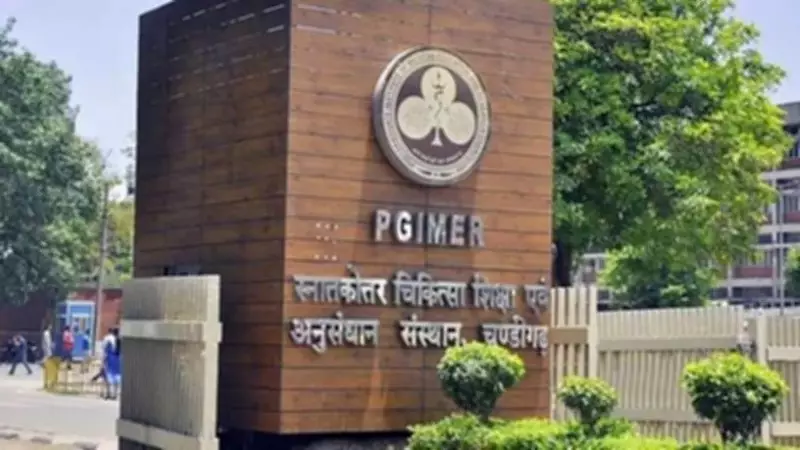
PGIMER Chandigarh Doctors Achieve Breakthrough in Treating Deadly Celphos Poisoning
In a significant medical advancement, doctors at the Postgraduate Institute of Medical Education and Research (PGIMER) in Chandigarh have reported a groundbreaking therapy for aluminum phosphide poisoning, commonly known as Celphos poisoning. This condition has long been considered one of the most fatal forms of poisoning, particularly prevalent in North India.
First Clinical Study Demonstrates Life-Saving Results
Conducted at PGIMER's Department of Internal Medicine, this pioneering study represents the first clinical research to establish the effectiveness of intravenous lipid emulsion as a novel, life-saving treatment for this highly lethal condition. The study's crucial findings have been published in the internationally acclaimed journal, European Review of Medical and Pharmacological Sciences, earning global recognition for addressing a major public health challenge.
Research Leadership and Institutional Support
The study was executed under the expert guidance of Sanjay Jain, Dean (Academics), Professor and Head of the Department of Internal Medicine at PGIMER. Jain's clinical leadership in emergency care proved instrumental in managing critically ill patients throughout the research. Funding for this vital study was provided by the Medical Education and Research Cell (MERC) at PGIMER, highlighting the institution's strong commitment to supporting clinically relevant and socially impactful medical research.

This randomized clinical trial was spearheaded by Mandip Singh Bhatia, Associate Professor of Internal Medicine, with Saurabh Chandrabhan Sharda serving as co-investigator, alongside other dedicated authors from the department.
Encouraging Clinical Outcomes
Patients who received intravenous lipid emulsion in addition to standard medical treatment demonstrated remarkable improvements:
- Marked reduction in mortality rates
- Faster correction of severe metabolic acidosis
- Improved hemodynamic stability, even in patients experiencing shock and cardiac complications
The findings clearly indicate that early administration of this therapy can substantially alter the clinical progression of aluminum phosphide poisoning, offering new hope where previously outcomes were often fatal.
A Practical and Accessible Treatment Solution
One of the most significant advantages of this novel treatment approach is its practicality and accessibility. Intravenous lipid emulsion offers several key benefits:
- Cost-effectiveness: The treatment is inexpensive compared to many advanced medical therapies
- Wide availability: Already stocked in most hospitals across India, including district hospitals and peripheral healthcare facilities
- Rural applicability: Its low cost and easy availability make it potentially life-saving even in remote areas where Celphos poisoning incidence is highest and access to advanced critical care is limited
Addressing a Critical Public Health Challenge
Aluminum phosphide poisoning continues to pose a serious public health threat, particularly in agricultural states such as Punjab, Haryana, and Uttar Pradesh. These regions bear the maximum disease burden due to the widespread use of this compound as a grain preservative. The development of an effective, affordable, and evidence-based treatment therefore holds immense importance for these areas, potentially saving countless lives and reducing the devastating impact of this poisoning on communities.
This breakthrough from PGIMER Chandigarh represents not just a medical advancement but a practical solution to a long-standing health crisis affecting vulnerable populations across North India.






