

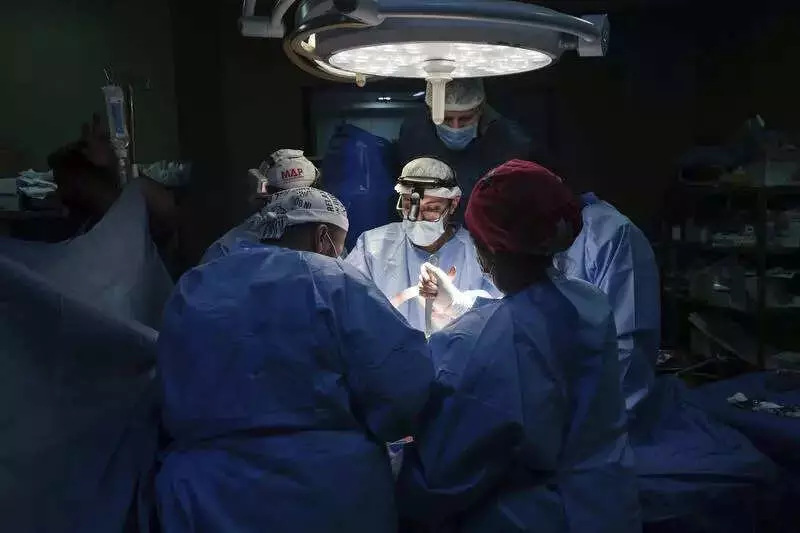
In a significant medical breakthrough for the city, a team of cardiologists in Pune has successfully performed its first-ever motorised Transcatheter Aortic Valve Implantation (TAVI) procedure. The life-saving surgery was conducted on a 61-year-old male patient suffering from a critical heart condition, offering a new lease of life to those deemed unfit for traditional open-heart operations.
A High-Risk Case Finds Hope
The patient, a resident of Pune, was admitted with symptoms of extreme fatigue and breathlessness, which were diagnosed as severe aortic stenosis. This condition involves a dangerous narrowing of the heart's aortic valve, severely restricting blood flow to the body. Complicating his case was a complex medical history that included systemic hypertension and a previous stroke. These factors rendered him a high-risk candidate, completely ruling out the possibility of conventional open-heart surgery due to the associated dangers.
The Precision of Motorised TAVI Technology
Faced with this challenge, the medical team at Jupiter Hospital, led by senior interventional cardiologist Dr. Tanmay Kulkarni, opted for the advanced motorised TAVI technique. "We chose the motorised TAVI procedure because it allows for minimal invasion and provides us with unparalleled technical precision to place the new valve exactly where it needs to be," explained Dr. Kulkarni.

Unlike traditional surgery, which requires cracking open the chest and stopping the heart, this revolutionary procedure is performed through a tiny 1-centimetre puncture in the groin. The motorised delivery system offers surgeons enhanced control during the delicate valve deployment, leading to significantly less physical trauma for the patient.
Rapid Recovery and a Landmark Achievement
The results were immediate and remarkable. Despite the gravity of the heart condition, the patient experienced a swift recovery. He was admitted on November 23, underwent the procedure, and was declared healthy enough to be discharged by November 27—just two days post-surgery. "The patient is doing very well," confirmed senior interventional cardiologist Dr. Rajendra Patil.
Dr. Kulkarni hailed this as the first procedure of its kind in Pune. "It offers a beacon of hope for elderly patients and those with multiple co-morbidities who are not ideal candidates for invasive surgery," he stated. "This technology ensures a safer treatment path and a much quicker return to normal life."
This successful case underscores a shifting landscape in Indian cardiac care, where cutting-edge technology is making complex, life-saving interventions accessible to patients who were once considered "inoperable." The motorised TAVI procedure stands as a testament to medical innovation directly impacting and saving lives in the community.






