

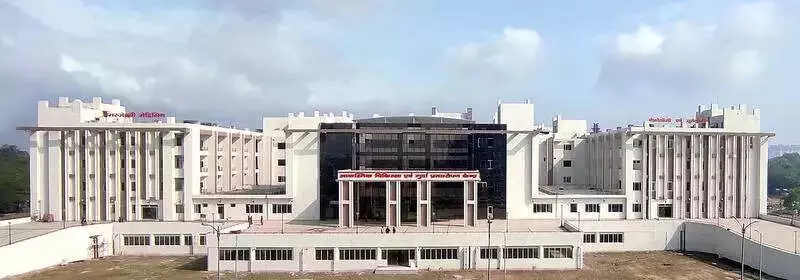
SGPGI Doctors Achieve Medical Breakthrough with Complex Hip Surgery on High-Risk Obese Patient
In a remarkable display of medical expertise, doctors at the Sanjay Gandhi Postgraduate Institute of Medical Sciences (SGPGI) in Lucknow have successfully performed a complex hip fracture surgery on a 50-year-old woman weighing over 140 kilograms. This high-risk case had been turned down by several other hospitals due to the patient's severe obesity and multiple co-morbidities, making this surgical achievement particularly significant.
Navigating Multiple Health Challenges
The patient presented with a femoral neck fracture alongside a thyroid disorder, hypertension, and obstructive sleep apnoea, which required continuous positive airway pressure (CPAP) support for breathing. These compounding health issues created substantial surgical risks that demanded exceptional preparation and execution.
Multidisciplinary Team Approach
The procedure was conducted by a specialized multidisciplinary team from the departments of orthopaedics and anaesthesiology. The surgical team was supervised by Dr Kumar Keshav, additional professor of orthopaedics, and Dr Vansh Priya, additional professor of anaesthesiology. Dr Keshav's surgical team included Dr Utkarsh, Dr Arpan, Dr Rajesh, Dr Yogesh, and scrub nurse Ankit, who worked in coordinated precision throughout the operation.

Surgical Challenges and Innovative Solutions
Doctors encountered significant difficulties accessing the fracture site and controlling bleeding due to the patient's excessive fat tissue. However, meticulous preoperative planning and surgical precision enabled the team to overcome these obstacles. Dr Keshav's prior research on pelvic surgery in obese patients, published in the British Medical Journal, provided valuable insights that contributed to managing the complexity of this challenging case.
Anaesthesia Breakthrough
The anaesthesia team faced equally formidable challenges. To avoid the risks associated with general anaesthesia in an obese patient with breathing complications, the medical team administered spinal anaesthesia using a specialized 150mm-long needle with the assistance of a state-of-the-art ultrasound machine. This innovative approach was executed by Dr Rumit and Dr Nikita under the expert guidance of Dr Vansh Priya.
Post-Surgical Complications and Management
Following the surgery, the patient developed rhabdomyolysis, a serious condition involving muscle breakdown that can potentially lead to kidney failure if left untreated. This complication was promptly identified by Dr Suruchi in the anaesthesia ICU and managed successfully through vigilant monitoring and appropriate medical intervention.
Successful Recovery and Broader Implications
Doctors report that the patient is now able to walk with the support of a walker, marking a significant milestone in her recovery journey. Dr Keshav emphasized that advanced infrastructure and experienced medical teams enable institutions like SGPGI to handle even the most complex, high-risk cases that other facilities might decline.
The medical team also offered important health advice, recommending that people adopt healthy lifestyles with balanced nutrition and regular exercise to prevent bone and joint disorders. This case serves as both a medical achievement and a reminder of the importance of preventive healthcare measures.
This successful surgery at SGPGI Lucknow demonstrates how specialized medical expertise, innovative techniques, and comprehensive patient management can overcome even the most challenging surgical scenarios, offering hope for patients with complex health profiles who might otherwise face limited treatment options.






