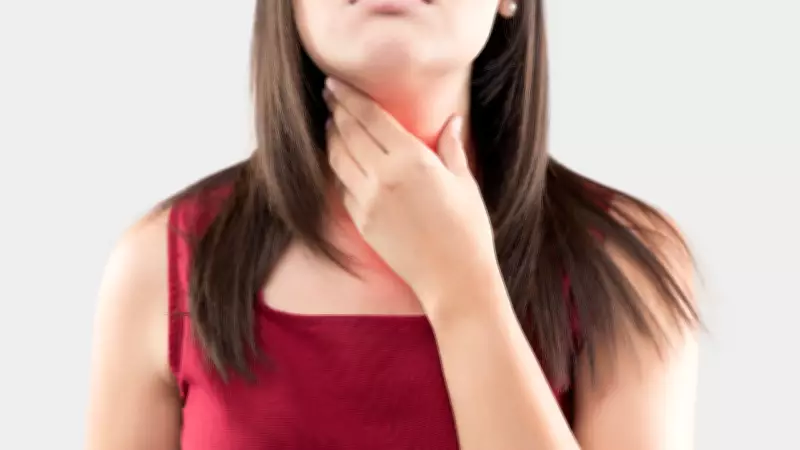
A small lump in the neck may not seem like a reason to worry. In fact, most people who develop a thyroid nodule never experience any serious health problems because of it. These seemingly harmless growths deserve attention for one important reason: almost all thyroid cancers begin as a thyroid nodule.
That does not mean every thyroid nodule is cancerous. Far from it. Experts estimate that more than 90 percent of thyroid nodules are benign. However, identifying the small percentage that may be cancerous is where timely evaluation becomes critical.
The thyroid gland, a small butterfly-shaped organ located at the front of the neck, controls many essential functions including metabolism, energy production, body temperature, and heart rate. When a nodule develops within this gland, the challenge is determining whether it is simply an innocent growth or an early warning sign of cancer.

What Exactly Is a Thyroid Nodule?
A thyroid nodule is an abnormal growth of thyroid cells that forms a lump within the thyroid gland. Some nodules are solid, while others contain fluid. Most are discovered by chance during routine health examinations or imaging tests performed for unrelated reasons.
We spoke to Dr Kalyan Kumar Gangopadhyay, Consultant Diabetes and Endocrinology, CK Birla Hospitals, CMRI, who explained, “A thyroid nodule is an abnormal growth of thyroid cells that forms a lump within the thyroid gland. While the exact cause of most thyroid nodules remains unknown, they are exceptionally common. By age 60, roughly half of the population will develop a thyroid nodule detectable via physical examination or medical imaging. Fortunately, more than 90% of these nodules are benign (noncancerous).”
Many people never know they have one. Others notice a swelling in the neck while looking in the mirror, fastening a necklace, or buttoning a shirt collar.
One surprising fact is that most thyroid nodules, even cancerous ones, do not affect thyroid hormone production. As a result, routine thyroid blood tests often appear completely normal despite the presence of a nodule.
The Important Link Between Thyroid Nodules and Cancer
This is where confusion often arises. Most thyroid nodules are not cancerous. Nearly every thyroid cancer first appears as a thyroid nodule. That makes the presence of a nodule the most important clue doctors have when investigating thyroid cancer.
Dr Gangopadhyay explained, “While the vast majority of nodules are benign, nearly all thyroid cancers originate as a nodule. Consequently, a thyroid nodule serves as the primary clinical indicator that thyroid cancer might be present.”
Doctors pay close attention to certain factors that can increase the likelihood of cancer, including:
- Previous radiation exposure to the head, neck, or chest, especially during childhood
- A family history of thyroid cancer
- Certain inherited genetic syndromes
- Increasing age
- Specific suspicious features seen on ultrasound imaging
According to the American Cancer Society, childhood radiation exposure remains one of the strongest established risk factors for thyroid cancer. Family history also significantly increases risk. What makes thyroid cancer challenging is that many patients have no identifiable cause. Even people without known risk factors can develop the disease.
Symptoms That Should Never Be Ignored
Most thyroid nodules are silent. They do not hurt. They do not affect thyroid hormone levels. They often remain unnoticed for years. However, a rapidly growing nodule or a cancerous growth can begin to cause symptoms.
Dr Gangopadhyay advised seeking medical attention if any of the following occur, “A new, firm, or rapidly growing lump in the front of the neck, just below the Adam’s apple.” Other warning signs include:

- Persistent hoarseness: If your voice changes and remains hoarse for several weeks without a cold or infection, it deserves medical evaluation. Tumours can sometimes affect nerves that control the vocal cords.
- Difficulty swallowing: Feeling as though food is getting stuck in the throat may indicate that a large nodule is pressing against the food pipe.
- Breathing difficulties: Large nodules can occasionally compress the windpipe, causing breathlessness or a choking sensation, especially when lying down.
These symptoms do not automatically mean cancer. But they should never be dismissed as normal ageing or minor throat irritation.
How Doctors Determine Whether a Nodule Is Cancerous
A common misconception is that a doctor can tell whether a thyroid lump is cancerous simply by examining it. Unfortunately, it is not that straightforward. Dr Gangopadhyay noted, “Because a physical examination and standard blood tests cannot definitively determine if a nodule is cancerous, physicians rely on specialised diagnostic tools.”
Thyroid Ultrasound
Ultrasound is usually the first and most important test. It allows doctors to examine the nodule's size, shape, borders, and internal structure. Certain ultrasound patterns are associated with a higher risk of cancer.
Fine-Needle Aspiration (FNA) Biopsy
If a nodule appears suspicious, doctors may recommend an FNA biopsy. During this procedure, a very thin needle is used to collect cells from the nodule. The sample is then examined under a microscope. The procedure is generally quick, minimally invasive, and often performed in an outpatient setting.
For many patients, the biopsy provides reassurance that the nodule is benign. For others, it allows cancer to be identified at an early and highly treatable stage.
Can Thyroid Cancer Be Prevented and Treated Successfully?
There is no guaranteed way to prevent thyroid cancer because its exact cause remains unclear in many individuals. However, risk can be reduced by avoiding unnecessary radiation exposure and maintaining regular medical follow-ups if there is a strong family history of thyroid disease.
What is encouraging is that thyroid cancer generally has one of the best outcomes among all cancers. Dr Gangopadhyay explained, “Thyroid cancer is generally highly treatable and often entirely curable. The primary treatment modalities are surgical removal and, when clinically indicated, radioactive iodine therapy.” Unlike many cancer treatments, these therapies often do not cause severe side effects such as hair loss, persistent nausea, or vomiting. Even when diagnosed at a more advanced stage, modern treatment options have significantly improved patient outcomes.
What Research Says
A comprehensive review published by the US National Library of Medicine found that while thyroid nodules are extremely common, only a small proportion prove to be malignant. The review also emphasised the importance of ultrasound evaluation and biopsy in identifying cancers early. Researchers estimated that more than 90 percent of thyroid nodules are benign.
Medical experts consulted for this article include Dr Kalyan Kumar Gangopadhyay, Consultant Diabetes and Endocrinology, CK Birla Hospitals, CMRI. His inputs were used to explain the link between thyroid nodules and thyroid cancer, highlighting why early evaluation of neck lumps is important, which symptoms should raise concern, and when individuals should seek timely medical attention for proper diagnosis and treatment.