

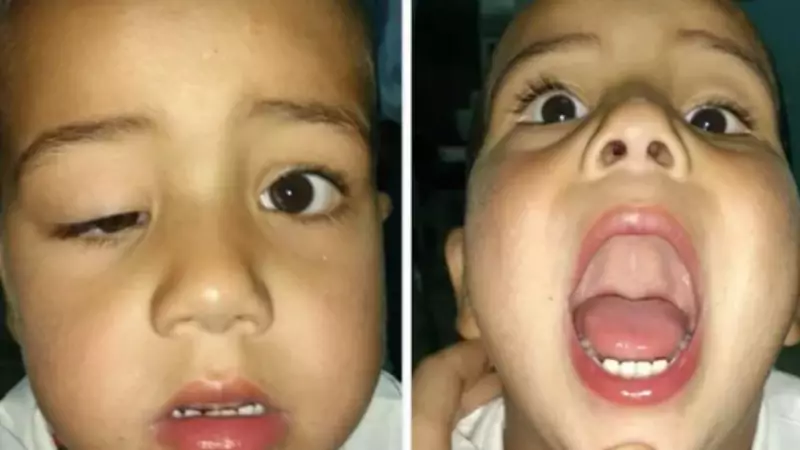
In the world of rare medical conditions, Marcus Gunn Syndrome stands out as a fascinating and unique congenital disorder. Characterised by an involuntary 'wink' of a droopy eyelid in sync with jaw movements, this syndrome draws attention, especially in infants during feeding. First identified by British ophthalmologist Robert Marcus Gunn in 1883, it remains a subject of both medical intrigue and concern for affected families.
What is Marcus Gunn Jaw Winking Ptosis?
The core of Marcus Gunn Syndrome lies in a neurological mix-up known as synkinesis. This involves an abnormal connection between the nerves controlling the jaw and the eyelid. Normally, the muscle that lifts the upper eyelid (levator palpebrae superioris) is controlled by the oculomotor nerve (cranial nerve III). Jaw muscles, like the external pterygoid, are governed by the trigeminal nerve (cranial nerve V). In this syndrome, these wires get crossed.
The result is a unilateral ptosis – one eyelid droops when the jaw is at rest but shoots upwards during chewing, sucking, or side-to-side jaw movements. This 'wink' can be subtle or very pronounced, with the eyelid moving as much as 20 mm vertically. Parents often first notice it while breastfeeding their child. While primarily congenital, rare acquired cases can follow injury, surgery, or infections like syphilis.

Causes, Genetics, and Associated Complications
Experts classify Marcus Gunn Syndrome as a congenital innervation disorder of the head. Its genetic roots are complex, following autosomal inheritance patterns with reduced penetrance. Research has linked it to mutations in the CHD7 gene and chromosomal issues like deletion of the 22q11.2 region. A leading theory suggests a developmental defect in the brainstem during fetal life, disrupting coordination between jaw and eye nerves.
The condition is estimated to occur in 2 to 6 percent of all congenital ptosis cases, affecting both genders equally, though females more frequently seek help for cosmetic reasons. It rarely exists in isolation. Associated complications include:
- Strabismus (misaligned eyes) in 50-60% of patients.
- Superior rectus palsy and double elevator paralysis, each in about 25% of cases.
- Risk of amblyopia (lazy eye) due to the drooping lid obstructing vision.
Diagnosis and Modern Treatment Pathways
Diagnosis is primarily clinical, based on observation. A doctor will ask the patient to perform jaw movements like chewing or shifting the jaw sideways to trigger the wink. No specific lab test confirms it; instead, doctors rule out mimics like Duane syndrome or Marin Amat syndrome through ophthalmologic exams and, if needed, imaging studies. Early diagnosis is crucial to prevent vision loss from amblyopia.
Treatment is tailored to severity:
For mild cases with minimal visual impact, simple observation is often sufficient as many individuals adapt well.
For severe ptosis or pronounced winking, surgery is the mainstay. Procedures like levator resection or a frontalis sling surgery (using fascia lata or silicone) help tighten the eyelid. Timing is key; surgeons typically wait until the child is 4 years or older to allow for jaw growth to stabilise.
Non-surgical options include Botox injections into the pterygoid muscle, which temporarily weaken the jaw-triggered signal to the eyelid for about 3-4 months. Emerging therapies involve neuromuscular training and AI-assisted facial rehabilitation systems.
Living with Marcus Gunn Syndrome
With proper management, most individuals lead completely normal lives. The main challenges are often cosmetic, particularly for teenagers and adults. Psychological counselling can be invaluable for those feeling self-conscious about the wink. Regular follow-ups with an eye specialist are essential to monitor for strabismus or vision changes.

Post-surgical outcomes are generally excellent with low recurrence rates when addressed timely. Ongoing research aims to pinpoint genetic markers for better prediction. Connecting with rare disease communities offers significant support for families. The key takeaway is that this quirky condition, with early intervention and proper care, rarely hinders one's potential for a full and visually healthy life.





