

NRI's Eating Phobia Resolved by Vadodara Hospital's Advanced Treatment
A 26-year-old non-resident Indian (NRI) living in Australia experienced a shocking medical ordeal when simply thinking about his favorite pizza triggered severe swelling along his jawline. Over time, his condition deteriorated to such an extent that he began avoiding meals entirely, driven by an intense fear of eating. For this individual, hunger was not the primary issue—the mere thought of food became a source of distress.
Understanding Meal-Time Syndrome and Salivary Stones
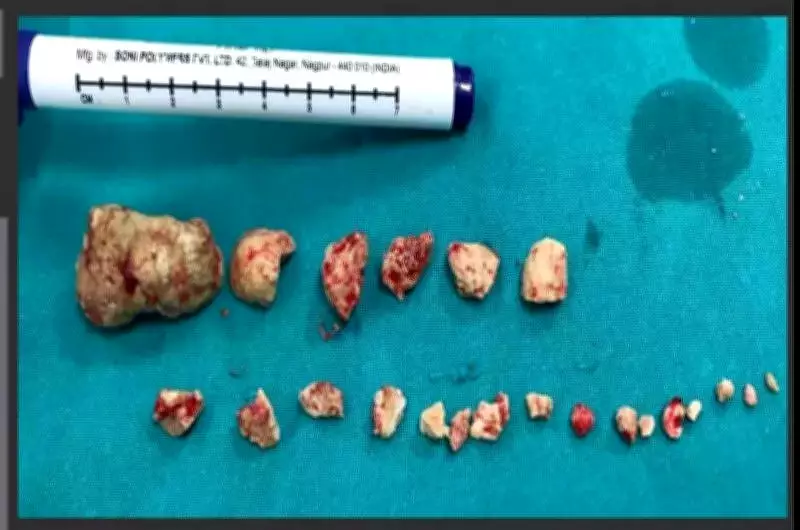
This young man, who hails from Anand, was diagnosed with what medical professionals term "meal-time syndrome," a disorder linked to salivary stones that can vary in size from 2 millimeters to 6 centimeters. The sight, smell, or even thought of food prompts a surge in saliva production. When the salivary duct is obstructed by these stones, the trapped fluid leads to excruciating pain and noticeable swelling, typically lasting between 30 minutes to an hour.
Salivary stones develop due to factors such as reduced salivary flow, dehydration, infections, or alterations in saliva composition, which cause calcification within the ducts. In a remarkable turn of events, GMERS Medical College and Hospital in Gotri, Vadodara, has attracted hundreds of patients from across India and overseas seeking relief from this debilitating condition.

GMERS Hospital Emerges as a Leader in Sialendoscopy
Three years after undergoing sialendoscopy at this government hospital, the NRI now enjoys his favorite foods without any apprehension. GMERS Hospital has quietly established itself as India's highest-volume public-sector center for sialendoscopy—a minimally invasive, gland-preserving procedure used to treat salivary stones, ductal stenosis, and complex salivary gland disorders.
Dr. Hiren Soni, a professor at GMERS Gotri who introduced the service in 2015-16, explained, "Sialendoscopy has completely changed the approach. Earlier, gland removal was common. Now, preservation is the goal." Until about a decade ago, patients with recurrent obstructions often required surgical removal of the affected gland, particularly the submandibular gland, through external incisions.
How Sialendoscopy Works and Its Impact
Using an ultra-thin 0.77mm endoscope, doctors enter the salivary duct to remove stones, dilate strictures, and restore natural salivary flow—all without making any external incisions. The hospital acquired two such scopes in 2015, both of which remain operational. Over the past four years, nearly 300 patients have undergone this procedure, with two to three cases performed weekly, making it the highest-volume government center in the country where the treatment is provided free of cost.
Referrals now pour in from various parts of Gujarat, including Ahmedabad, Surat, Bhuj, Mehsana, and Modasa, as well as from states like Maharashtra, Madhya Pradesh, Rajasthan, and Karnataka. International patients from countries such as Australia, New Zealand, the United Kingdom, the United States, and Ghana have also traveled to Vadodara for this advanced treatment.
Broader Applications and Patient Success Stories
Dr. Soni highlighted the cultural aspect, noting, "In many cultures, people pray before a meal. That itself stimulates salivary flow. But for patients with blocked ducts, pain begins at that very moment." Beyond meal-time syndrome, the hospital has managed several complex salivary gland disorders that affect chewing, swallowing, and speech.
One notable case involved a 68-year-old retired bank manager suffering from xerostomia, a chronic dry mouth condition caused by reduced saliva production. He faced difficulties with chewing, speaking, and sleeping, often waking up at night due to extreme dryness. After undergoing sialendoscopy and receiving appropriate medication, his salivary flow improved significantly, and his sleep patterns returned to normal.
In another instance, a 14-year-old boy experienced recurring painful swelling near both ears almost every month. Following the procedure, he has had only two minor episodes in the four years since, with none occurring in the past year.

Doctors also treated six to seven women with recurrent parotid abscesses who were later diagnosed with Sjogren's syndrome, an autoimmune disorder affecting the salivary glands. A combination of sialendoscopy and medical therapy helped stabilize their conditions. What was once a painful, recurring disorder often necessitating gland removal is now effectively treated through a needle-thin endoscope—restoring not only salivary flow but also the simple joy of eating without fear.





