Pune Hospital Achieves Milestone with Wireless Pacemaker Implantation
In a significant medical advancement, a 61-year-old man suffering from complete heart blockage successfully received a leadless capsule pacemaker at a hospital in Pune. This wireless device was implanted using a minimally invasive catheter-based procedure, marking a notable achievement in cardiac care. The patient, who also had diabetes and hypertension, was discharged within just three days, showcasing the rapid recovery benefits of this innovative technology.
Patient's Condition and Initial Treatment
The patient was admitted to Inamdar Hospital on February 15, presenting with symptoms of giddiness and discomfort. Upon evaluation, doctors identified a dangerously slow heart rate caused by an interruption in the heart's electrical signals. To stabilize his condition, a temporary pacemaker was immediately implanted. Further assessments ruled out reversible causes, and a coronary arteries examination confirmed no physical blockage, indicating a faulty electrical system in the heart.
Expert Insights on the Procedure
Senior interventional cardiologist Dr. Hasmukh Gujar from Inamdar Hospital emphasized the life-saving potential of timely intervention in cases of complete heart blockage. He stated, "In this instance, a leadless pacemaker provided an effective and patient-friendly solution. By implanting the device directly into the heart without traditional leads or a chest pocket, we can reduce procedure-related complications. This approach also facilitates faster recovery, shorter hospital stays, and offers a long battery life, making it a valuable option for carefully selected patients." The patient's relatives gave consent after detailed counseling on available treatment options.

Benefits of Leadless Pacemaker Technology
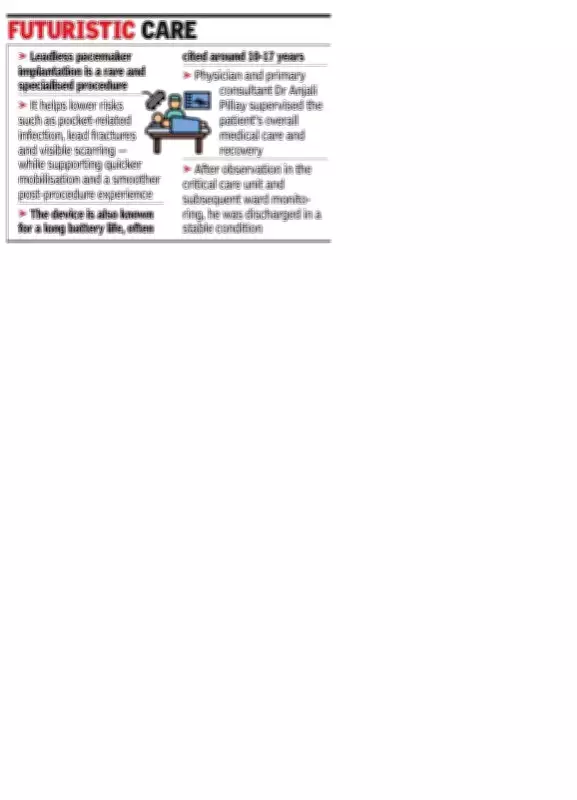
Leadless pacemaker implantation is a rare and specialized procedure that offers several advantages over conventional methods. Key benefits include:
- Reduced risks of pocket-related infections and lead fractures.
- Minimal visible scarring and support for quicker mobilisation.
- A smoother post-procedure experience with a battery life often ranging from 10 to 17 years.
This technology represents a leap forward in cardiac treatment, enhancing patient outcomes and comfort.
Recovery and Discharge
Physician and primary consultant Dr. Anjali Pillay supervised the patient's overall medical care and recovery. She reported, "Following the implantation, the patient's heart rate stabilized, his symptoms resolved, and he showed steady clinical improvement. After observation in the critical care unit and subsequent ward monitoring, he was discharged in a stable condition." The swift recovery underscores the efficacy of leadless pacemakers in managing complex cardiac issues, particularly in older patients with comorbidities.
This case highlights the growing adoption of advanced medical technologies in India, offering hope for improved healthcare solutions in cardiac care. The successful procedure at Inamdar Hospital sets a precedent for future treatments, emphasizing the importance of innovation in saving lives and enhancing patient quality of life.