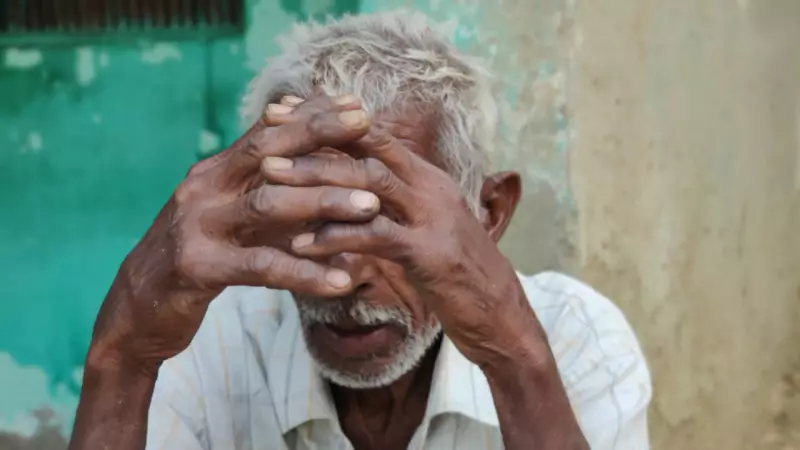
An 80-year-old man from Sayedraja village in Chandauli district left his home one November morning, telling his family he was going to collect his medicines. He never returned. Nearly three weeks later, on December 16, his body was discovered hanging from a mango tree in a village orchard.
The man, whose identity has been protected, had been receiving treatment for a mental illness for several years, according to his family. His tragic death, however, is not an isolated incident in the region.
A Disturbing Pattern of Neglect and Despair
Police records and First Information Reports (FIRs) from Chandauli district alone reveal a grim pattern: at least five elderly individuals have died by suicide in the last four months. Most of the victims were over the age of 60. Officials familiar with these cases describe a recurring sequence of family conflict (parivarik kalah), neglect (upaksha), and severe financial strain (arthik tangi). These factors combined to create profound distress and deepening isolation for the victims.

Several of those who died were either widowed and dependent on relatives, or were older daily-wage workers who had lost their income and physical mobility. A critical and common thread in all these tragedies is the complete absence of any documented mental health intervention or monitoring before their deaths.
Experts Decry Structural Failure, Not Just Individual Tragedy
Mental health professionals assert that these cases point to a massive systemic failure rather than isolated personal misfortunes. "Depression among the elderly is increasing, and it is going to blow up," warned Dr. Sanjay Gupta, a professor in the psychiatry department at Banaras Hindu University, located about 30 kilometers from Chandauli.
He emphasized that suicide in this age group is a grave sign. "These are mature people who have endured lifelong struggles. When an elderly person reaches this point, it typically means their depression or illness has gone undetected and unsupported for a very long time." Dr. Gupta identified migration and the breakdown of traditional joint family structures as central drivers, especially in rural areas like Chandauli.
"Children move out for work, return late, or live in other cities entirely. We still assume parents are quietly and contentedly sitting at home. This is exactly where depression gets missed," he explained. Symptoms like social withdrawal, loss of interest in daily life, disturbed sleep, and appetite loss are often mistakenly dismissed as just a 'normal' part of aging.
Doctors highlight a crucial gap in India's healthcare approach: unlike routine screenings for diabetes or hypertension, there is no standard mental health check-up for older adults. This allows conditions like depression and cognitive decline to fester unnoticed for years.
The Twin Triggers: Loneliness and Economic Anxiety
While youth suicides may be triggered by social or relationship issues, experts note that suicides among the elderly are more closely linked to biological depression and dementia. Dr. Gupta cautioned that psychotherapy alone is often insufficient; medication under supervision is usually required, but the lack of family support to monitor intake can make even treatment dangerous.
The crisis extends beyond clinical diagnosis. Those working directly with seniors point to economic anxiety and social disconnection as powerful catalysts for loneliness. "We see unmistakable signs of loneliness among the elderly," said Bilal Zaidi, founder of Eldera.io, a platform for older adults. He noted that many face a sudden loss of financial control after retirement, which breeds intense anxiety and isolation.
Zaidi criticized the mismatch between the scale of the problem and government responses. "There are several schemes for elderly healthcare and insurance, but very little that addresses their economic engagement, social life, or sense of purpose. Loneliness is not treated as a policy problem."
Rapid technological change has exacerbated the issue. Daily tasks like shopping, hiring transport, or paying bills have gone digital. For elders unable to navigate smartphones and apps, this loss of independence creates helplessness and deepens their isolation.

A National Crisis as India Ages
The situation in Chandauli mirrors a frightening national trend. According to Sample Registration System (SRS) data, Indians aged 60 and above now constitute nearly 9.7% of the population, a significant demographic shift. This number is projected to double to nearly 20% by 2050.
However, awareness and infrastructure for elderly care are lagging far behind increasing lifespans. A recent October 2025 study by the Sitaram Bhartia Institute of 300 seniors in Delhi underscores the vulnerability:
- 27% had dementia (7% severe)
- 20% suffered from depression
- 40% had bone or muscle problems
- 22% were classified as frail
These conditions dramatically increase isolation and suicide risk. Furthermore, many in the 27% facing cognitive decline also struggle with digital exclusion, unable to access pensions or health insurance like Ayushman Bharat due to Aadhaar-linked OTPs and online portals.
Lead researcher Dr. Harjit Singh Bhatti warned that with 140 million elders today set to become nearly 350 million by 2050, systemic geriatric care "remains deeply inadequate." The stark reality is that in India, longevity is rising much faster than societal preparedness.
As police in Chandauli continue to file reports and families mourn, experts are issuing an urgent call to action. They demand the establishment of geriatric psychiatry wings in every district hospital, the implementation of annual mental health screenings for those over 60, and comprehensive family training to help identify the silent signs of despair before it is too late.