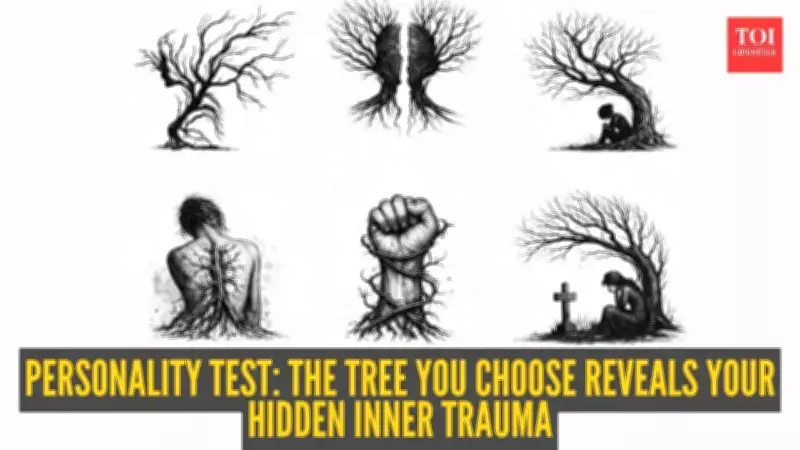
Most people like to think they have moved on from the hard parts of their past. But the mind does not always work that way. Some experiences do not disappear; they go underground. They show up in quieter ways, such as through who you trust, how you react, or what you avoid. That is why tests like this blocked inner trauma optical illusion feel strangely personal.
They are not medical tools or formal diagnoses, but they can act like tiny emotional mirrors. One picture, several hidden elements, and your brain instantly chooses one. That first choice can sometimes hint at the kind of hurt your mind still carries in the background. So, think about it: what did you see first? Here is what that might say about you.
1. If You Saw the Twisted Dark Tree First
If your eyes went straight to the dark, distorted-looking tree, this test links your hidden pain to emotional abuse. That might mean past experiences where you were criticised, belittled, manipulated, rejected, or regularly made to feel like your feelings were wrong or too much. Trauma like this often creates a deep fear of not being good enough. You may crave closeness but flinch at vulnerability. Compliments can feel suspicious; criticism can feel crushing. You might overanalyse people's tone, words, or silences because a part of you is always watching for emotional danger. Love and connection can feel both safe and threatening at the same time, which is exhausting but also a very understandable response to what you have been through.

2. If You Saw the Split or Crack First
If the separation, crack, or dividing line stood out to you first, this pattern is tied to fear of loss and instability. It could be a leftover of old wounds from experiences of separation, like divorce, sudden moves, emotionally unavailable caretakers, or sudden endings of relationships. You might notice yourself falling for people quickly, fearing that people will suddenly leave, or feeling anxious even when things are stable. On the outside, life may seem okay, but on the inside, part of you is always semi-ready for things to fall apart. This can quietly shape your attachment style; maybe you cling too tightly, or you pull away first so you do not get hurt. It is not a flaw; it is your nervous system trying to protect you from reliving old pain.
3. If You Saw the Lonely Figure Under the Tree First
If your eye went straight to a small, lonely figure beneath the tree, this test points toward psychological or emotional neglect. That does not always mean obvious abuse; sometimes it means your emotional world went largely unnoticed. Maybe no one asked how you really felt. Maybe you learned early that crying, needing comfort, or asking for support would not change anything. As an adult, that can look like struggling to name your own needs, minimising your feelings (saying it is not a big deal), taking care of everyone else while ignoring yourself, or feeling guilty or dramatic for wanting emotional closeness. You may have spent years telling yourself your emotions do not matter. But they do. The fact that you see the lonely figure first suggests your inner world is still carrying that quiet, unmet need for someone to truly see you.
4. If You Saw the Darker, Aggressive Shapes First
If the harsh, aggressive forms jumped out at you before anything else, this is connected to physical or fear-based trauma. Your body may have learned early on that the world could become dangerous very quickly. Because of that, your nervous system might still be on high alert. You might notice tiny shifts in people's body language, startle easily at sudden sounds or movements, feel uneasy when people raise their voice, or find it hard to fully relax, even in safe spaces. This is not you being too sensitive; it is your body remembering what it had to survive. Your mind may want to move on, but your nervous system is still trying to keep you safe.

5. If You Saw Signs of Conflict First
If your eyes were drawn first to symbols of chaos, tension, or fighting, the pattern here is linked to domestic violence, which is either witnessed or experienced. Growing up or living in an environment full of explosive arguments, aggression, or constant tension shapes the way your brain understands love. You might associate love with intensity, drama, or extremes; feel bored or uneasy in calm, stable relationships; confuse emotional chaos with passion; or expect closeness to eventually turn into conflict. It is not that you want chaos; it is that your system learned to interpret unpredictability as normal. Calm love can feel unfamiliar or even empty compared to what you have known. Recognising this is a powerful first step toward building relationships that feel safe, not just intense.
6. If You Saw the Empty Space First
If you first noticed the emptier, isolated areas of the image, this test connects your hidden hurt to loss, such as the death of a loved one, a major separation, or a deep sense of someone no longer being there in your life. You may stay constantly busy to avoid thinking too much, struggle with being alone in quiet moments, avoid emotional conversations because they bring old pain back up, or feel like part of you is stuck in a moment from the past. On the surface, the grief might seem distant, like something you have accepted. But underneath, parts of you may still be frozen in that loss, with uncried tears, unsaid goodbyes, and unprocessed shock.
A Gentle Reminder
Quizzes like this are not therapy or formal assessments. They cannot fully define you, diagnose you, or know everything you have been through. But they can give language to feelings you may have struggled to name. Sometimes, the symbol you notice first is less about accuracy and more about what your mind is ready to look at today. If any of these descriptions felt uncomfortably close to home, that does not mean you are broken; it means you survived something hard. And if reading this stirred something up, it might be a sign to show yourself a little extra care, or to talk to someone you trust, whether that is a friend, a family member, or a mental health professional. So, what did you see first, and how much did its meaning resonate with the story you have quietly been carrying inside you? Tell us in the comments below.
About the Author
The TOI Lifestyle Desk is a dynamic team of dedicated journalists who, with unwavering passion and commitment, sift through the pulse of the nation to curate a vibrant tapestry of lifestyle news for The Times of India readers. At the TOI Lifestyle Desk, we go beyond the obvious, delving into the extraordinary. Consider us your lifestyle companion, providing a daily dose of inspiration and information. Whether you are seeking the latest fashion trends, travel escapades, culinary delights, or wellness tips, the TOI Lifestyle Desk is your one-stop destination for an enriching lifestyle experience.