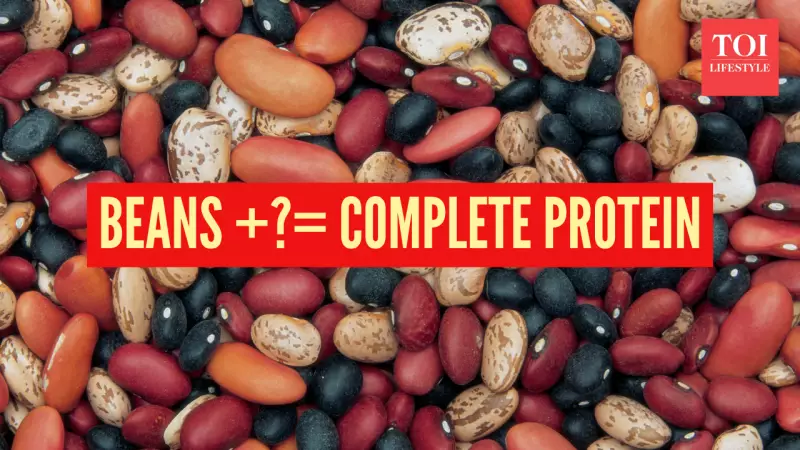
Beans have long been celebrated as a powerhouse of nutrition and a key component of diets linked to longevity. They deliver a rich array of vital nutrients to the body. However, there is one crucial nutritional area where beans fall slightly short. While they are an excellent source of protein, they are not considered a 'complete' protein on their own.
What Makes a Protein 'Complete'?
To understand this, we need to look at amino acids, the building blocks of protein. The human body requires 20 different amino acids to function properly. It can produce 11 of these internally, but the remaining nine must be obtained from the food we eat. According to the Cleveland Clinic, a food is labeled a complete protein when it contains all nine of these essential amino acids that our bodies cannot synthesize.
Foods like fish, eggs, beef, and pork are typical examples of complete proteins, which are primarily non-vegetarian sources. On the flip side, many vegetarian protein sources are 'incomplete,' meaning they contain only some of the nine essential amino acids. This group includes foods like beans, whole grains, nuts, and seeds.

The Perfect Nutritional Pair: Beans and Rice
So, how can vegetarians and those looking to reduce meat intake get a complete protein profile? The answer lies in a beloved and ubiquitous staple combination in Indian cuisine: beans and rice.
The magic works through complementary amino acid profiles. As noted by the MD Anderson Cancer Center, beans are rich in seven essential amino acids: Histidine, Isoleucine, Leucine, Lysine, Phenylalanine, Threonine, and Valine. However, they are deficient in two: Methionine and Tryptophan.
Rice, conversely, contains Methionine and Tryptophan—precisely the two amino acids beans lack. But rice itself is missing Lysine, Isoleucine, and Threonine. When consumed together, beans and rice effectively 'complete the puzzle.' Each food fills the nutritional gaps of the other, providing a full spectrum of all nine essential amino acids to form a complete protein.
Why This Combo is a Game-Changer for Vegetarians
This pairing holds exceptional importance for vegetarians in India and worldwide. Since few plant-based foods individually offer a complete amino acid profile, strategic food combining becomes essential for optimal health. The beans-and-rice duo is a simple, affordable, and culturally ingrained solution.
The MD Anderson Cancer Center points out that beans can also be paired with nuts or seeds to achieve a complete protein. However, it cautions that combining grains with nuts or seeds is less effective because both are often deficient in the same amino acids, failing to create the necessary complementary effect.
This insight reinforces the wisdom of traditional dietary patterns. The widespread consumption of combinations like rajma-chawal, dal-chawal, or chhole-chawal across India is not just a matter of taste and convenience; it is a time-tested nutritional strategy that ensures the body receives the complete protein it needs for muscle repair, enzyme production, and overall well-being.