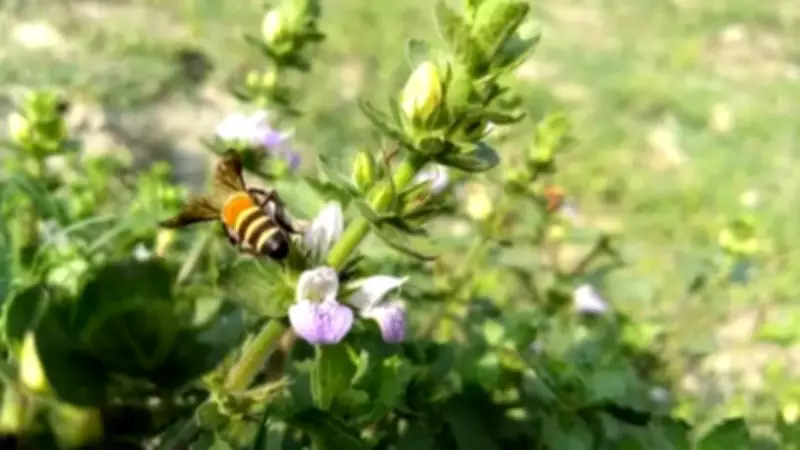
Urban gardeners often spend heavily on imported flowering plants to attract butterflies and bees to their balconies and terraces. However, several traditional Indian plants, once common in households, are highly effective at attracting bees. These plants not only provide rich nectar but also thrive easily in Indian climatic conditions. As awareness of pollinator gardening grows, these native plants are gaining renewed popularity.
1. Sesbania grandiflora (Agathi)
Agathi is a fast-growing traditional Indian tree found across the subcontinent. It is a vital nectar-producing tree that draws numerous bees. Besides its role in pollination, agathi is used as food and medicine. Its adaptability to Indian climates and low maintenance make it a favorite in pollinator-friendly gardens.
2. Indian Borage
Known for its medicinal properties, Indian borage is also an excellent nectar source for bees. It grows well in containers and on balconies, requiring minimal care. This plant is increasingly included in urban pollinator gardens.

3. Drumstick Tree (Moringa)
Commonly grown for its nutritious leaves and pods, the drumstick tree also produces pale cream-colored flowers that are highly attractive to bees. Dwarf varieties are suitable for rooftops and terraces, making it a multipurpose addition to gardens.
4. Curry Leaf Plant
While primarily used in cooking, curry leaf plants bear tiny white flowers when allowed to bloom, attracting bees and other insects. They thrive in containers and Indian climates, ideal for pollinator gardens.
5. Leucas aspera
This wildflower, often found in fields and roadsides, has nectar-rich white tubular flowers that attract bees. Despite being overlooked as an ornamental plant, it is hardy and valued by biodiversity enthusiasts for its bee-attracting qualities.
6. Holy Basil (Tulsi)
One of the best traditional Indian plants for bees, holy basil produces small purple-white blossoms that regularly attract bees during its flowering season. It adapts well to pots, balconies, terraces, and courtyards.
Disclaimer: This article is for general informational and gardening awareness purposes only. The ability of plants to attract bees and other pollinators may vary depending on climate, flowering season, local biodiversity, pesticide exposure, and regional environmental conditions. Some plants may require specific care or may not be suitable for all balcony or terrace spaces. Readers are advised to consult local horticulture experts, nurseries, or environmental authorities before introducing new plant species into home gardens or urban ecosystems.