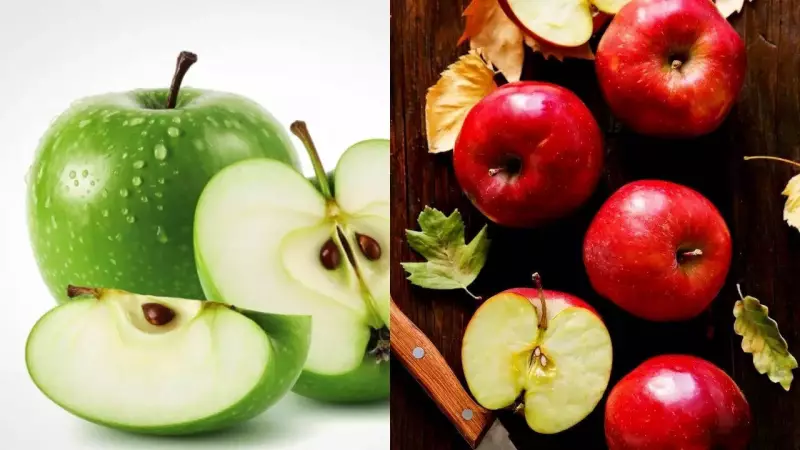
Apples are a global favourite, cherished for their crisp texture, refreshing flavour, and impressive health benefits. In India, they are a common sight in fruit baskets and lunch boxes. While both green and red varieties are packed with essential nutrients, they differ significantly in taste, nutritional profile, and their impact on health goals like managing diabetes and weight.
Colour, Taste, and Texture: The First Noticeable Differences
The most obvious distinction lies in their appearance and flavour. Green apples, like the popular Granny Smith, boast a vibrant green skin and firm, pale flesh. They are celebrated for their tart, tangy, and crisp bite, which holds up excellently during cooking.
On the other hand, red apples, such as Red Delicious and Fuji, feature a deep red to crimson skin, thanks to natural pigments called anthocyanins. Their flesh is typically sweeter, juicier, and slightly softer than green apples, making them a preferred choice for fresh, raw consumption.

Nutritional Showdown: Health Benefits of Each Variety
Both types are nutritional powerhouses, rich in dietary fibre, vitamin C, and various antioxidants. However, their compositions cater to slightly different health needs.
Green apples contain slightly fewer calories and carbohydrates, making them a strategic choice for weight management. They are particularly high in pectin, a soluble fibre that aids digestion and promotes a feeling of fullness, helping control appetite.
Red apples shine with their anthocyanin content, the antioxidants that give them their colour. These compounds are known to combat oxidative stress, support heart health, and may even boost brain function. Their natural sweetness can also help curb cravings for processed sugars.
Blood Sugar Control and Weight Management
For individuals mindful of blood glucose levels, the choice of apple can be particularly relevant. The fibre in all apples slows carbohydrate absorption, which is beneficial.
Green apples, with their lower sugar and higher fibre content, are especially suitable for maintaining stable blood glucose. The pectin in green apples slows sugar absorption, helping prevent sudden spikes in insulin. This makes them an excellent fruit choice for those managing diabetes or insulin resistance.
While red apples are slightly higher in sugar, they are not off-limits. The polyphenols in red apples can improve insulin sensitivity and support metabolic health when eaten in moderation. A study in the Journal of Nutritional Science supports that regular apple consumption aids in glycaemic control and improves lipid profiles.
For weight management, both are low-calorie snacks. The firm flesh and high fibre of green apples promote satiety for longer. Red apples, with their higher water content, provide hydration and a sweet, satisfying crunch that can prevent unhealthy snacking.
Culinary Uses in the Indian Kitchen
Their unique flavours lend themselves to different culinary applications. The tartness and firm texture of green apples make them ideal for Indian cooking. They are perfect for adding a tangy balance to chutneys, holding their shape in roasted dishes, or being used in savoury salads and slaws. Their acidity is excellent for pies and sauces.
Red apples, with their inherent sweetness and juiciness, are best enjoyed fresh. They are great for fruit chaats, smoothies, juices, or simply as a quick snack. They can also be used in desserts where added sugar can be reduced, or paired with nuts and cheese for a nutritious treat.
Other key differences to note include:

- Sugar Content: Green apples are lower; red apples are sweeter.
- Antioxidants: Green apples have more chlorophyll-based antioxidants; red apples are rich in anthocyanins.
- Shelf Life: Green apples generally last longer.
- Culinary Versatility: Green apples excel in baking and cooking; red apples are ideal for fresh consumption.
Disclaimer: This article is for informational purposes only and does not constitute medical advice. Always consult a qualified healthcare professional before making any changes to your diet or health routine.