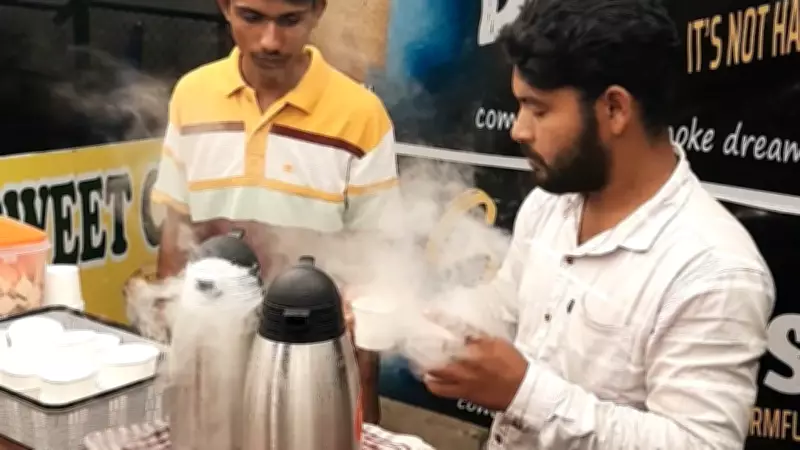
Liquid nitrogen, commonly used to create smoke-filled desserts and frozen treats, hides a serious health risk due to its extreme temperature. The boiling point of nitrogen is -196°C, whereas a regular freezer is about -18°C. “So it is quite extreme,” notes Ramesh Agarwal, CEO of Food Safety Works.
What Makes Liquid Nitrogen Dangerous in Food?
Liquid nitrogen is often used in the food industry for its dramatic visual effects, such as creating billowing smoke or flash-freezing ingredients. However, its extremely low temperature can cause severe injuries if not handled properly. Direct contact with liquid nitrogen can lead to frostbite or cold burns on the skin or mucous membranes. Ingesting food containing residual liquid nitrogen can cause internal injuries, including perforation of the stomach or esophagus.
Agarwal highlights that the risk is particularly high with trendy desserts like dragon’s breath cereal or nitrogen-infused ice creams, where the liquid nitrogen may not fully evaporate before serving. “If you eat it too quickly, you can damage your mouth, throat, or stomach,” he warns.

How Common Is Liquid Nitrogen Use in Food?
The use of liquid nitrogen in food has grown in popularity in recent years, especially in high-end restaurants, food festivals, and street food stalls. It is used to create unique textures and presentations, from frozen cocktails to instant ice cream. However, safety regulations vary widely across countries. In the United States, the Food and Drug Administration has issued warnings about the potential hazards, but no specific ban exists. In India, the Food Safety and Standards Authority of India (FSSAI) has not yet issued comprehensive guidelines on liquid nitrogen in food, leaving consumers vulnerable.
According to Food Safety Works, many food businesses lack proper training in handling liquid nitrogen. “We see a lot of unregulated use,” says Agarwal. “It’s not just about the cold; the rapid expansion of nitrogen gas can also cause pressure buildup in containers, leading to explosions.”
Reported Incidents and Health Impacts
Several incidents have been reported globally involving liquid nitrogen in food. In 2012, a British teenager suffered a perforated stomach after drinking a liquid nitrogen cocktail. In 2018, a woman in Florida suffered severe burns from a nitrogen-infused dessert. In India, there have been no major reported cases yet, but experts warn that it is only a matter of time. “The lack of awareness is alarming,” says Agarwal. “We need to educate both vendors and consumers about the risks.”
The health impacts range from mild discomfort to life-threatening conditions. Common symptoms after ingestion include abdominal pain, nausea, vomiting, and difficulty swallowing. In severe cases, it can lead to gastric perforation, which requires urgent surgery. The extreme cold can also cause the formation of ice crystals in tissues, leading to cell damage.
What Can Consumers Do to Stay Safe?
To minimize risks, experts recommend that consumers avoid eating foods that are still emitting visible smoke or steam, as this indicates residual liquid nitrogen. Wait until the smoke has completely dissipated before consuming. Also, be cautious with desserts that are served with a dramatic visual effect, as they may not have been prepared safely.
Agarwal advises, “If you see a vendor using liquid nitrogen, ask them about their safety protocols. They should be using proper equipment and allowing sufficient time for the nitrogen to evaporate.” He also suggests that regulators step in to set clear standards for the use of liquid nitrogen in food. “It’s a powerful tool, but it needs to be handled with care.”
The Future of Liquid Nitrogen in Food
Despite the risks, liquid nitrogen is likely to remain popular in the food industry due to its unique properties. However, safety measures must improve to prevent accidents. Some countries have started to introduce regulations, such as requiring vendors to use food-grade nitrogen and provide warning labels. In the European Union, liquid nitrogen is classified as a food additive (E941) and is subject to specific purity standards.

In India, Food Safety Works is pushing for more awareness and training programs for food handlers. “We are working with industry bodies to create best practices,” says Agarwal. “The goal is not to ban liquid nitrogen, but to ensure it is used safely.”
As consumers, staying informed and vigilant is key. The next time you are tempted by a smoke-filled dessert, remember the hidden danger behind the dramatic effect.