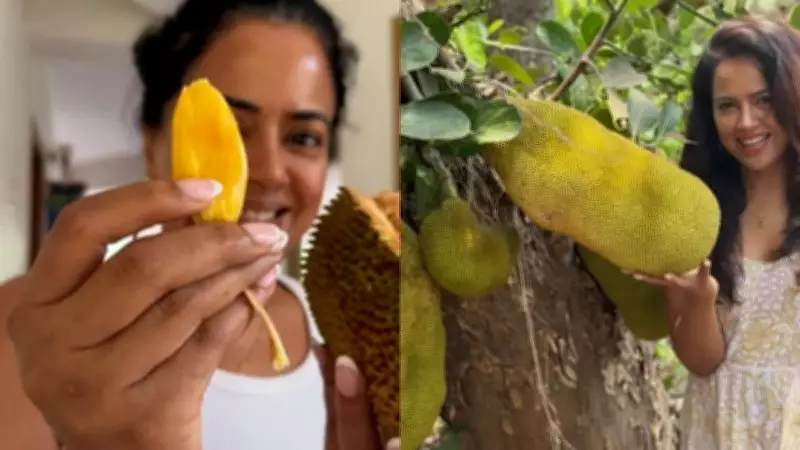
Sameera Reddy Enjoys Jackfruit Seeds with Family
Sameera Reddy was seen savoring the benefits of jackfruit seeds alongside her family. In a series of photos posted on Instagram, she revealed that a large jackfruit tree grows in her backyard. While highlighting the fruit's advantages, she captioned the post: "Did you know you can eat jackfruit seeds?"
To educate her audience, Sameera explained what jackfruit is called in various Indian languages. She wrote, "The global common name 'jackfruit' stems from the Portuguese word jaca, which was adopted from the Malayalam word chakka." She added, "I did not know there are different names for the unripe jackfruit?"
Origin of Jackfruit
As summer temperatures rise, many people turn to seasonal fruits for refreshment, and jackfruit remains a popular choice across South Asia. Scientifically known as Artocarpus heterophyllus, jackfruit belongs to the Moraceae family and is native to the Western Ghats of India. It is recognized globally as the world's largest edible fruit, with some specimens weighing over 20 kilograms.

Nutritional Benefits
Jackfruit is not only delicious and fragrant but also nutrient-rich. According to the National Library of Medicine, this tropical fruit is abundant in carbohydrates, proteins, vitamins, minerals, dietary fiber, and various phytochemicals. The edible yellow bulbs are typically eaten fresh in summer, while unripe jackfruit is often cooked as a vegetable in curries. Its seeds are also consumed after boiling or roasting.
Research indicates that ripe jackfruit contains higher levels of certain vitamins and minerals compared to fruits like apples, apricots, avocados, and bananas.
Low in Calories, Rich in Protein
Jackfruit is relatively low in calories, with a 100-gram serving providing only about 94 calories, making it a healthy option for those seeking nutrient-dense foods without excessive energy intake. Protein deficiency is common among Indians, but jackfruit contains essential amino acids such as arginine, cystine, histidine, leucine, lysine, methionine, threonine, and tryptophan.
The protein concentration in jackfruit seeds ranges from 5.3% to 6.8%, while the flesh of ripe varieties contains 0.57% to 0.97% protein. Additionally, jackfruit is rich in vitamin C.
Effective Against Chronic Diseases
The fruit's yellow to orange color comes from carotenoids. Beyond providing natural pigment, carotenoids are a rich source of antioxidants, and some can be converted into vitamin A in the body. Researchers suggest these compounds may protect cells from free radical damage and are linked to lower risks of cardiovascular disease, inflammation, cataracts, and age-related eye disorders. Some studies have also explored their potential role in protecting against certain cancers.
Jackfruit contains several important carotenoids, including beta-carotene, alpha-carotene, and lutein. These compounds contribute to both the fruit's color and its nutritional value. Beta-carotene is particularly important because the body can convert it into vitamin A, essential for healthy vision, immune function, and skin health. Lutein supports eye health and may help protect against age-related vision problems.