

Andhra Health Minister Raises Alarm Over Declining Fertility Rate
In a significant statement issued on Monday, Health Minister Y Satya Kumar Yadav of Andhra Pradesh cautioned the public about the serious consequences of the state's steadily declining fertility rate. The rate has now plummeted to an ultra-low level of 1.50, which is well below the replacement rate of 2.10 necessary for population stabilisation.
Shift from Population Control to Population Care
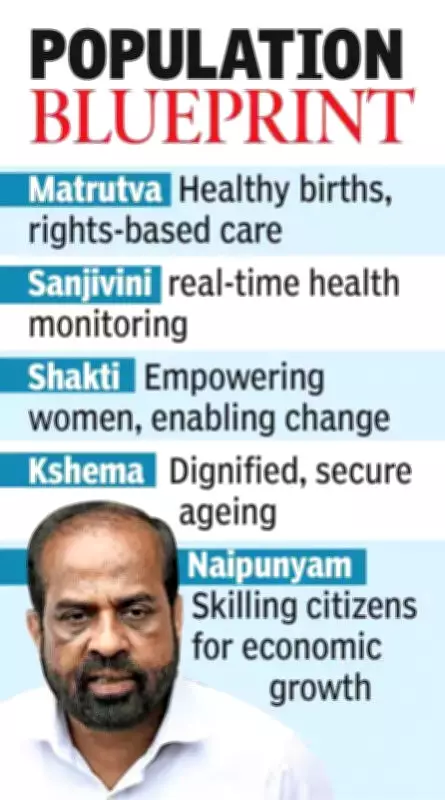
Yadav highlighted that the state government has formulated a new framework aimed at population stabilisation. This approach marks a radical departure from the decades-old focus on population control to a more holistic concept of population care. Under this new strategy, the government plans to create a supportive and enabling environment where childbearing decisions are made voluntarily by families, free from governmental dictates.
The objective is to ensure that raising children, from birth through adolescence into productive adulthood, no longer poses a burden on families. This shift is designed to foster positive family planning choices and address the underlying issues contributing to the fertility decline.

Economic Implications and Demographic Trends
The health minister elaborated on the economic risks associated with the current trend. If unchecked, the decline in fertility could lead to a reduction in the active and productive workforce, while simultaneously doubling the aged population. This scenario, termed shrinconomics, involves a shrinking workforce bearing the increasing burden of an aging population, with serious implications for the economic well-being of both individuals and the state.
Yadav provided detailed statistics to underscore the urgency of the situation:
- Population growth has declined sharply from 7.10% during 2011-15 to 1.70% in 2026, and is projected to fall further to 0.30% by 2035.
- The fertility rate has decreased from 1.68 to the current 1.50, with potential for further decline without intervention.
- The median age in Andhra Pradesh is already 32.50 years, significantly higher than the national median of 28%, indicating that the state is aging faster than the country as a whole.
Long-Term Demographic Shifts
Elaborating on the demographic consequences, Yadav noted that the population under 14 years is expected to shrink from 25% in 2011 to 15% by 2036. Conversely, the population aged 60 and above is projected to double from about 10% to 19% during the same period, and further increase to 23% by 2047. These shifts could adversely impact the state's Swarnandhra Vision for development and prosperity.
The minister attributed the ultra-low fertility rate to outdated, government-dictated family planning approaches from past decades. He emphasized that stabilising the population is crucial to leveraging the population dividend beyond 2040, ensuring a balanced demographic structure that supports sustainable economic growth.
In summary, Health Minister Y Satya Kumar Yadav's warning calls for immediate attention to reverse the declining fertility trend through innovative policies focused on care and support, rather than control, to safeguard Andhra Pradesh's future economic stability.






