

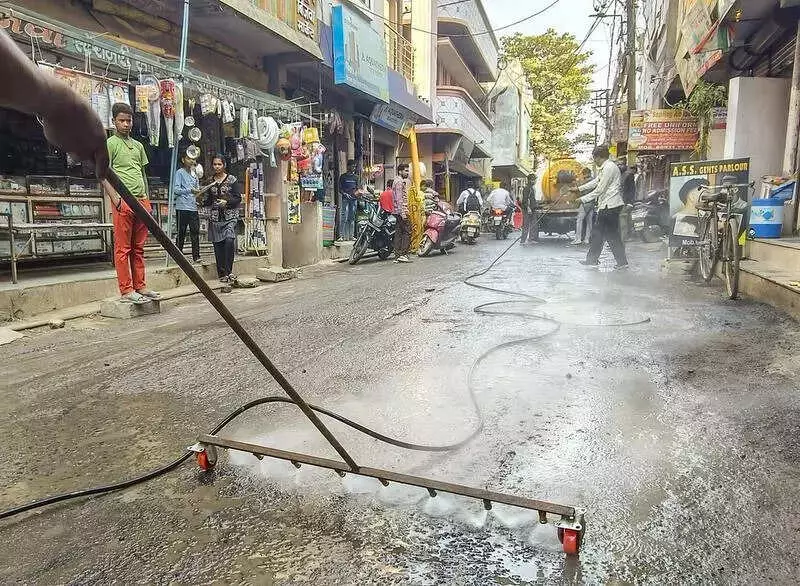
In a proactive move to ensure public health, the Bhopal Municipal Corporation (BMC) launched the New Year with rigorous, back-to-back water quality surveys across the city. This heightened vigilance came amid concerns following reports of contamination-related illnesses in neighboring Indore.
Extensive Testing Yields Positive Results
Officials from the civic body confirmed a reassuring outcome: none of the water samples collected and tested in Bhopal showed any signs of contamination. The comprehensive exercise was designed to check the safety of the city's drinking water supply and reinforce public trust in the system.
Details of the Two-Day Survey Drive
The intensive monitoring spanned two consecutive days. On Thursday, a dedicated team of 24 BMC staff members fanned out across Bhopal to collect and examine a total of 119 water samples. This large-scale effort followed a similar survey conducted just a day earlier on Wednesday, during which 58 samples from various locations were tested.

In total, over the two-day period, authorities scrutinized 177 samples from different parts of the city. The tests were not superficial; each sample was analyzed against several key parameters crucial for determining water potability. These included:
- Odor and color
- Taste
- Residual chlorine levels
- pH balance
- Turbidity (cloudiness)
A Routine Measure for Public Safety
Authorities clarified that these consecutive checks are part of the corporation's routine monitoring protocol. The primary goal is to consistently ensure the delivery of safe drinking water to every resident of Bhopal. While the immediate trigger was the situation in Indore, BMC emphasized that such exercises are standard procedure to preempt any potential health hazards.
The swift and transparent action by the Bhopal Municipal Corporation serves a dual purpose. Firstly, it provides factual, science-based assurance to citizens about the water coming from their taps. Secondly, it demonstrates the administration's commitment to proactive governance and public health stewardship, aiming to prevent any water-borne disease outbreaks before they can occur.






