A recent study conducted by the LV Prasad Eye Institute (LVPEI) has raised concerns about the effectiveness of cataract screening and surgery camps in Telangana, which have been a cornerstone of the state government's strategy to combat blindness. The findings suggest that these initiatives may not be delivering the expected results in terms of post-surgical outcomes.
Study Details and Key Findings
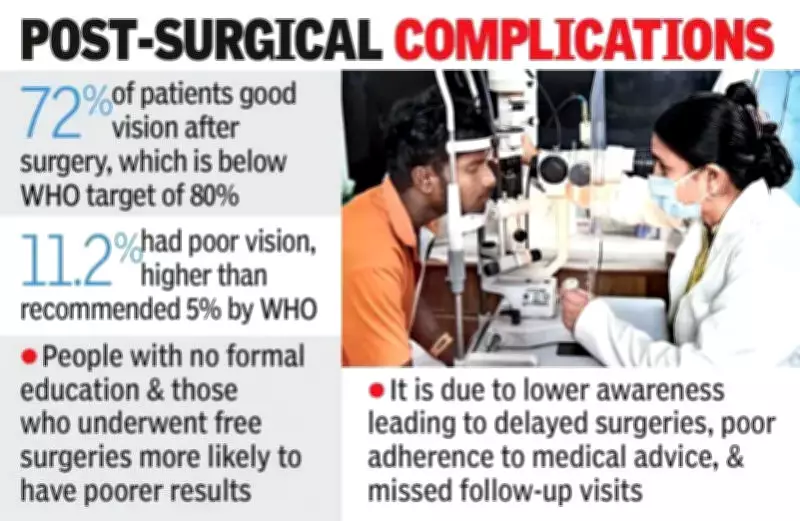
The research, published in the journal Ophthalmic Epidemiology, assessed cataract surgery outcomes across four districts in Telangana: Adilabad, Mahabubnagar, Khammam, and Warangal. After analyzing data from over 11,000 individuals, the study found that patients who underwent surgery in government hospitals and camps were more likely to experience poor or unclear vision post-operation. Specifically, only about 72% of patients achieved good vision after surgery, falling short of the World Health Organization (WHO) target of 80%. Furthermore, approximately 11.2% of patients had poor vision, which is more than double the WHO's recommended maximum of 5%.
Factors Contributing to Poor Outcomes
The study identified several factors associated with poorer surgical results. Patients with no formal education and those who received free surgeries were more likely to have suboptimal outcomes. This is attributed to lower awareness levels, which often lead to delayed surgeries, poor adherence to medical advice, and missed follow-up appointments. These findings highlight the need for improved patient education and follow-up care.

Context of Blindness in India
Cataract remains the leading cause of blindness globally. In India, the National Programme for Control of Blindness, launched in 1976, has significantly reduced the prevalence of blindness from 1.4% to 0.36% in 2019, a reduction of nearly 70-75%. However, the LVPEI study indicates that more efforts are needed to enhance the quality of cataract surgeries, particularly in government-run programs.
Post-Surgical Complications and Follow-Up Care
The study noted that many post-surgical complications were due to other eye diseases or the need for proper glasses, both of which are treatable. Experts emphasized that cataract surgery is not a one-time intervention and that regular follow-ups are crucial for optimal outcomes. Dr. Srinivas Marmamula, lead author and chief optometrist at LVPEI, stated, "The main reasons for poor vision after surgery were other eye problems and the need for proper glasses. These issues can often be treated if patients return for follow-up care. Patients need regular check-ups after surgery to correct vision and treat other eye conditions. Improving follow-up care is important to ensure better results and long-term benefits for patients."
Government Response and Initiatives
A senior official from the Telangana health department acknowledged the findings and highlighted the state's progress under the National Programme for Control of Blindness and Visual Impairment. The official noted that the state has reduced blindness prevalence to 0.36%, significantly lower than the earlier national average of 1%. "Along with regular screenings, we are focusing on surgical interventions and cornea collection. Between January 2025 and October 2025, over 2.14 lakh cataract surgeries were performed, achieving 92% of our target. We are also expanding eye care services to underserved areas and strengthening institutional capacity to ensure access to high-quality eye care for all," the official said.
Role of Screening Camps
Responding to the study's implications, another senior official emphasized the importance of screening camps in identifying patients early, particularly in remote areas. "Camps are the first step in bringing patients into the system. But we are also working to ensure proper referral, safe surgeries, and regular follow-up so that patients get lasting benefits," the official added. The state is now focusing on improving surgical standards, training doctors, and enhancing post-operative follow-up to address the gaps highlighted by the LVPEI study.

Additional Insights from Previous Studies
A previous LVPEI study, the Hyderabad Ocular Morbidity in Elderly Study (HOMES), along with other research in Telangana, showed that cataracts account for roughly 50% to 70% of blindness and severe visual impairment. Health department data corroborates this, indicating that cataracts are responsible for 62.6% of blindness in the state, followed by uncorrected refractive errors. The data also revealed that Hyderabad has a higher prevalence of vision impairment (2.24%) compared to other districts, especially among school-going children.
In conclusion, while cataract screening and surgery camps have been instrumental in reducing blindness in Telangana, the LVPEI study underscores the need for continuous quality improvement, patient education, and robust follow-up mechanisms to ensure that the benefits of surgery are fully realized.