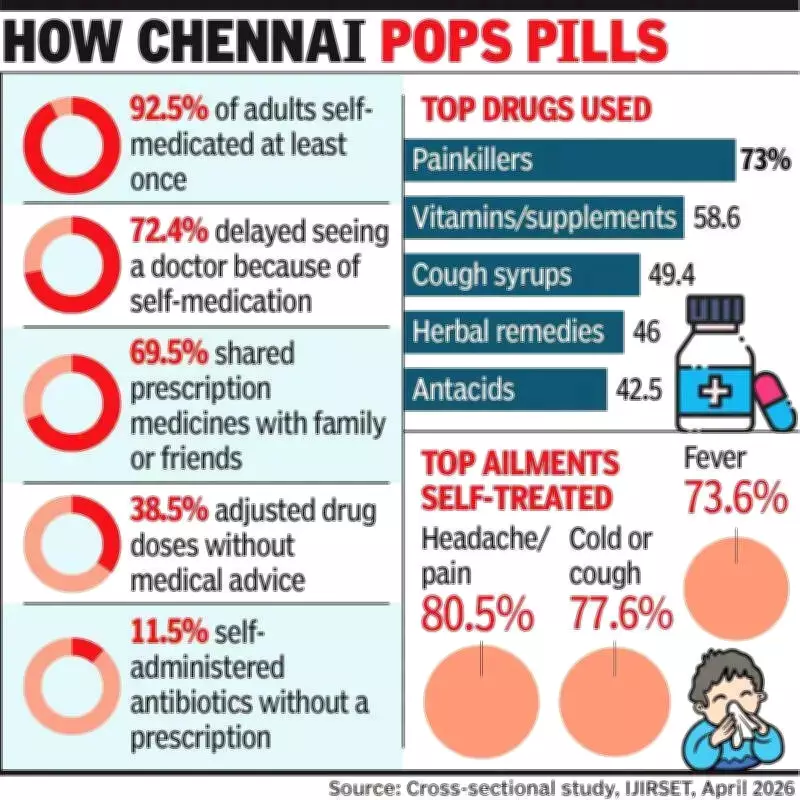
A recent cross-sectional study conducted in Chennai has revealed that nine out of ten adults resort to self-medication rather than consulting a doctor. This rate is almost double the national average, according to earlier estimates. The study, published in April in the International Journal of Innovative Research in Science, Engineering and Technology (IJIRSET), an open-access peer-reviewed journal, surveyed 174 adults from urban and rural field practice areas of Omandurar Government Hospital.
Key Findings of the Study
Researchers from the department of community medicine found that 92.5% of participants had self-medicated at least once. Painkillers were the most commonly self-prescribed drugs, accounting for 73% of cases. This was followed by cough syrups, vitamins, and herbal remedies. The majority of participants obtained medicines directly from pharmacies without a prescription, a practice that persists despite regulatory restrictions on several drug categories, as noted by Dr. Arun Murugan, the lead author.
Behavioral Concerns
The study highlighted alarming behavioral patterns: three out of four participants admitted that self-medication caused them to delay seeking professional medical care. Nearly 70% confessed to sharing prescription drugs with family or friends. The report emphasized that self-medication is highly prevalent and widely accepted despite known risks, driven by easy access to medicines, permissive attitudes, and limited e-Health literacy. It called for strengthening regulations, improving public awareness, and promoting responsible medicine use.

Antibiotic Misuse and Resistance
One of the most significant concerns is the misuse of antibiotics. One in nine participants reported self-administering antibiotics without a prescription. Public health experts directly link this habit to the rise of drug-resistant infections, a crisis where India already bears a disproportionate global burden. Dr. Subramanian Swaminathan, an infectious diseases expert not involved in the study, noted that despite national campaigns for antibiotic stewardship, over-the-counter purchases remain unchanged. He stated, "We see this in practice every day. We have adequate evidence to show abuse of antibiotics is affecting treatment outcomes."
Expert Opinions
Doctors' bodies, including the Indian Medical Association (IMA), warn that deaths due to antibiotic resistance will soon surpass those from road accidents. IMA association president Dr. B. Sridhar remarked, "Organizations such as the WHO are already accusing India of creating superbugs. It's time for the government to implement stricter norms and for professional healthcare givers to follow them." He also urged vulnerable and high-risk populations to get vaccinated and follow preventive measures.
Recommendations
Researchers have called for stricter regulation of over-the-counter drug sales, the implementation of antibiotic stewardship programs, and awareness campaigns targeting social media and television to curb unsafe self-medication practices.