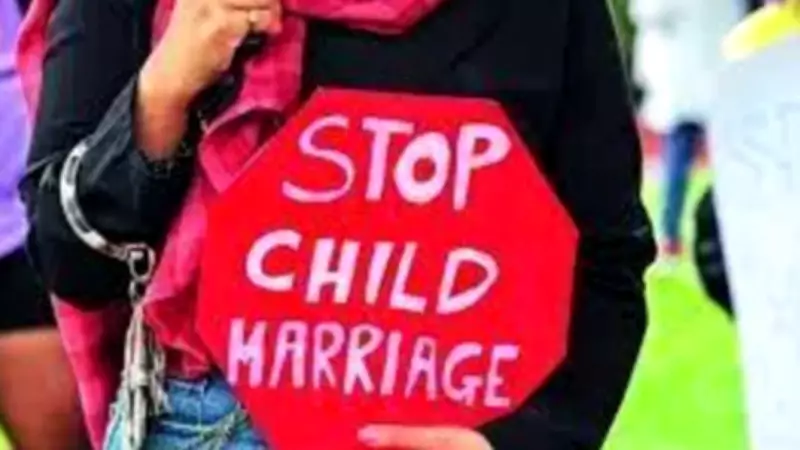
NEW DELHI: Child marriage persists in several Indian states despite years of campaigns promoting girls' education and delayed marriage, with West Bengal and Jharkhand reporting the country's highest share of girls marrying before the legal age of 18 years, according to the latest Sample Registration System (SRS) Statistical Report 2024.
Key Findings from the SRS Report
The report, released by the Registrar General of India, showed that while most women in India now marry after 21 years, there are pockets in parts of eastern and central India where early marriage remains entrenched. Nationally, 2.1% of women who got married in 2024 were below 18 years of age, while 24.5% married between 18 and 20 years. Nearly three-fourths, or 73.5%, married at 21 years or above. Overall, more than one in four women in India still got married before the age of 21 in 2024.
State-wise Breakdown
West Bengal recorded the country's highest proportion of girls marrying before 18 years at 6.3%, followed by Jharkhand at 4.9%. Chhattisgarh was also identified among states where a considerable proportion of girls, 2.9%, continue to marry before adulthood. In rural India, 2.4% of girls married before turning 18, compared to 1.1% in urban areas.

Among rural regions, West Bengal reported the highest share of child marriages at 5.9%, followed by Jharkhand at 5.8%. West Bengal was also at the top for child marriages in urban areas at 7.6%, far above the urban national average of 1.1%. Delhi reported zero child marriage in the survey, while Kerala recorded one of the lowest rates at 0.04%.
Haryana and Himachal also reported very low figures. The report showed the average age of marriage for women in India now stood at 23.1 years.
Implications of Early Marriage
Public health experts say early marriage is closely linked with school dropout, early pregnancy, higher maternal health risks, and lower workforce participation among women.
About the Author
Anuja Jaiswal is a Senior Assistant Editor at The Times of India, with an impressive 18-year career in narrative journalism. She specializes in health and heritage reporting, expertly simplifying complex health information to make it engaging and understandable for readers. Her deep dives into heritage topics are well-researched, resulting in captivating narratives that resonate with her audience. Over the years, she has worked in Chandigarh, Chhattisgarh and West UP, gaining diverse on-ground experience that shapes her storytelling.