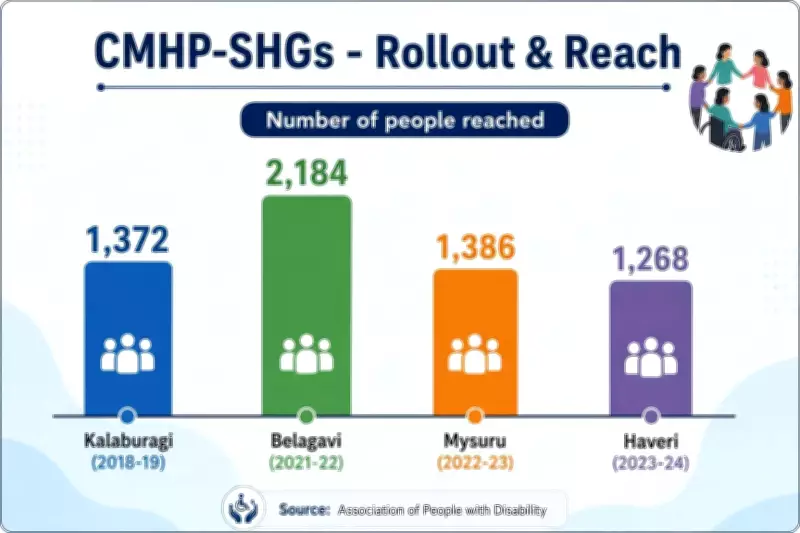
Mysuru: For many rural patients, staying on treatment is often a struggle shaped by distance, cost and continuity of care. Community networks are beginning to bridge that gap, with APD forming 90 self-help groups (SHGs) under the Community Mental Health Programme (CMHP), with collective savings of over Rs 7 lakh, and 28 taluk federations with 1,484 members, said Dr Gurucharan Bhaskar Mendon, senior manager, CMHP-APD.
One such case is that of a 46-year-old man from rural Mysuru, diagnosed with Bipolar Affective Disorder (BPAD) in 1992, for whom access once meant long monthly journeys. Educated up to class 5 and from a poor nuclear family, he travelled to NIMHANS in Bengaluru with his wife, spending about Rs 1,500 per visit despite free medicines being available. The distance and cost made regular treatment difficult.
A shift to KR Hospital in Mysuru reduced expenses. In 2024, he came in contact with the CMHP run by the Association of People with Disability (APD) and began accessing care at Periyapatna taluk hospital under the District Mental Health Programme (DMHP), making follow-up easier.

Through the programme, he joined an SHG and federation, and participated in vocational training and stress management. He also received sheep as livelihood support and now has two lambs—one will be returned to support another beneficiary (PWMI), while the other is expected to fetch around Rs 10,000.
Impact of Community Mental Health Programme
The CMHP has demonstrated significant impact in addressing mental health challenges in rural areas. By establishing SHGs and federations, APD fosters peer support and financial inclusion. The collective savings of over Rs 7 lakh empower members to access resources and reduce economic barriers.
Livelihood Support and Vocational Training
Vocational training and livelihood support, such as providing sheep, enable beneficiaries to generate income and gain self-reliance. This holistic approach not only improves mental health outcomes but also enhances economic stability for families.
The programme’s success highlights the importance of community-based interventions in mental health care, particularly for underserved populations. By decentralizing services and integrating them with local health systems, CMHP ensures continuity of care and reduces the burden on tertiary hospitals.