

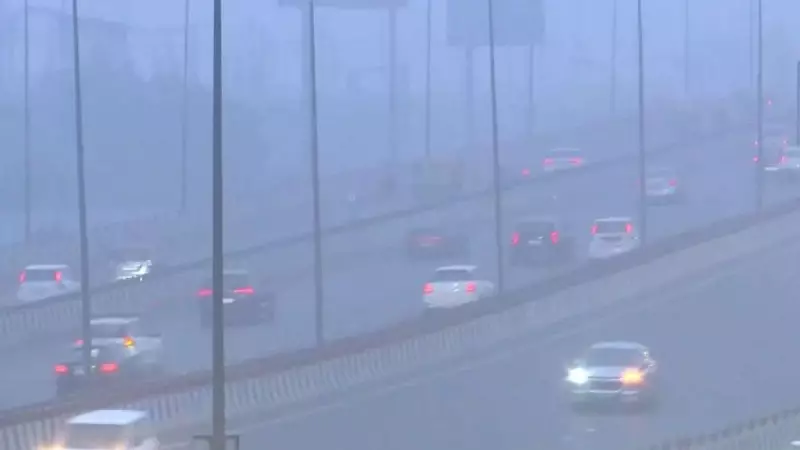
Delhi's air quality continues to be a major cause for concern as it remained in the 'Very Poor' category on Sunday, December 22, 2024. A thick blanket of dense smog enveloped the national capital, significantly reducing visibility across the city and its suburbs.
Persistent 'Very Poor' Air and Visibility Woes
The overall Air Quality Index (AQI) for Delhi was recorded at 352, firmly placing it in the 'Very Poor' zone according to the monitoring agencies. The situation was particularly severe in several areas. Anand Vihar recorded an alarming AQI of 415, which falls into the 'Severe' category. Other locations like Wazirpur (AQI 406) and Jahangirpuri (AQI 402) also reported 'Severe' air quality levels, highlighting the widespread nature of the pollution.
Meteorological conditions have played a significant role in trapping pollutants close to the ground. The dense smog led to notably poor visibility, creating hazardous conditions for commuters during the early morning hours. Despite the challenging visual conditions, there was a silver lining for air travelers.

Flight Operations Remain Unaffected
In a positive development, flight operations at Delhi's Indira Gandhi International (IGI) Airport proceeded normally. Airport authorities confirmed that both arrivals and departures were on schedule, with no cancellations or major delays reported due to the weather. This indicates that while surface visibility was impacted, conditions at the airport and in the immediate airspace remained within operational limits.
The persistence of 'Very Poor' air quality poses serious health risks, especially for vulnerable groups such as children, the elderly, and individuals with pre-existing respiratory or cardiovascular conditions. Doctors routinely advise limiting outdoor activities and wearing protective masks like N95s when exposure is unavoidable during such periods.
Ongoing Monitoring and Public Advisory
Authorities are keeping a close watch on the pollution levels. The current situation underscores the ongoing battle with air pollution that Delhi faces, particularly during the winter months when factors like low wind speed, drop in temperature, and stubble burning in neighboring states often converge to worsen air quality.
While the immediate focus is on the smog, the normal flight operations provide some respite. However, the consistently high AQI readings serve as a stark reminder of the environmental challenges at hand. Residents are urged to follow health advisories and stay informed through official channels for any updates or changes in the situation.






