
A new study from Jawaharlal Nehru University (JNU) has raised a major public health alarm for Delhi, suggesting the capital's notorious winter pollution may be actively breeding and spreading antibiotic-resistant bacteria, commonly known as superbugs. Published in the prestigious scientific journal Nature, the research indicates that the very air Delhiites breathe, particularly in vulnerable and crowded neighbourhoods, contains dangerously high levels of drug-resistant staphylococci.
What Did the JNU Researchers Discover?
Scientists from JNU's School of Environmental Sciences collected air samples from various parts of Delhi. Their analysis revealed a shockingly high load of staphylococcal bacteria in both indoor and outdoor environments, exceeding 16,000 Colony Forming Units per cubic metre (CFU/m3). This figure is 16 times higher than the World Health Organization's recommended safety limit of 1000 CFU/m3 for microbial exposure.
The study found a clear seasonal pattern, with bacterial concentrations peaking during the winter months. This correlation helps explain why respiratory infections become more common and severe in Delhi during this season. Of the bacterial strains isolated, 73% were resistant to a single drug, and a worrying 36% were multi-drug resistant (MDR), severely limiting treatment options.
Why Are Crowded Areas and Winter More Dangerous?
The research identified specific hotspots for bacterial contamination. The highest loads were found in densely populated and crowded locations like the Munirka market complex and the Vasant Vihar urban slum clusters. In contrast, less populated areas like the JNU campus showed significantly lower levels.
Dr. Madhuri Singh, the study's corresponding author, explained the mechanism. Staphylococci bacteria are shed by humans and animals through breathing and coughing. In polluted air, these bacteria latch onto fine particulate matter (PM2.5 and PM10). These pollution particles act as carriers, transporting the bacteria deep into the respiratory system and enhancing their ability to cause infection. The higher the pollution, the greater the bacterial spread.
Understanding the Threat: From Skin Infections to Sepsis
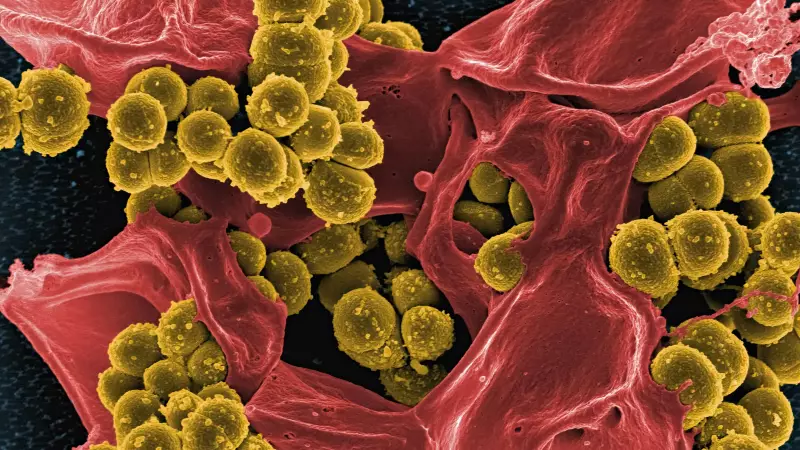
Staphylococci are spherical bacteria often found on skin and in nasal cavities. While some are harmless, others can cause a range of illnesses from minor skin boils and pimples to life-threatening conditions like pneumonia, sepsis, and infections from Methicillin-resistant Staphylococcus aureus (MRSA).
The study identified eight different staphylococcal species in Delhi's air, with Staphylococcus epidermidis and Staphylococcus arlettae being the most common. The elderly, children, cancer survivors, and individuals with compromised immune systems are at the greatest risk of developing severe infections from these airborne superbugs.
The Larger Crisis of Antimicrobial Resistance (AMR)
This study underscores a critical environmental dimension of the global Antimicrobial Resistance (AMR) crisis. It calls for comprehensive monitoring of antibiotic-resistant bacteria and their genetic markers in the environment to map the threat accurately.
Beyond the crucial advice on prudent antibiotic use—completing prescribed doses and avoiding self-medication—the researchers highlight a often-overlooked factor: improper disposal of antibiotics. Flushing pills or throwing them in trash leads to antibiotics entering soil and water. This creates a low-dose antibiotic environment that allows bacteria to adapt, mutate, and develop resistance genes, which can then spread through ecosystems.
The study notes that hospital wastewater often contains high antibiotic levels due to disposal practices. The researchers advocate for professional drug take-back policies and public awareness. To combat airborne superbugs indoors, technologies like Ultraviolet (UV) light irradiation, ionisation, and HEPA filtration can be effective in sterilising air.
The findings present a stark warning: Delhi's air pollution is not just damaging lungs but is also becoming a potent vehicle for spreading infections that are increasingly difficult to treat.