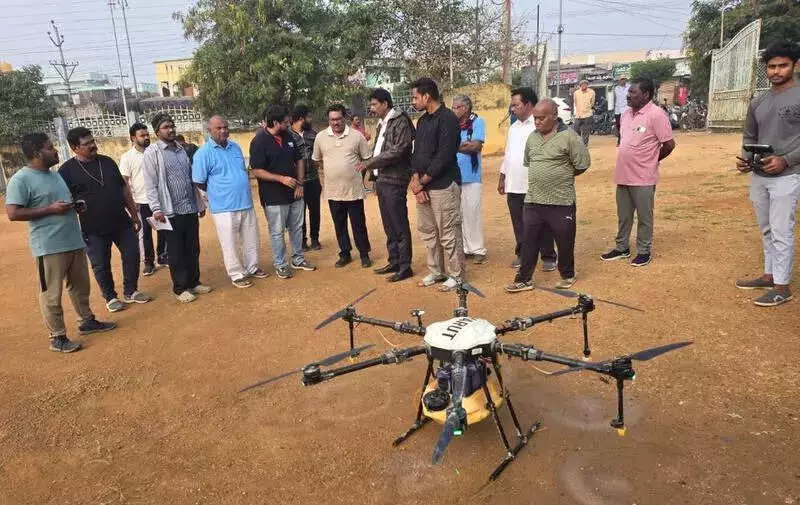
In a groundbreaking move to combat mosquito-borne diseases, the Guntur Municipal Corporation (GMC) has launched a first-of-its-kind initiative using drones for city-wide anti-mosquito operations. This technological intervention marks a significant shift in urban public health strategy, targeting areas that are difficult or unsafe for manual workers to access.
A Technological Solution to an Age-Old Problem
The core of this novel approach involves deploying drones to spray chemophos liquid, a larvicide, over large water bodies, lakes, and expansive vacant plots. GMC commissioner Puli Srinivasulu personally inspected the drone spraying operation at Nallacheruvu, underscoring the civic body's commitment to this intensified anti-larval drive. Officials explained that drones enable precise and uniform application of the liquid in identified mosquito-breeding zones, which dramatically improves the effectiveness of vector control measures.
Commissioner Srinivasulu highlighted the practical challenges that led to this innovation. He noted that numerous water bodies and open spaces across Guntur cannot be manually accessed due to factors like excessive depth, dense vegetation, or general safety risks for workers. "In such locations, drones are being used to spray chemophos liquid to prevent mosquito breeding. This technology enables us to cover critical areas quickly and efficiently," he stated.

Pinpoint Strategy for Maximum Impact
The commissioner has directed the GMC's malaria wing and biologists to meticulously identify mosquito-prone zones on a pinpoint basis to ensure highly targeted spraying. This strategic focus offers multiple benefits:
- It significantly reduces chemical wastage.
- It ensures that only high-risk areas are treated.
- It helps in minimising the overall environmental impact of the larvicide.
This proactive initiative comes at a crucial time, amid rising public health concerns over seasonal vector-borne diseases like dengue and malaria. Health officials stress that such pre-emptive anti-larval measures are vital to prevent potential outbreaks, especially during periods of fluctuating weather that are conducive to mosquito breeding.
Broader Infrastructure Review
Alongside the drone drive, Commissioner Srinivasulu also reviewed other infrastructure works critical to public health. He inspected drain construction near Chuttugunta, emphasising its importance in preventing water stagnation—a key factor in mosquito proliferation. His inspection tour also included the walking track at Nallacheruvu and a visit to Pragati Nagar on the Inner Ring Road, where he directed officials to initiate road construction to ease traffic and improve connectivity.
Civic officials view GMC's drone-based campaign as a clear indicator of a broader shift towards technology-driven urban governance. This approach seeks to align public health management with infrastructure development and preventive planning, ultimately aiming to enhance the quality of life for Guntur's residents by creating a safer, healthier urban environment.